Last updated October 31, 2026
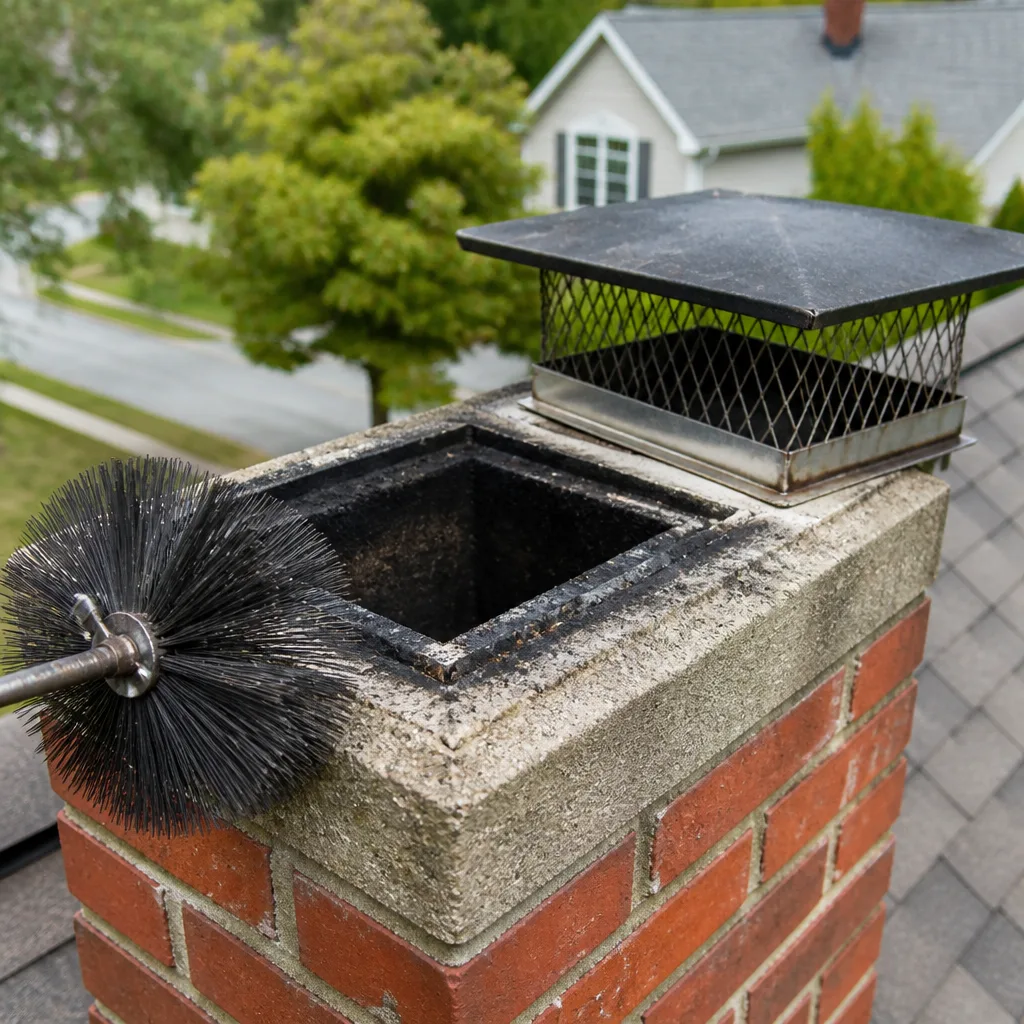 Sweep & inspection
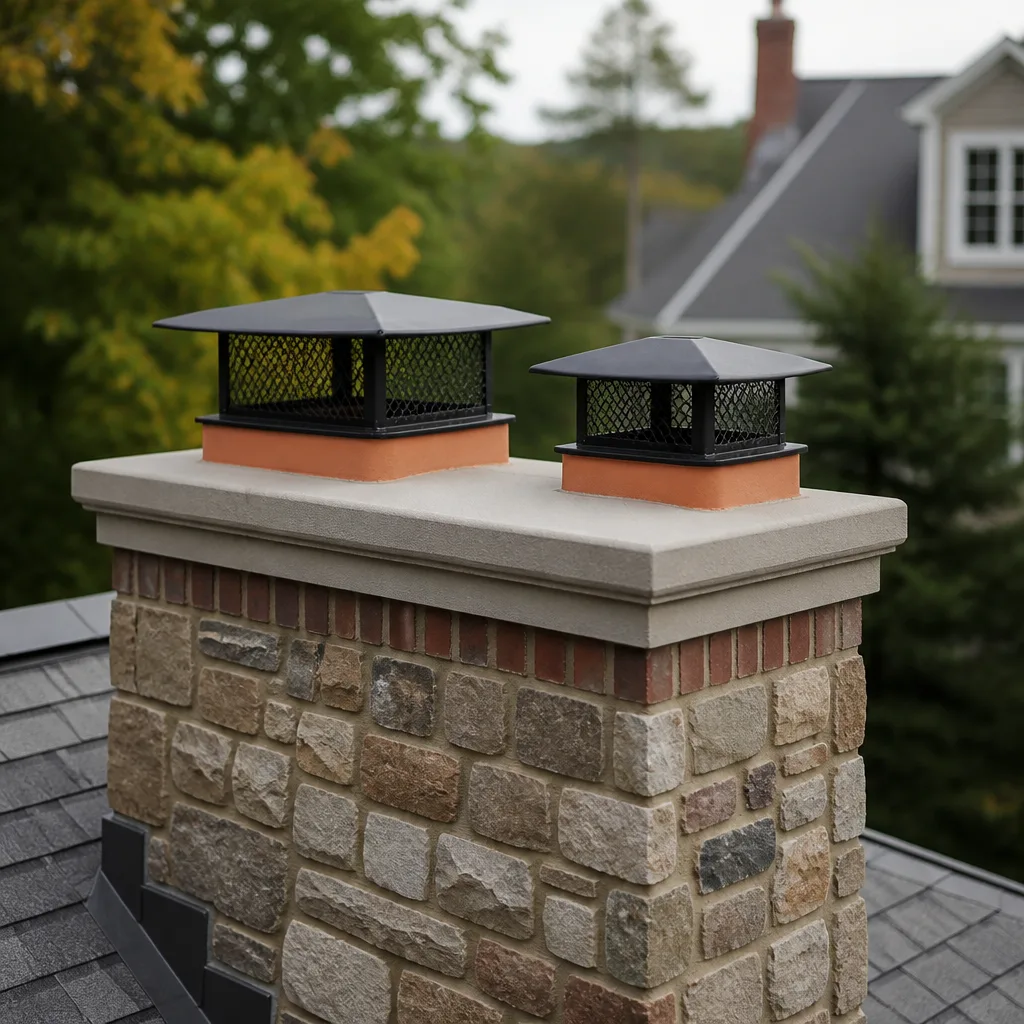 Caps & crowns
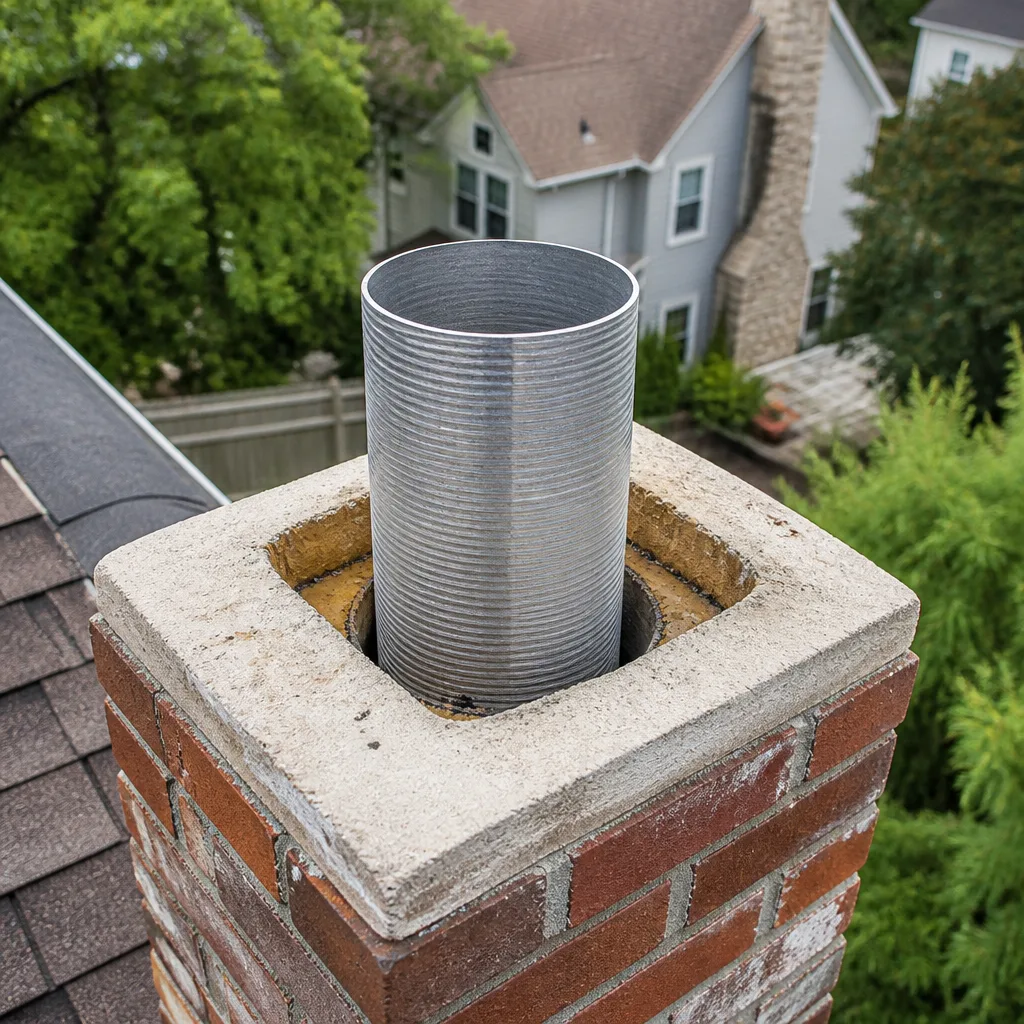 Flue relining
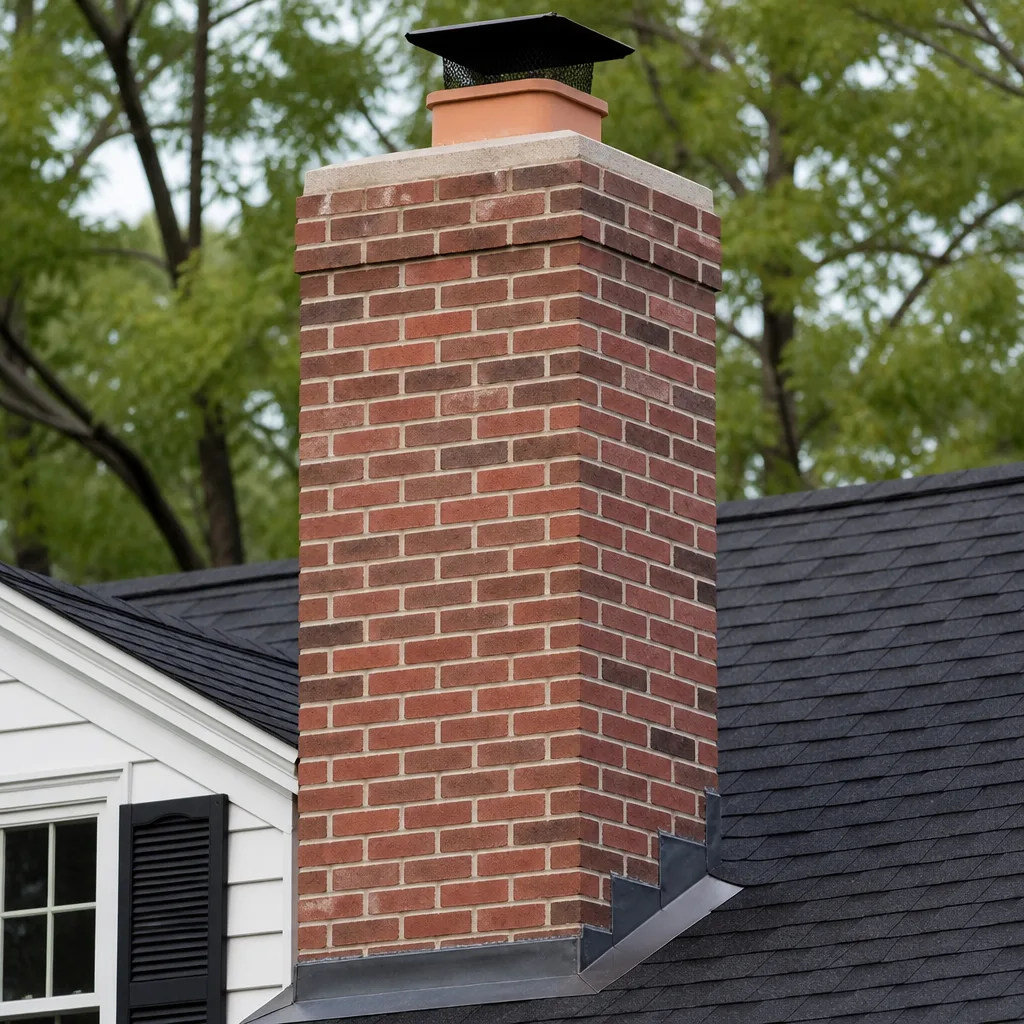 Masonry repair
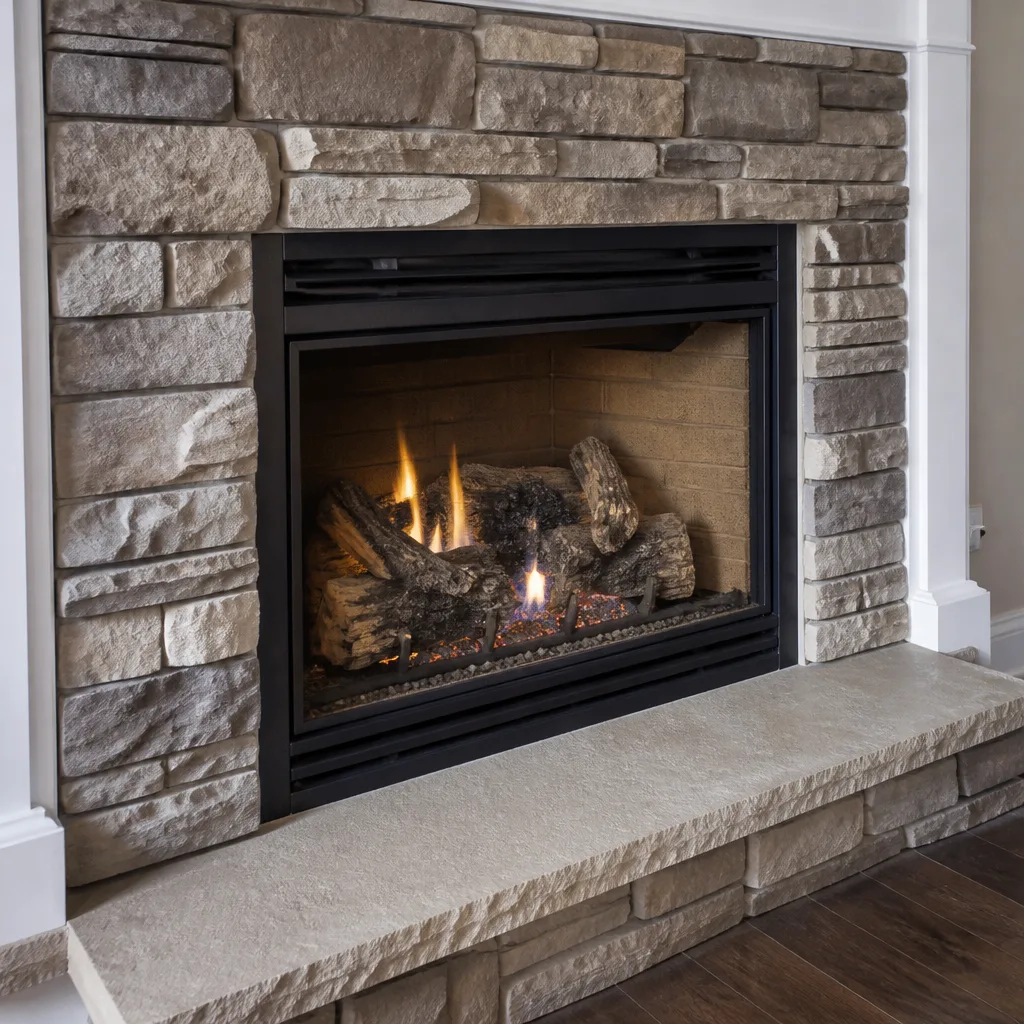 Gas fireplace service
Level 1 sweep and inspection to the NFPA 211 annual standard - flue, crown, cap, and flashing checked and photographed
Chimney sweep logs do not sweep chimneys. They loosen some creosote - which then falls where a brush and vacuum still have to collect it.
Chimney Cleaning Warning Signs: A Georgetown Homeowner’s Reference Guide
Every fall, we get calls from Georgetown homeowners who say the same thing: “The fireplace worked fine last winter.” It usually did. What they didn’t notice was the slow accumulation of signals that something was changing inside the flue. A little more smoke than usual when the wind shifted. A faint smell on humid mornings. A fine, gritty dust on the mantel that wasn’t there in years past. None of these are dramatic, and that’s exactly the problem. The most serious chimney failures we find in Georgetown homes are the ones that took two or three seasons to develop, quietly, while everything still looked normal from the couch. This guide catalogs the warning signs that actually matter, what each one indicates, and when it’s time to act. For more guides & resources, see our blog.
Quick Answer
A chimney needs professional attention when you notice smoke entering the room instead of drafting upward, a persistent tar or campfire smell on warm days, white staining or cracked mortar on the exterior brick, rust or water stains inside the firebox, or flaking black deposits inside the flue that look like shiny tar. These are not quirks of an old Georgetown house. Each one corresponds to a specific failure: restricted airflow, third-degree creosote glazing, water intrusion, or liner deterioration. The fix is a professional sweep and inspection, and in many cases, the repair work can be done by the same company. For a complete overview, see our Chimney Sweep Maintenance Checklist for Georgetown Homeowners.
Styles & brands we work with
Table of Contents
- Smoke and Downdraft: When Your Fireplace Pushes Back
- The Tar Smell on Warm Days: Third-Degree Creosote
- Exterior Signals: Efflorescence, Cracked Crowns, and Spalling Brick
- Inside the Firebox: Rust, Dampness, and Stained Dampers
- Liner Fractures: What’s Normal and What’s Not
- Unusual Sounds and Animal Activity
- What Your Burning Habits Are Telling You
- Common Mistakes to Avoid
Smoke and Downdraft: When Your Fireplace Pushes Back
A fireplace that “smokes a little when it’s windy” isn’t a quirk of the house. It’s a draft failure. And under the right pressure conditions, that draft failure can reverse carbon monoxide flow into living space. We’ve seen this happen in homes across Georgetown, from Sun City to Serenada, and the homeowner almost always describes it the same way: a faint wisp of smoke on windy days, or a cold air current you can feel when you stand near the hearth. Then one evening the wind shifts hard, the fire is burning low, and the room fills with haze.
Occasional Puffback vs. Chronic Downdraft
Here’s the distinction that matters. An occasional puffback happens when a gust of wind overpowers the chimney’s natural draft for a second or two. You might see a small plume of smoke enter the room, then disappear. This is often caused by a missing or undersized chimney cap, or a chimney that doesn’t extend far enough above the roofline to clear the wind pressure zone created by the roof itself. In Georgetown, where single-story ranches and two-story builds sit side by side with varying rooflines and tree canopies, this pressure zone varies significantly from house to house.
A chronic downdraft is different. The smoke doesn’t just puff back occasionally; the fireplace seems to struggle with every fire. You might notice smoke curling lazily into the room even when you open a window to equalize pressure. This usually indicates a more structural issue: a flue that’s too cold to establish draft (common in exterior-wall chimneys), a partially blocked flue from creosote or debris, or a liner that’s no longer smooth enough to carry combustion gases upward efficiently. For help diagnosing these issues, see our Chimney Sweep Troubleshooting: Common Problems and How to Fix Them.
What Each Pattern Tells You
- Puffback only in high wind: Typically a cap or chimney-height issue. The fix is often straightforward: a properly sized cap or a flue extension.
- Smoke when starting a fire, then it clears: The flue is cold and draft is slow to establish. This is common in Georgetown’s shoulder seasons when outdoor and indoor temperatures are close. A pre-warmed flue helps, but if it persists, the liner may be oversized for the firebox.
- Smoke throughout the burn, regardless of wind: Strong indicator of heavy creosote buildup, a partial blockage, or a compromised liner. This is a “stop using the fireplace and call someone” situation.
What to Do First
- Note the conditions. Does it happen only when windy? Only on cold starts? Every fire? This information helps a sweep diagnose the problem faster.
- Check the damper is fully open. A partially closed damper is a common cause of mild smoke issues, and it’s easy to rule out.
- Open a window in the same room. If smoke stops when you open the window, the room is too airtight and starving the fire for combustion air. If it continues, the problem is in the flue itself.
- Stop using the fireplace until you know the cause. Carbon monoxide is odorless, and a fireplace that doesn’t draft properly is a carbon monoxide risk.
If you’re in Georgetown and noticing any of these patterns, a professional Chimney Sweep in Georgetown can diagnose the exact cause. The cost of an inspection is trivial compared to the cost of guessing wrong about carbon monoxide.
The Tar Smell on Warm Days: Third-Degree Creosote
Here’s a scenario that comes up constantly with Georgetown homeowners. It’s July. The AC is running. The fireplace hasn’t been used in four months. But on humid afternoons, or when the sun hits the chimney just right, you catch a smell like an old campfire, or hot asphalt, or a barbecue grill that was never cleaned. You might notice it more in the room with the fireplace, or in the upstairs hallway near the chimney chase.
That smell is creosote. Specifically, it’s third-degree creosote, the glazed, tar-like residue that forms when combustion byproducts condense on the flue walls and then bake into a hard, shiny coating. It emits odor when heat and humidity cause it to off-gas, which is why Georgetown’s hot, humid summers make it more noticeable.
Why Third-Degree Creosote Is a Different Problem
First-degree creosote is a fine, dusty soot. Second degree is flaky and granular. Both come off with a standard chimney sweeping using wire brushes. Third-degree creosote is different. It’s a hardened, vitreous layer that forms when flue temperatures cycle between hot and cold, often because of smoldering fires, unseasoned wood, or a flue that’s too cold. Standard brushes slide right over it. Removing it requires chemical treatment, mechanical methods like rotary chains, or both. It is also the most combustible form of creosote, and it’s the primary fuel source for chimney fires.
What many Georgetown homeowners don’t realize is that the smell itself is a warning, even if you never see smoke. The creosote layer has reached a thickness and density where it’s actively outgassing into your living space. That means the flue is significantly loaded, and the passageway for proper draft is narrowed.
What You Can Check
- Look down the flue with a flashlight. If you see shiny black patches that look like melted plastic or dark glass, that’s glazed creosote. A thin, dull, dusty layer is normal; glossy is not.
- Smell the firebox on a hot afternoon. Compare it to other rooms. If the firebox area smells strongly of tar or asphalt, the creosote is off-gassing.
- Recall your burning habits. Have you burned a lot of pine? Georgetown has abundant cedar and pine in the area, and while properly seasoned softwood is fine, unseasoned or smoldering fires accelerate creosote glazing.
When Chemical or Mechanical Treatment Is Required
If a sweep confirms third-degree creosote, a standard brushing won’t be enough. The process typically involves applying a chemical treatment to soften the glaze, then using rotary cleaning equipment to remove it. This is not a corner to cut. Glazed creosote is a chimney fire waiting for the right ignition temperature, and a chimney fire in a Georgetown home can reach temperatures that crack the flue liner and transfer heat to framing within minutes.
We carry the professional products and equipment for this work. If the liner is damaged by a previous chimney fire or the glazing has compromised its integrity, repair becomes necessary. For liner restoration, we use HeatShield resurfacing products, which are specifically designed for this kind of damage. It’s the same material certified chimney professionals specify, and it’s the difference between a liner that’s patched and one that’s restored to a smooth, code-compliant firing surface.
Exterior Signals: Efflorescence, Cracked Crowns, and Spalling Brick
Most Georgetown homeowners never look at their chimney from the outside unless they’re hanging Christmas lights. That’s a mistake. The exterior of the chimney tells you more about its internal condition than almost anything else, and the signals are visible from the ground if you know what to look for.
Efflorescence: The White Staining That Predicts Interior Damage
Efflorescence is the white, chalky staining that appears on brick chimneys. It’s often dismissed as cosmetic. It’s not. Efflorescence forms when water penetrates the masonry, dissolves soluble salts inside the brick and mortar, and carries those salts to the surface. When the water evaporates, the salts crystallize into white deposits. What you’re seeing is evidence that water is moving through your chimney masonry.
In Georgetown, the pattern of wet winters followed by hot, dry summers is particularly hard on brick. Each cycle of saturation and drying moves more salts to the surface, and over time, the repeated expansion and contraction of moisture inside the brick begins to break it apart from within. Efflorescence that appears, disappears after rain, and then reappears is an early signal. Efflorescence that’s thick, crusty, and persistent indicates years of water intrusion.
The interior consequences are what matter most. Water moving through the masonry eventually reaches the flue liner, the smoke chamber, and the firebox. In a masonry chimney, that means deteriorating mortar joints between flue tiles, rusted dampers, and a firebox floor that soaks up water like a sponge.
Cracked Crowns: The Most Overlooked Failure Point
The crown is the concrete or mortar slab that caps the top of the chimney, sealing the gap between the flue liner and the outer brick. It’s exposed to direct sun, rain, and freeze-thaw cycles, and it’s the first place water enters a chimney. A cracked crown lets water run down the inside of the chimney, behind the brick, where you can’t see it until the damage is already significant.
Signs of a failing crown from the ground:
- Visible cracks running across the top surface of the chimney (use binoculars if needed)
- Chunks of concrete or mortar missing from the edges
- A chimney cap that’s rusted through or missing entirely (the cap protects the crown too)
- Water stains on the ceiling near the chimney chase, or in the attic
Crown cracks can be repaired if caught early. Left alone, they widen with every winter, and the freeze-thaw cycle in Georgetown’s occasional hard freezes accelerates the damage. A cracked crown is the leading cause of the efflorescence and spalling that follows.
Spalling Brick: When the Brick Itself Is Failing
Spalling is what happens when water-saturated bricks freeze and the surface layer pops off, leaving rough, pitted, or crumbling brick faces. You might find brick chips on the roof, in the gutters, or on the ground near the chimney base. Spalling is not a surface issue; it’s structural. Each lost layer of brick reduces the chimney’s ability to shed water and support its own weight. A chimney with significant spalling is a structural hazard, not just an aesthetic one.
The solution depends on the extent of the damage. In minor cases, tuckpointing restores the mortar joints and stabilizes the brick. In severe cases, partial or full rebuilding of the affected section is required. The right material matters here. We source masonry components through professional supply channels, including Olympia Chimney and Gelco, because the mortar mix, crown material, and flashing components need to match the existing chimney’s construction. Learn more about selecting quality products in our guide to Choosing the Right Chimney Cleaning Brand: A Buyer’s Guide for Georgetown. Hardware-store substitutes don’t bond properly with old brick and fail within a few seasons.
Inside the Firebox: Rust, Dampness, and Stained Dampers
When water gets into a chimney, it shows up inside the firebox before you typically notice it on the ceiling or walls. These interior signals are easy to check and frequently ignored because fireboxes get dirty. A little rust seems normal. A damp spot in the firebox after rain seems like it’s just part of having a fireplace.
It’s not.
What Each Interior Signal Means
- A stained damper handle: If the metal handle or lever that operates your damper has rust streaks or water staining, water is running down the flue and pooling at the damper. This is a direct leak indicator, usually from a failed crown or missing cap.
- A rusted firebox floor: The floor of the firebox should be refractory brick or metal. If it’s rusting, water is sitting there routinely. In a masonry fireplace, this means water is saturating the firebrick and potentially wicking into the surrounding structure.
- Damp spots or musty smell after rain: Active water entry. Check the attic near the chimney chase and the ceiling around the fireplace. Even if you can’t see staining yet, the smell is a reliable early indicator.
- Crumbling mortar joints inside the firebox: The mortar between firebricks should be intact. If you can scrape it out with a fingernail, water and heat cycles have compromised it. This reduces the firebox’s ability to contain heat and embers safely.
- White residue inside the firebox or on the damper: Same principle as exterior efflorescence: water is moving through the masonry and carrying soluble salts.
Why Interior Moisture Is a Structural Issue, Not a Cosmetic One
Water that enters the firebox doesn’t stay there. In a masonry chimney, the firebox is built into the same mass as the flue and smoke chamber. Water migrates through the masonry, rusting the damper assembly, deteriorating mortar joints between flue tiles, and weakening the connection between the fireplace and the surrounding framing. Over years, this water movement can cause the chimney to shift, creating gaps that open the way for both water and fire to reach combustible framing.
The first step is finding where the water is entering. That’s usually a defective crown, a missing or rusted cap, or failed flashing at the roofline. A proper inspection will identify all three. Once the entry point is sealed, the interior damage can be assessed and repaired. In many cases, the repair involves Chimney Repair in Georgetown, which we handle directly, so the same technician who finds the problem can fix it. No separate calls, no coordination between companies.
Liner Fractures: What’s Normal and What’s Not
The flue liner is the most important safety component of your chimney. It contains combustion gases, directs them upward, and creates a thermal barrier between the hot flue gases and the combustible framing of your house. When the liner fails, the chimney is no longer doing its job, even if the fireplace still “works.”
Normal Settling vs. Structural Fractures
All masonry settles. A hairline crack in a mortar joint at the top of the chimney is usually benign. Georgetown soil, with its mix of blackland clay and limestone outcroppings, moves with moisture cycles, and every house in the area experiences some degree of settling. A hairline crack that stays hairline through a full seasonal cycle is typically not a structural concern.
A structural liner fracture is different. Here’s what to look for:
- Cracks that are wide enough to fit a quarter or larger: These indicate movement beyond normal settling.
- Spalling or missing pieces of the flue tile: If you see clay tile fragments in the firebox after a heavy rain or after a chimney fire, the liner is actively failing.
- Vertical cracks running the length of the liner: These allow flue gases and heat to reach the masonry directly, bypassing the liner’s protective function.
- Gaps between flue tile sections: The mortar between tiles should be continuous. Gaps mean the seal is broken.
When a Camera Inspection Is the Only Way to Know
Here’s the reality most Georgetown homeowners don’t realize: you cannot see the majority of your flue liner from the firebox. You can see the first few feet. After that, the flue rises through the dark, through the smoke chamber, past the roofline, and the only way to inspect its full length is with a camera.
A camera inspection shows exactly what’s there: the condition of each tile joint, cracks that are hidden from view, creosote buildup in the upper third of the flue (where it’s coldest and creosote accumulates fastest), and damage in the smoke chamber that’s invisible from below.
We recommend a camera inspection anytime a chimney has not been professionally evaluated in the last few years, and always after any suspected chimney fire. The cost is small relative to the information gained, and the camera record gives you something no visual “looks fine from the hearth” assessment can: proof of condition.
Repair Options by Liner Type
- Minor mortar joint deterioration: Tuckpointing and joint repair may be sufficient if the tiles themselves are intact.
- Cracked or damaged sections: HeatShield resurfacing can restore the interior surface of many clay tile liners without a full rebuild. It’s a propriety system that bonds to the existing liner and restores a smooth, insulated firing surface.
- Severe deterioration or missing tile sections: A full reline is required. We install DuraFlex flexible liner systems, which are code-compliant for continuous, seamless relining. This is not a job for a handyman; it requires correct sizing, proper insulation, and a mechanical connection at the appliance or firebox.
The right material for the repair matters. A chimney that’s relined with the wrong product, or resurfaced with a material not designed for flue temperatures, is a liability, not an asset. We choose from the same professional product lines that certified chimney professionals specify: HeatShield for resurfacing, DuraFlex for relining, and components from Famco where the installation requires specific terminations or caps.
Unusual Sounds and Animal Activity
Georgetown’s mature tree canopy and abundant bird and squirrel population make chimneys a prime nesting target. A chimney without a properly fitted cap is an open invitation, and the consequences go beyond the nuisance factor.
Sounds That Indicate a Problem
- Scratching or rustling from the chimney, especially in spring: Squirrels, birds, or raccoons. Squirrels in particular will nest in the flue or in the chase around an uncapped chimney.
- A fluttering or buzzing sound: Birds trapped in the flue, or in some cases, a chimney swift colony. Chimney swifts are protected by federal law, and they cannot be removed while nesting. This means the chimney cannot be used until they migrate, and the nest itself becomes a fire hazard if it remains.
- Dripping water sounds after rain, even when the firebox looks dry: Water moving inside the chimney chase or behind the masonry. You’re hearing it before you see it.
- A hollow echo or unusual resonance when you tap the chimney from inside the attic access: Sometimes indicates detached flue tiles or voids in the masonry.
What Animal Presence Means for the Flue
A nest inside the flue is not just a blockage. Nests are constructed from twigs, grass, leaves, and other flammable material. In the flue, they act as a concentrated fuel source located exactly where flue temperatures are highest. A nest that partially blocks the flue also impairs draft, leading to the smoke-back and downdraft issues described earlier. And the animal itself, if it dies in the chimney, creates a different set of problems: odor, insects, and an even more stubborn blockage.
The fix is a properly fitted chimney cap with appropriate screening. Not the $12 cap from a hardware store, but a cap that’s sized to the flue, has the right mesh for your local wildlife pressure, and is installed to stay put. We install components from Famco, which are built for permanent installations and come in the sizes and profiles needed for most Georgetown chimneys.
What Your Burning Habits Are Telling You
Sometimes the warning sign isn’t in the chimney at all. It’s in how you’re using it. Certain burning patterns consistently produce the problems described in this guide, and recognizing them is the first step toward prevention.
Burning Habits That Signal Future Problems
- Burning unseasoned wood: Fresh-cut wood contains up to 60% water. Burning it produces low-temperature, smoky fires that deposit creosote rapidly. Georgetown’s humid summers mean wood must be split and stacked for a full year before it’s properly seasoned. Anything less and you’re feeding the creosote problem.
- Frequent smoldering fires: A fire that’s damped down to smolder overnight produces incomplete combustion and very high creosote deposition. The romantic all-night fire is also the highest-creosote fire you can burn.
- Using the fireplace as a primary heat source without regular cleaning: The more you burn, the faster creosote builds. A fireplace that sees daily use from October through February should be swept at least twice during that period, not once a year.
- Burning construction scraps, treated lumber, or paper with colored inks: These materials produce chemical compounds that deposit on the flue walls and are more difficult to remove than standard creosote. Some also emit genuinely toxic fumes, even with good draft.
- Ignoring the smell of smoke in the house after the fire is out: If the room smells like smoke for hours after the fireplace is cold, the flue is not clearing properly. This is a draft and possibly a liner issue, not a “normal part of having a fireplace.”
Conversely, What Good Burning Looks Like
- You burn wood that’s been split and stacked for at least 12 months, preferably 18 in Georgetown’s humidity.
- You burn hot, active fires with visible flame, not smoldering oxygen-starved fires.
- You use the damper correctly: fully open during the fire, closed only after the fire is completely out and the embers are cold, to prevent downdraft odor.
- You have the chimney swept annually, even if you only burn a cord or two per season.
- You notice and act on the small signals: a little more smoke, a slightly stronger smell, a crack you haven’t seen before.
The homeowner who does these things keeps a chimney in stable condition year over year. The homeowner who doesn’t is the one we see in January with a chimney fire or a flue so blocked that the fireplace is unusable for the rest of the season.
Common Mistakes to Avoid
- Assuming a chimney that’s been fine for years is still fine. Chimneys deteriorate whether or not they’re used. Water, time, and heat cycles do their work. “It worked last winter” is not a safety assessment.
- Ignoring a “small” smell or a “little” smoke. These are threshold signals. The first time you notice them is the earliest and cheapest time to address them. Waiting until they’re constant means the underlying problem has had time to compound.
- Burning the creosote out with a hot fire. This is an old folk remedy that some Georgetown residents still swear by. It’s dangerous. A hot fire can ignite the creosote you’re trying to remove, turning a controlled burn into a chimney fire. There is no safe DIY creosote removal.
- Sealing the chimney top against water without addressing the cause. A homeowner will sometimes caulk or paint the crown to stop a leak. If water is coming through a cracked crown or failed flashing, surface sealing buys a season at best and hides the real problem in the meantime.
- Closing the damper too soon after a fire. The damper should stay open until the fire is completely out. Closing it while embers are still smoldering traps combustion gases and moisture inside the flue, accelerating creosote deposition and damper rust.
- Hiring a handyman to repair a chimney. Chimney work requires specific knowledge of fire codes, draft dynamics, and materials. A general contractor who “does chimneys occasionally” is not the same as a specialist who works with the correct materials every day. The brands we use (DuraFlex, HeatShield, Olympia Chimney, Famco, Gelco) exist for a reason: they’re specified by certified chimney professionals because they perform to fire safety standards, and they’re not sold at retail home-improvement chains for good reason.
- Cleaning the fireplace after every fire and thinking that’s the same as sweeping the flue. The firebox is visible. The flue is not. What you can’t see is where the fire hazard lives. Regular firebox cleaning is fine, but it does nothing for the creosote above the damper.
See the difference
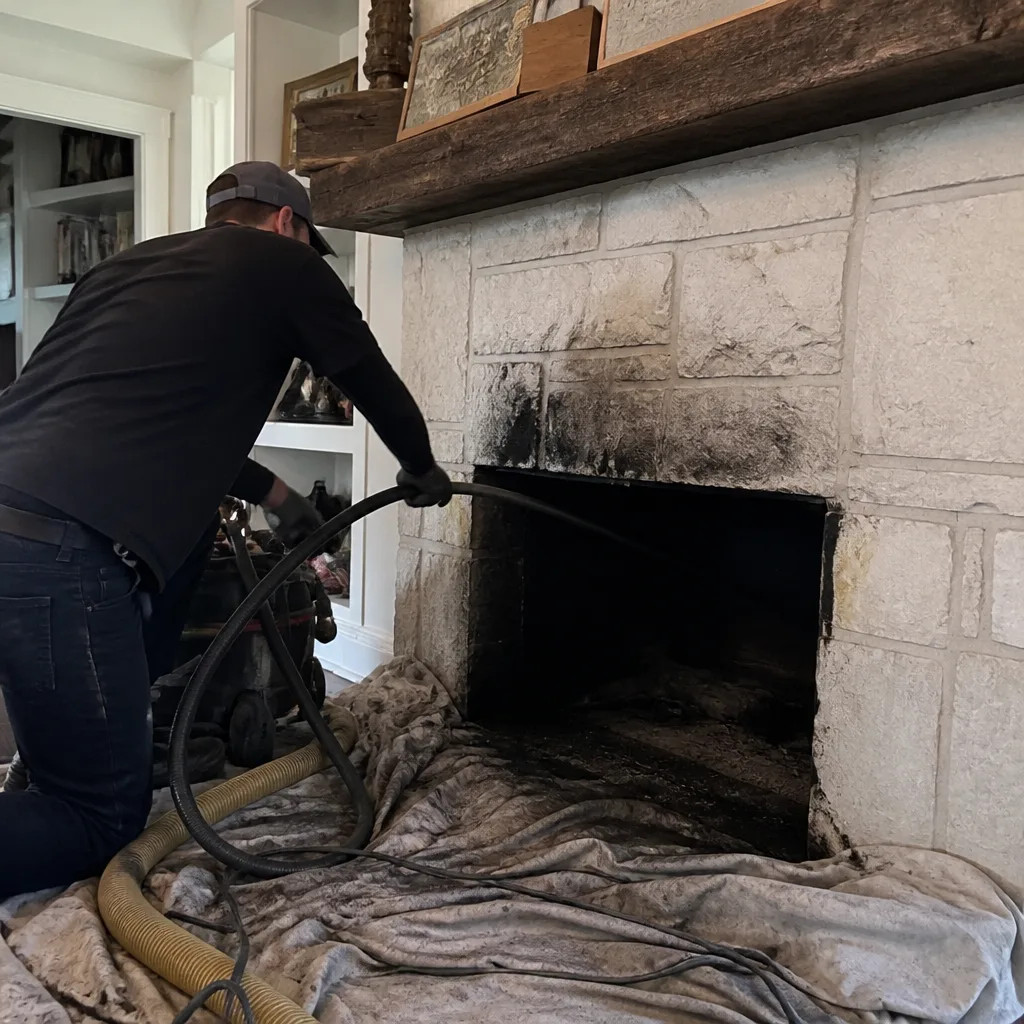 Before
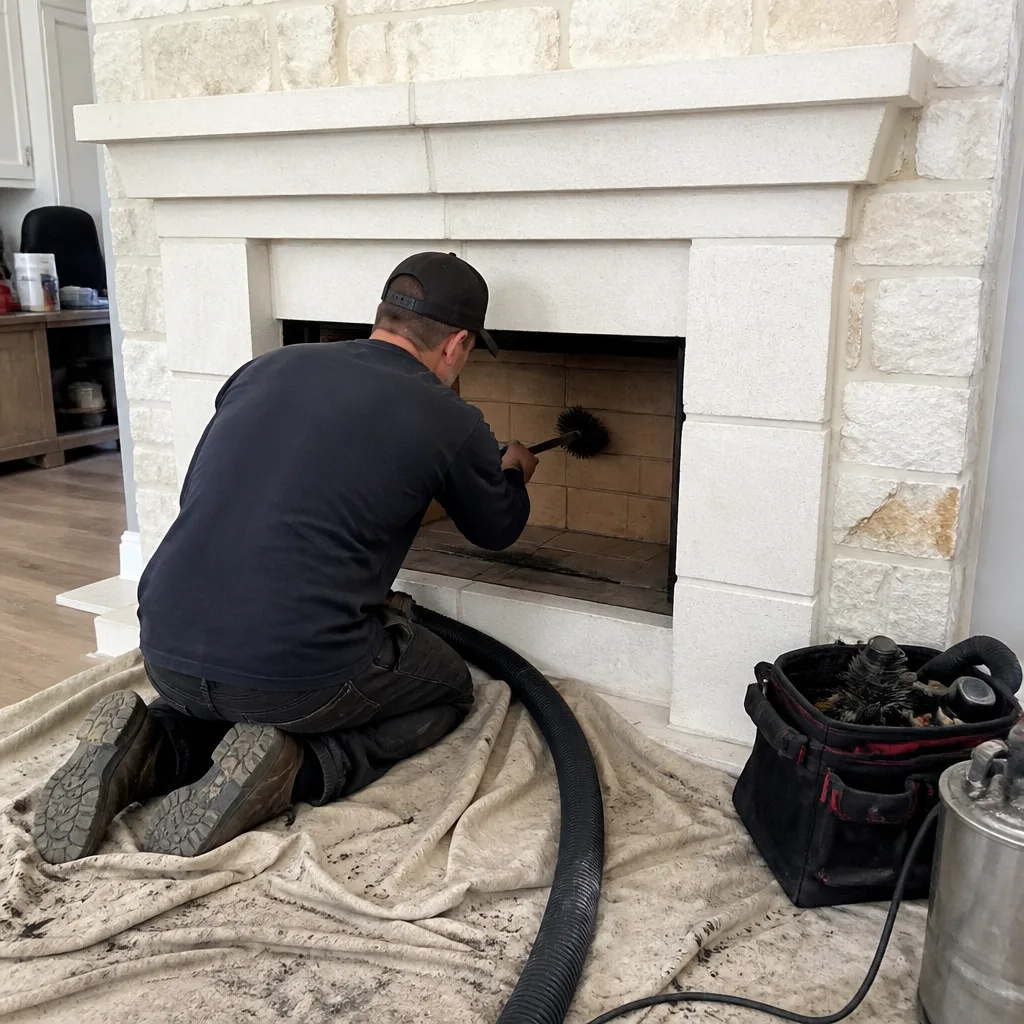 After
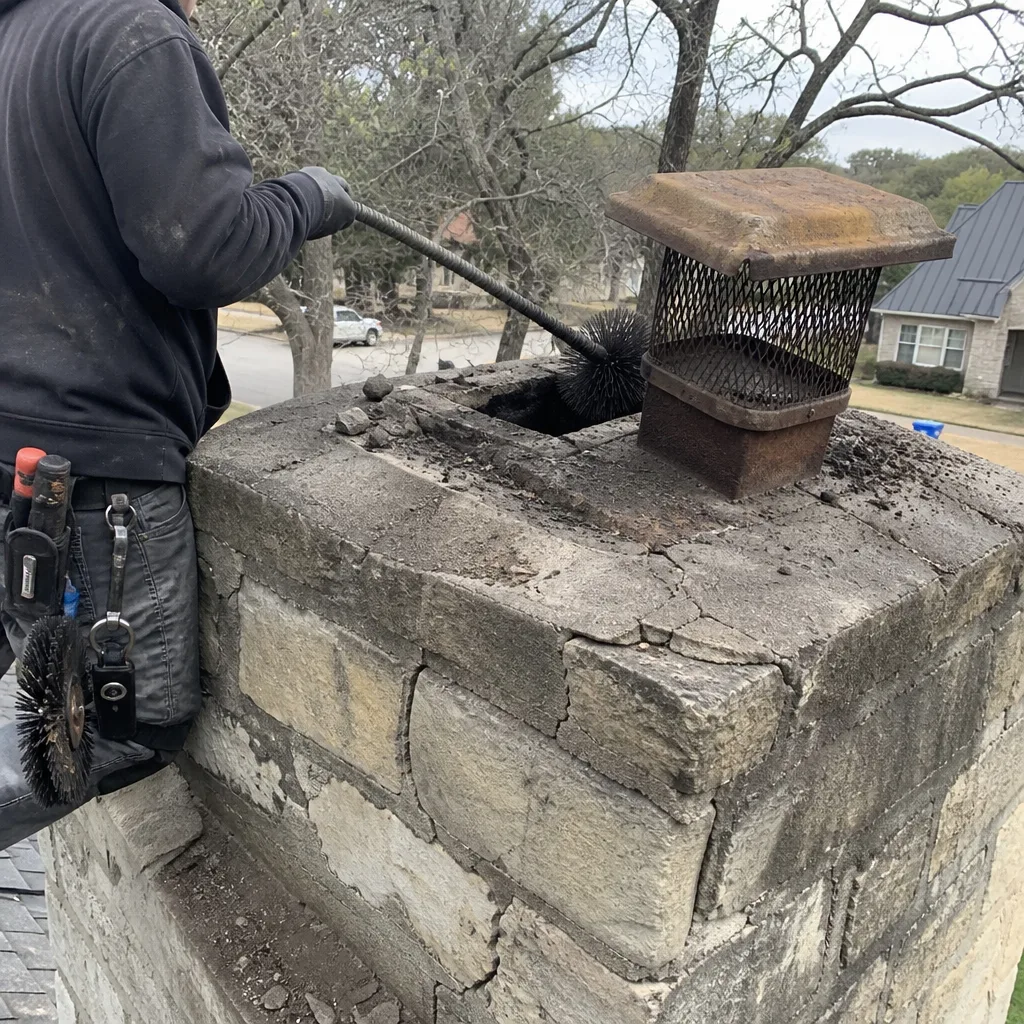 Before
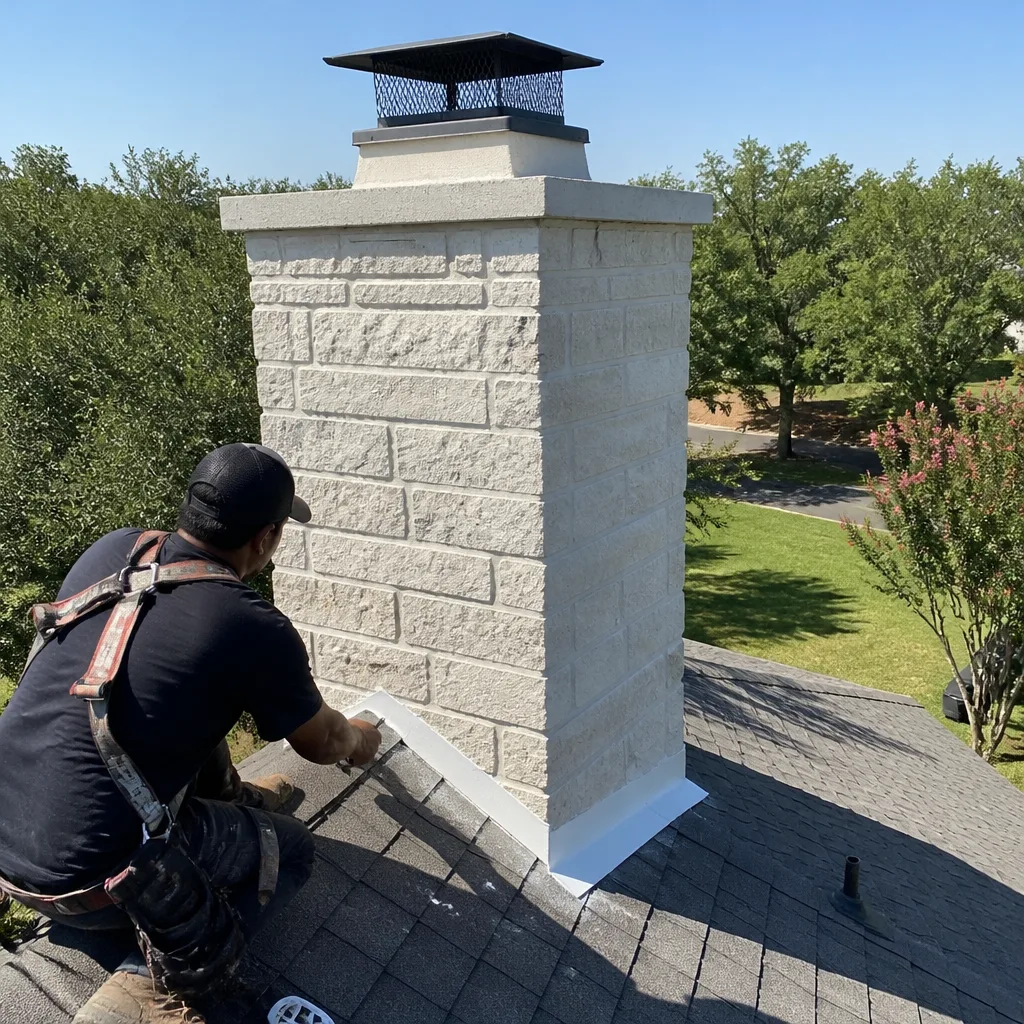 After
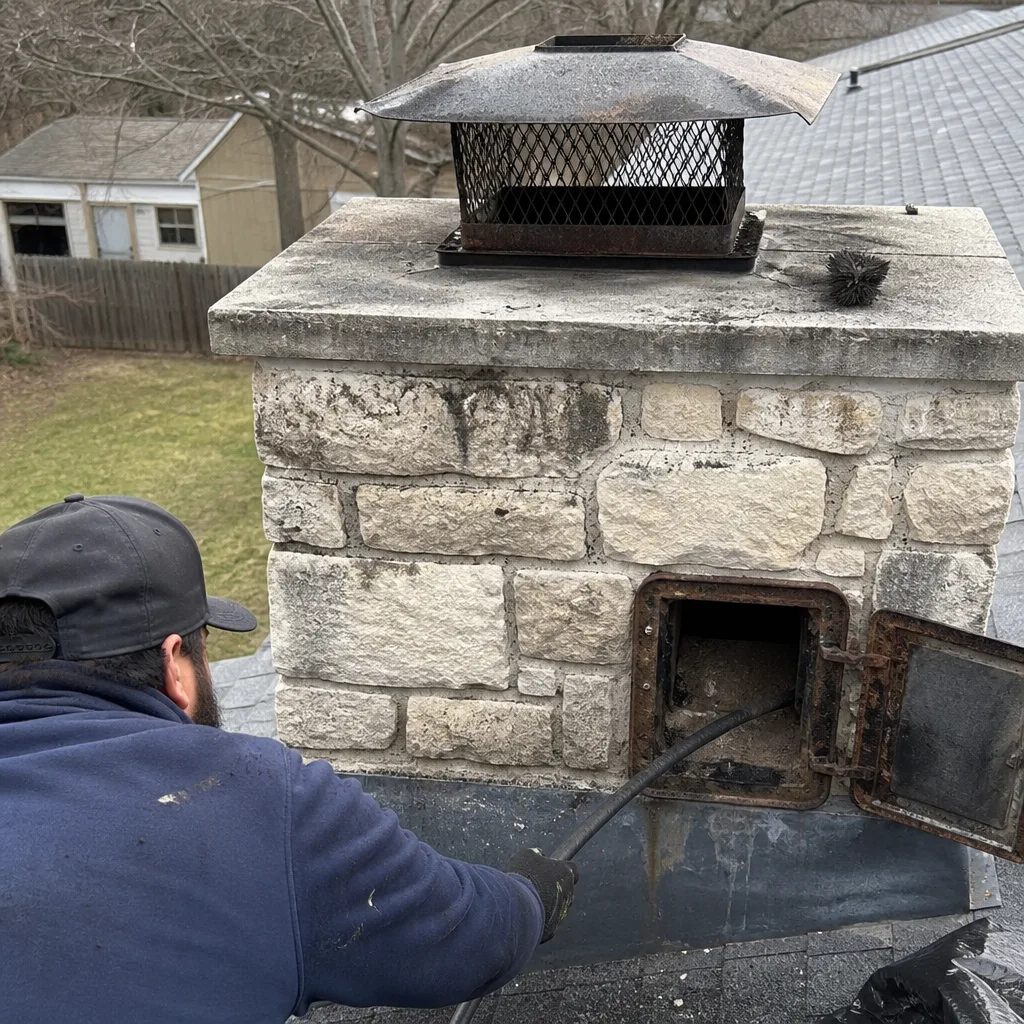 Before
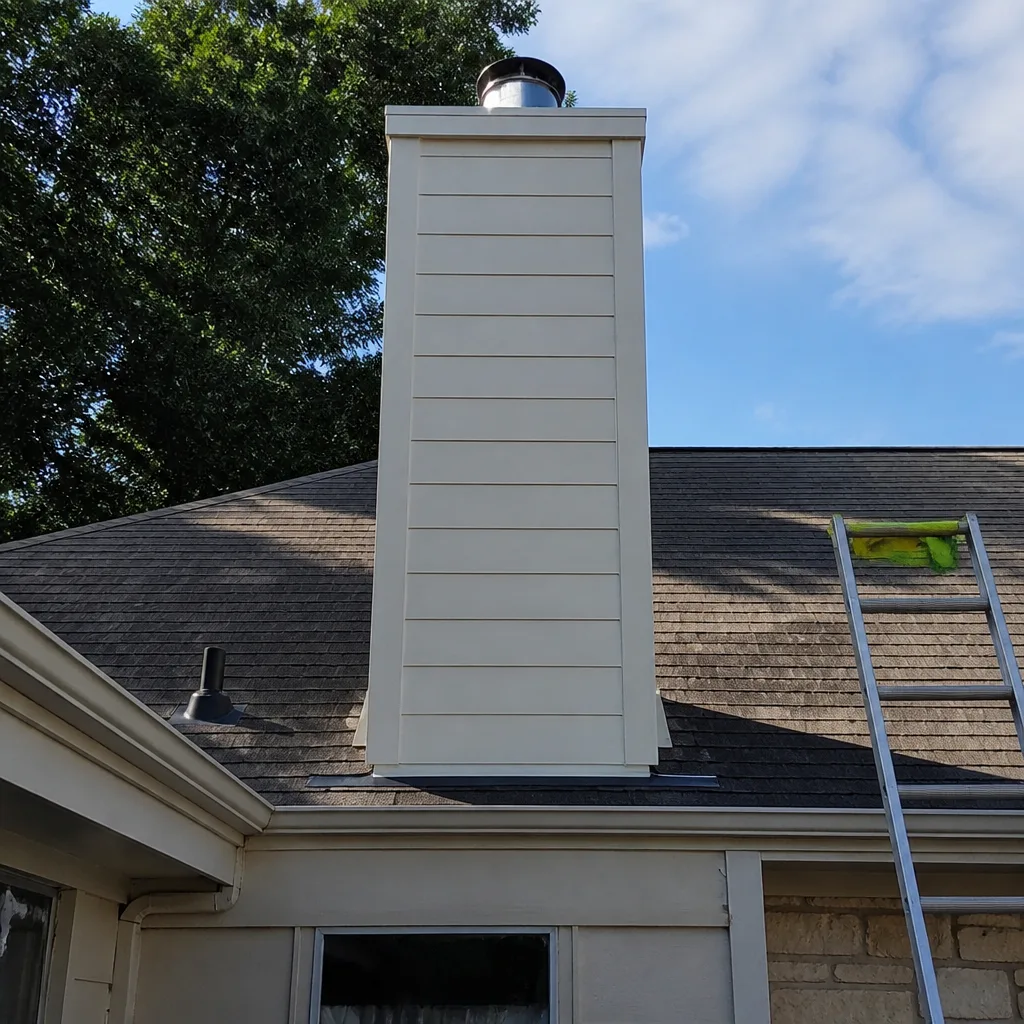 After
When to Call a Professional
Call a professional chimney sweep when you notice any of the signals described in this guide: smoke entering the room, a tar or campfire smell on warm days, white staining or cracks on the exterior chimney, rust or moisture inside the firebox, or animal sounds coming from the flue. If you’ve already had a chimney fire (even a small one you “put out” yourself), call immediately. The liner has been thermally shocked and needs inspection before the fireplace is used again.
If you’re in Georgetown and you’ve noticed any of these warning signs, or you simply haven’t had the chimney inspected in the last year, call us. We offer free estimates, and a sweep always includes an inspection. Resolute Chimney Sweep offers free estimates in Georgetown, call (877) 644-8036. One call covers the sweep, the vent, and the repair. The same team that finds the problem can fix it.
Frequently Asked Questions
A standard chimney sweep and inspection in Georgetown typically ranges from $179 to $325, depending on the chimney’s condition, the amount of creosote present, and whether any access issues are involved. Additional work, like a camera inspection or third-degree creosote treatment, is quoted separately. Call (877) 644-8036 for an exact quote. Estimates are free.
Not every liner defect requires replacement. Minor mortar deterioration between flue tiles can sometimes be repaired without a full reline, and HeatShield resurfacing can restore many damaged liners at a fraction of the cost of replacement. The determining factor is what the camera inspection shows. We never recommend a liner replacement without camera evidence you can see for yourself, and we’ll tell you plainly when a sweep is all that’s needed. Call (877) 644-8036 to schedule an inspection.
The National Fire Protection Association recommends annual inspection and sweeping as needed, and that’s the baseline we use. In Georgetown, the combination of high humidity and the prevalence of unseasoned or softwood burning means many homeowners need a sweep every year, and heavy users (daily burning all season) may need one mid-season. If you notice any of the warning signs in this guide, don’t wait for the annual schedule. Call (877) 644-8036 to have it checked.
Creosote continues to build, and creosote is fuel. The flue narrows, draft deteriorates, and the risk of chimney fire rises. Even without a chimney fire, a heavily loaded flue can cause smoke and carbon monoxide to back into living space. Water damage continues, expanding into mortar joints and liner fractures that become more expensive to repair. Skipping a sweep is never a savings; it’s a deferral that accumulates interest.
That’s third-degree creosote off-gassing. Heat and humidity cause the glazed creosote coating on your flue walls to release odor into the house. It’s not a fire hazard by itself, but it’s a reliable indicator that the flue is heavily loaded with the most combustible form of creosote. Schedule a sweep before the burning season. Call (877) 644-8036.
They’re separate systems, but they share the same stakes: both carry combustion and exhaust products out of your home, and both are fire hazards when neglected. Many chimney companies don’t address dryer vents at all. We do. Our Dryer Vent Cleaning in Georgetown clears the lint buildup that causes thousands of structure fires a year, and it’s handled by the same team that handles your chimney.
The Bottom Line
The chimney problems that damage Georgetown homes and threaten the people in them are not the dramatic, sudden failures. They’re the slow accumulations: the faint smell on a hot July day, the rust on the damper handle, the hairline crack in the crown that widens with each winter, the creosote that glazes over year after year. Each signal has a specific underlying cause, and each is easier to fix the earlier it’s caught. The right material for the repair matters. The right person to identify the problem matters more. If you’ve noticed anything in this guide in your own chimney, call (877) 644-8036. We’ll tell you what it means and what it will take to fix it. Resolute means we see it through.
Written by the team at Resolute Chimney Sweep home, serving Georgetown since 2014.