Last updated October 31, 2026
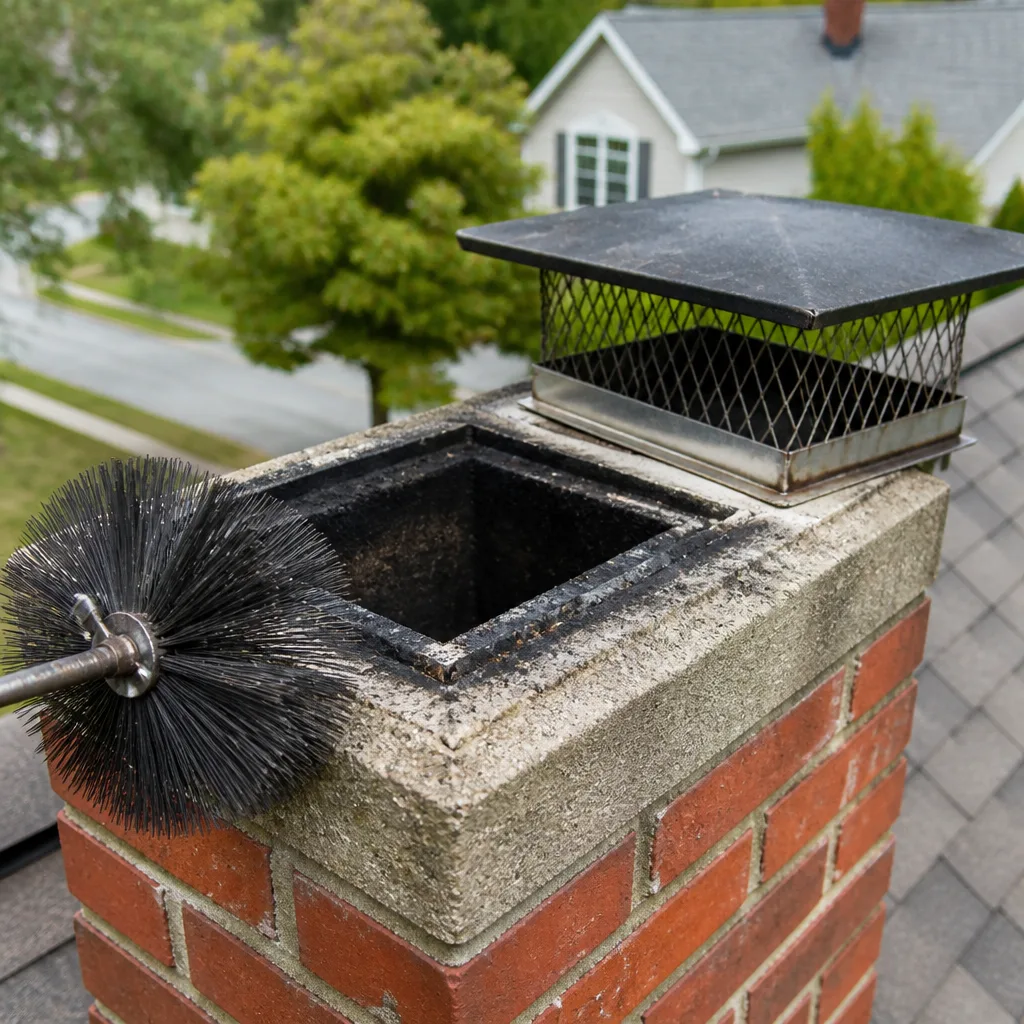 Sweep & inspection
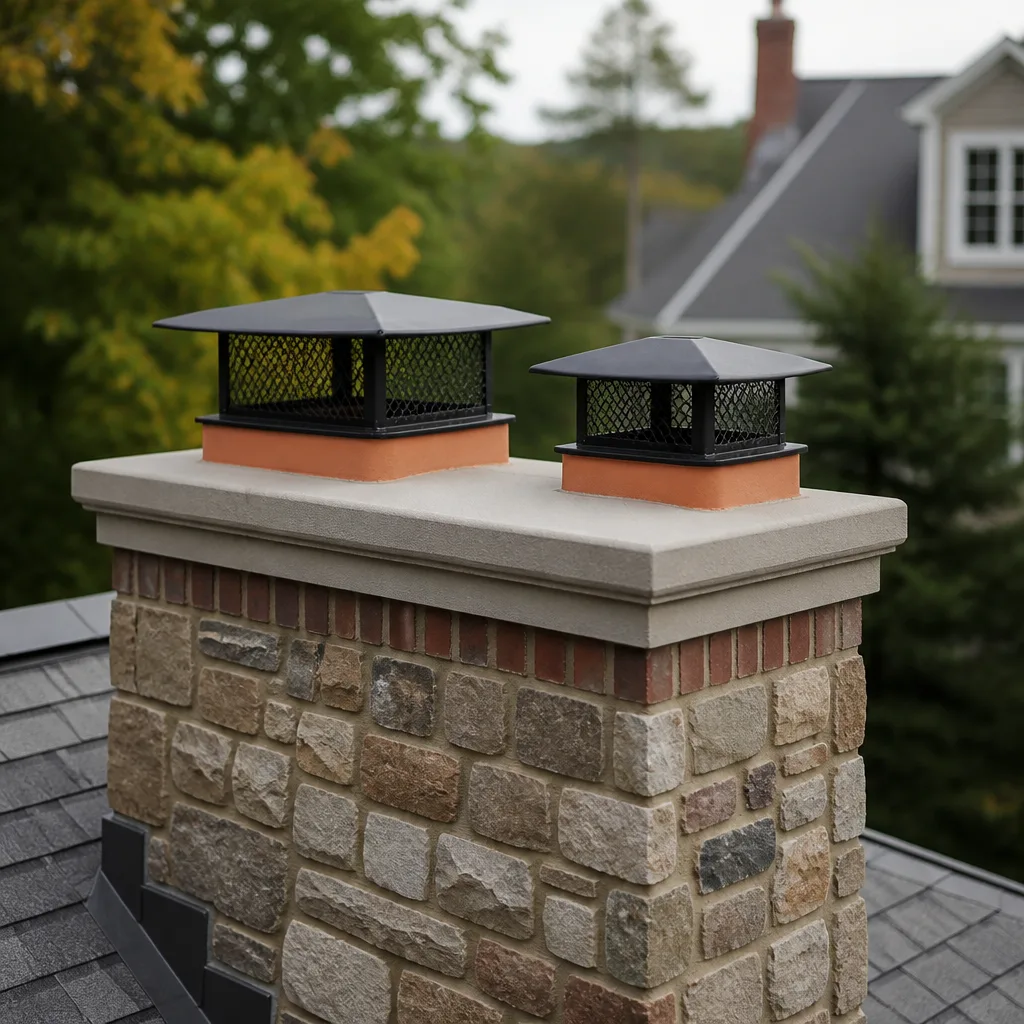 Caps & crowns
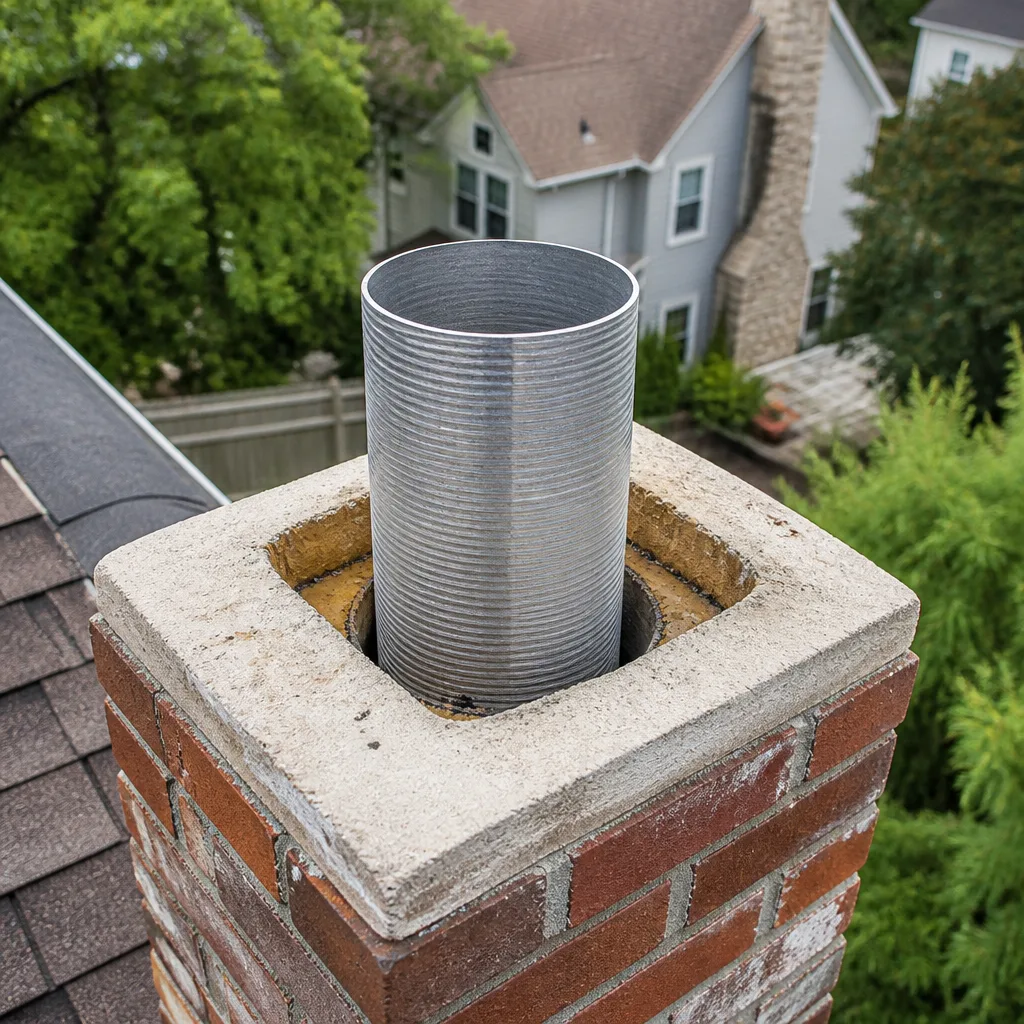 Flue relining
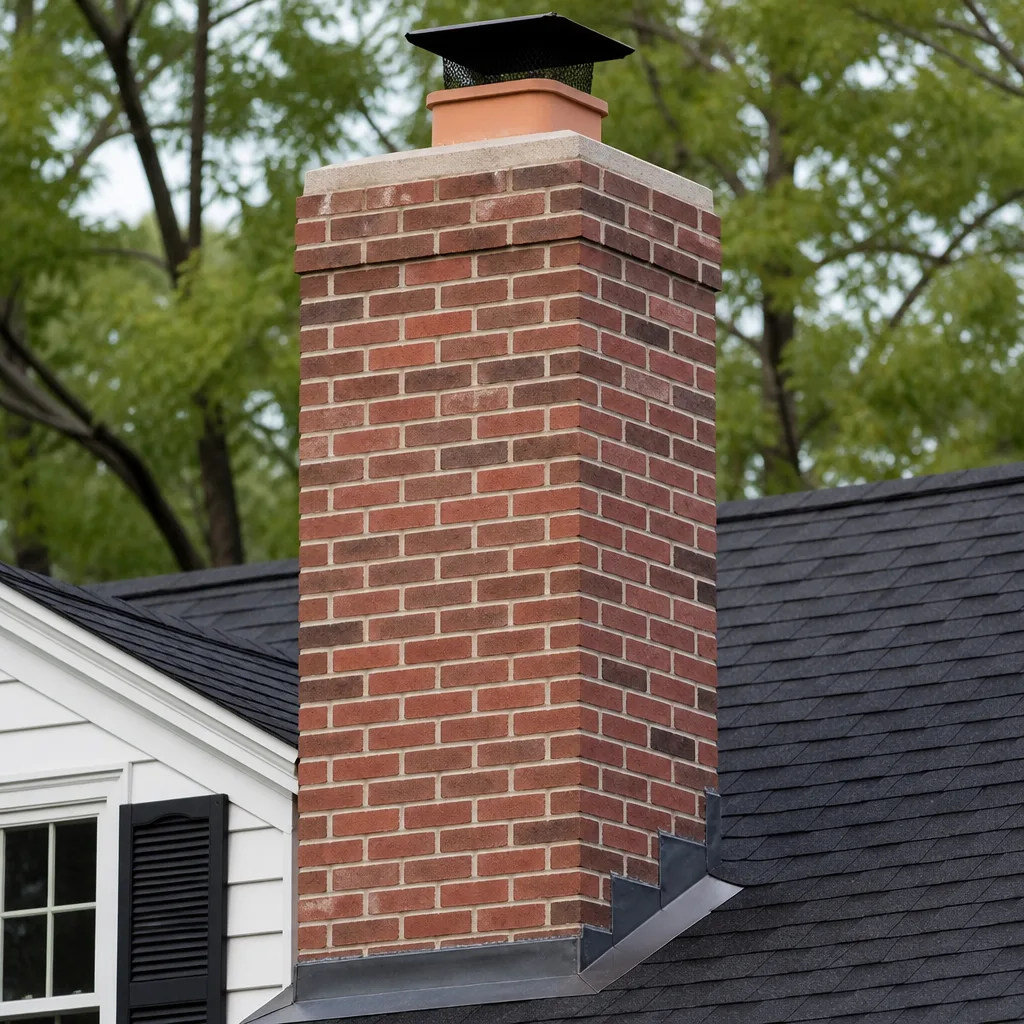 Masonry repair
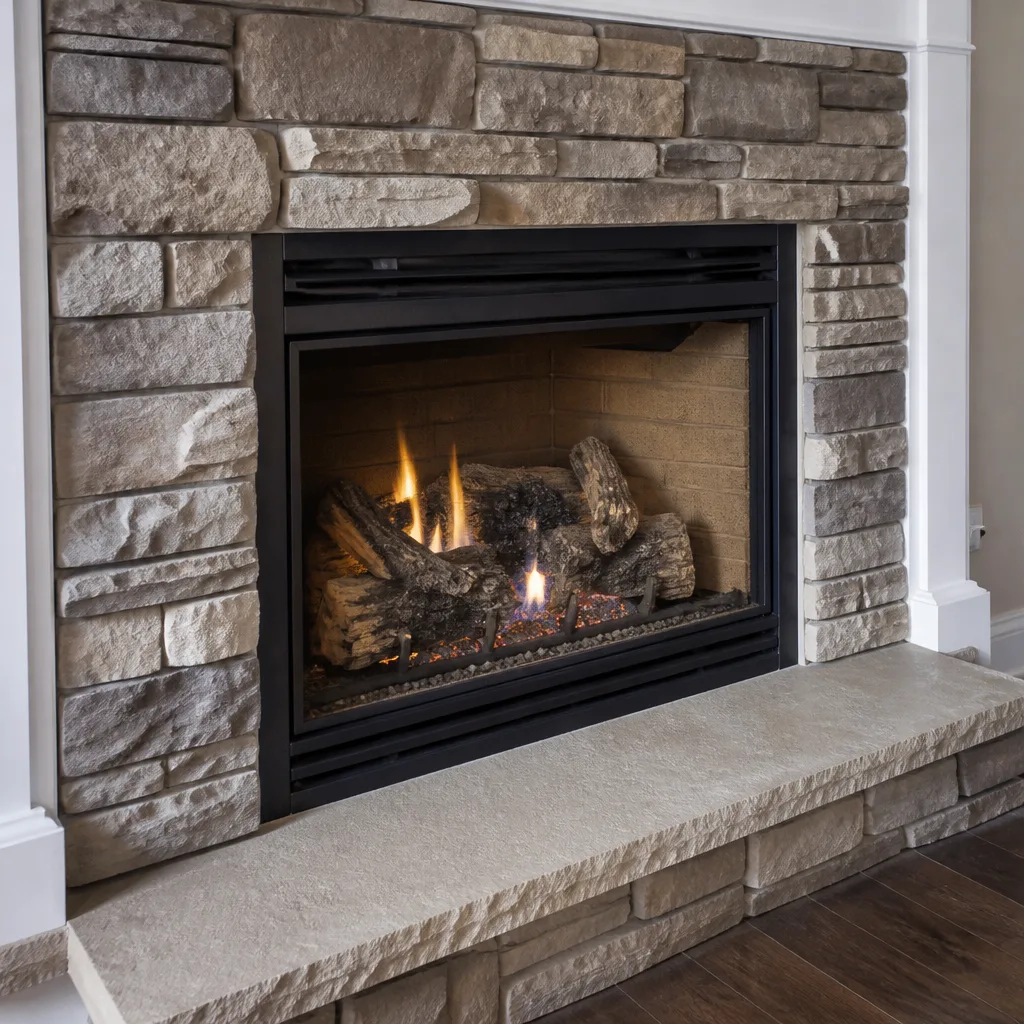 Gas fireplace service
Level 1 sweep and inspection to the NFPA 211 annual standard - flue, crown, cap, and flashing checked and photographed
Chimney sweep logs do not sweep chimneys. They loosen some creosote - which then falls where a brush and vacuum still have to collect it.
Chimney Sweep Troubleshooting: Common Problems and How to Fix Them
A chimney that smokes into the room is rarely a dirty chimney. It’s usually a pressure problem, a sizing mismatch, or a draft reversal caused by competing exhaust fans. Cleaning it won’t fix any of those things. This guide walks through the most common chimney problems homeowners in Georgetown call us about, how to identify the root cause before anyone arrives, and which fixes are simple enough to handle yourself versus which ones require specification-grade materials and a trained technician. We’ll cover smoke rollback, persistent odors, moisture stains, sudden performance drops, and the point where DIY stops being viable.
Quick Answer
Most chimney problems fall into five categories: smoke rollback (pressure or draft issues), persistent odor (creosote, animal matter, or moisture), visible staining (moisture pathways or creosote seepage), sudden performance changes (home weatherization or exhaust appliance installation), and structural deterioration (liner cracks, mortar decay, crown damage). For help selecting a service provider, see our guide on Choosing the Right Chimney Cleaning Brand: A Buyer’s Guide for Georgetown. Roughly 70% of the service calls we respond to in Georgetown are traceable to one of these five root causes, and a trained technician can usually identify the specific issue in under 20 minutes using a systematic diagnostic sequence. The key is reading the symptom accurately before deciding whether it’s a clean-and-monitor situation or a material-grade repair.
Styles & brands we work with
Table of Contents
- Smoke Rollback: The Three Causes and the Test That Tells Them Apart
- Odor Identification: Creosote vs. Animal vs. Moisture
- Why a Chimney That Worked Last Year Suddenly Underperforms
- What White Efflorescence Stains Actually Tell You
- The Point Where DIY Stops and Material-Grade Repairs Begin
- Dryer Vents and Chimneys Share the Same Stakes
- Common Mistakes to Avoid
- When to Call a Professional
- Frequently Asked Questions
Smoke Rollback: The Three Causes and the Test That Tells Them Apart
Smoke rollback is exactly what it sounds like: smoke enters the room instead of going up the flue. It’s the single most common chimney complaint we hear from homeowners in Georgetown, and it’s also the most misdiagnosed. People assume a dirty chimney is to blame. In our experience, that’s the cause less than a third of the time.
There are three distinct causes of smoke rollback, and each requires a different fix:
- Negative pressure: Your home is drawing air down the chimney instead of letting it rise. This happens when exhaust fans (bathroom fans, kitchen hoods, clothes dryers) are running simultaneously, or when the house is tightly sealed and there’s no makeup air source. The chimney becomes the path of least resistance for air entering the home.
- Flue sizing mismatch: The flue is too large or too small for the fireplace opening. A flue that’s too large never gets hot enough to establish a draft. One that’s too small can’t move the volume of smoke the firebox produces. This is a design issue, not a cleaning issue.
- Cold flue column: A chimney that’s been sitting cold for days, especially in Georgetown’s winter temperature swings, holds a column of dense, cold air. When you light a fire, that cold plug has to be pushed out before the warm smoke can rise. Some chimneys handle this fine. Others send the first several minutes of smoke into the room.
The At-Home Test
- Open a window or exterior door in the same room as the fireplace by about two inches.
- Light a small piece of rolled newspaper and hold it near the fireplace opening, at the top of the firebox, where the smoke would enter the flue.
- Watch the smoke. If it drifts upward into the flue with the window open, you have a negative pressure problem. If it still rolls into the room, the flue sizing or cold column is the culprit.
- If a cold column is suspected, warm the flue first: hold a lit piece of newspaper at the top of the firebox, as high as you can safely reach, for 30 to 60 seconds before lighting the main fire.
Negative pressure is often fixable: crack a window when the fireplace is in use, or install a dedicated makeup air vent near the firebox. Sizing mismatches are structural and require either a flue liner change or a firebox adjustment. A professional inspection tells you which category you’re in. If you’re dealing with persistent smoke rollback in the Georgetown area, the team at Resolute Chimney Sweep home walks through this diagnostic sequence on every service visit.
Odor Identification: Creosote vs. Animal vs. Moisture
Odor is the second most common complaint, and homeowners often describe it vaguely: “it smells musty” or “there’s a weird smell when it rains.” The fix depends entirely on what you’re actually smelling. The three sources of chimney odor are chemically distinct, and once you know what to sniff for, you can tell them apart without any special equipment.
- Creosote odor smells like a campfire that’s been doused overnight, acrid and slightly sweet. It intensifies in humidity or after rain. The source is creosote deposits inside the flue absorbing moisture from the air. It’s a cleaning issue.
- Animal intrusion odor smells like decay or a barn, and it’s sharpest at the fireplace opening. The source is a dead animal (usually a bird, squirrel, or raccoon) inside the flue or smoke chamber, or nesting material packed above the damper. It’s a removal-plus-prevention issue.
- Moisture odor smells like wet stone or old basement, and it’s often accompanied by visible dampness on the firebox walls. The source is water intrusion through a cracked crown, failed flashing, or a chimney cap that’s letting rain straight down the flue. It’s a structural issue.
Here’s what each category means for the fix. Creosote odor: a thorough chimney sweep from a qualified company resolves it, and an annual maintenance schedule prevents recurrence. Animal odor: removal is step one, but the lasting fix is a properly fitted cap and a sealed-off spark arrestor, so the animal never gets back in. Moisture odor: you’ll need a crown repair or replacement, possibly flashing work, and in Georgetown’s freeze-thaw climate, delaying this one gets more expensive every winter.
Georgetown’s humidity patterns mean creosote odor is especially common in spring and fall, when temperature swings drive moisture in and out of flue deposits. If you’re not sure what you’re smelling, a Chimney Sweep in Georgetown visit includes odor source identification as part of a standard inspection.
Why a Chimney That Worked Last Year Suddenly Underperforms
This is one of the most frustrating scenarios we encounter: a fireplace that drafted perfectly for years, then suddenly starts smoking, smelling, or struggling. Homeowners want to know what changed. The answer is almost always something else in the home changed.
The three most common culprits we trace in Georgetown homes:
- Weatherization upgrades: New windows, added insulation, sealed attic penetrations, or spray foam in the crawl space all reduce the home’s natural air infiltration. Older homes in Georgetown’s established neighborhoods were built leaky. When you seal them, the chimney suddenly can’t compete with the tighter envelope. The fireplace worked before because the house was letting in enough outside air to feed the fire.
- Kitchen hood installation or upgrade: A new high-CFM range hood, especially a downdraft or island model, pulls a massive volume of air out of the home when running. If the hood is on, the chimney becomes a competing exhaust fan, and the stronger fan wins. This is negative pressure again, but it’s caused by a specific appliance upgrade rather than general tightness.
- Attic ventilation changes: Ridge vents, powered attic fans, or solar attic fans change the pressure relationship between the attic and the living space. Sometimes the chimney is located in a way that makes it sensitive to attic pressure shifts, and the result is a fireplace that only drafts poorly on certain wind days.
None of these are fixed by cleaning the chimney. They’re fixed by understanding the home as a system and either adding makeup air, adjusting how the fireplace is used (open a window, run the hood less), or in some cases re-lining the flue to match the home’s new pressure profile. A professional who treats the chimney as part of the house, not an isolated system, will find the answer faster.
What White Efflorescence Stains Actually Tell You
If you see white, chalky stains on the exterior brick of your chimney, that’s efflorescence. It’s not cosmetic, and painting over it doesn’t fix anything. Efflorescence is dissolved salt left behind when water moves through masonry and evaporates at the surface. It tells you there’s an active moisture pathway inside the chimney structure.
In Georgetown’s climate, the mechanism works like this: rain or condensation enters the masonry through a cracked crown, porous brick, failed mortar joints, or an unsealed flue. The water carries minerals from inside the mortar and brick. When it reaches the exterior surface and dries, the minerals crystallize as white powder. Every white bloom means water moved through that section of the chimney.
What efflorescence specifically tells you:
- The location of the stain traces the moisture pathway. White streaks below the crown point to crown failure. Stains near the roofline suggest flashing problems. General white haze across the face indicates porous brick absorbing rain directly.
- The pattern tells you whether it’s active. Sharp, defined streaks indicate ongoing moisture movement. Faint, uniform haze may be leftover from a previous water intrusion that’s since been repaired.
- The interior consequence is often more serious than the exterior stain. The same water that causes efflorescence is also saturating the flue liner, accelerating creosote breakdown, and weakening mortar joints from inside.
The fix starts with stopping the water at its entry point: crown repair or replacement, flashing replacement, masonry sealing, or a new chimney cap. In some cases, the liner itself is the site of water entry, and relining solves both the moisture problem and the safety concern. We use DuraFlex flexible liner systems for code-compliant relining work in Georgetown homes, because a liner that’s sized correctly and installed properly also improves draft performance.
The Point Where DIY Stops and Material-Grade Repairs Begin
There’s a line between what a homeowner can reasonably handle and what requires a professional’s expertise, a pro-grade material, and the warranty and code compliance that comes with both. That line is usually crossed when the problem moves from the accessible firebox into the flue itself, or from the cosmetic exterior into the structural interior.
Here’s the honest breakdown, based on what we see when we follow up on attempted DIY repairs:
- Safe for DIY: cleaning ash and debris from the firebox after a fire has fully cooled, checking the damper opens and closes smoothly, visually inspecting the spark arrestor from the ground with binoculars, monitoring for new efflorescence, and testing draft with a candle or rolled paper.
- Not safe for DIY: any work involving the flue liner, smoke chamber, crown structure, masonry repair, or damper replacement. These areas are inaccessible without specialized equipment, are subject to building codes, and in the case of liner work, represent the primary barrier between combustion gases and your home’s structure.
When a chimney has a cracked flue liner, the only durable solutions are HeatShield resurfacing or a full DuraFlex reline. Both involve professional-grade materials installed by a certified chimney professional, not hardware-store substitutes. HeatShield specifically is a ceramic resurfacing product that restores the liner’s integrity from inside, and it fills a gap that basic cleaning companies can’t address. If someone tells you a cracked liner just needs to be swept more often, call someone else.
The same goes for crown repairs and masonry work. Georgetown’s freeze-thaw cycles mean small cracks become big cracks within a season or two. A professional-grade crown sealant applied correctly lasts years. A hardware-store patch may not last through one winter. When you’re comparing options, Chimney Repair in Georgetown operates on the principle that the right material, installed correctly, is always cheaper in the long run than the wrong material installed quickly.
Dryer Vents and Chimneys Share the Same Stakes
A lot of homeowners think of dryer vent cleaning as a separate household chore from chimney maintenance. But the physical system is nearly identical: a tube moves hot, particle-laden exhaust from an appliance inside the home to the outside air. When that tube gets blocked or degraded, the consequences are the same: fire risk and carbon monoxide risk.
Dryer lint is the dryer-vent version of creosote. It’s combustible, it accumulates in exactly the wrong places (bends, joints, terminations), and it doesn’t announce itself until the dryer starts taking twice as long to dry a load, the exterior vent flap stops opening, or the laundry room gets unseasonably warm. In a Georgetown home where the laundry room is often off the garage or in a hallway closet, the vent run can be long, with multiple elbows, and lint buildup happens faster than in a short, straight run.
The same diagnostic logic applies: you read the symptoms (longer dry times, hot dryer cabinet, burning smell, vent flap not moving) and you trace the restriction. A blocked dryer vent is a leading cause of residential structure fires in the United States. The fix is a thorough mechanical cleaning of the full vent run, plus an inspection of the termination point to confirm the damper closes properly so birds and rodents don’t make a home in the warm ductwork.
This is why we built Dryer Vent Cleaning in Georgetown into the same service relationship as chimney work. Both systems carry the same stakes: a failure in either means a fire. One company that understands both systems can look at your home as a whole and catch problems that a chimney-only or vent-only company would miss.
Common Mistakes to Avoid
- Assuming smoke rollback means the chimney is dirty. The most common cause is negative pressure, and sweeping won’t fix a pressure problem. Test with a window cracked before you book a cleaning.
- Ignoring efflorescence because it’s “just cosmetic.” White staining is a moisture map showing you exactly where water enters your masonry. Every season you ignore it, the repair scope grows.
- Burning green or wet wood to save money. In Georgetown’s climate, seasoned hardwood means at least 12 months of drying. Green wood produces more creosote per fire than any other variable, and the cleaning bill will eat whatever you saved on firewood.
- Replacing a chimney cap with a generic box-store model. Cap sizing and spark arrestor mesh dimensions affect draft. A cap that’s too restrictive inhibits airflow. One that’s too open lets in rain and animals. Components sourced from professional lines like Gelco or Olympia Chimney are specified for the flue, not approximate guesses.
- Delaying a liner inspection after a chimney fire. Even a small chimney fire can crack a clay tile liner. Once cracked, the flue is no longer a continuous barrier, and the next fire is a different risk level. HeatShield resurfacing or DuraFlex relining is cheaper than a structure fire.
- Treating the chimney and the dryer vent as separate, unrelated systems. They both exhaust combustion byproducts or heat. A home that understands both as a single category of maintenance is a safer home.
- Using the fireplace as a primary heat source without annual inspection. Georgetown winters are mild compared to northern climates, which means fireplaces often go unused for months at a time. Unused flues accumulate animal debris and moisture damage that goes unnoticed until the first fire of the season.
When to Call a Professional
Call a professional when the symptom involves anything inside the flue: smoke rollback you can’t correct with a cracked window, persistent odor you can’t identify, efflorescence that recurs after cleaning, or any suspicion of liner damage. Call after a chimney fire, no matter how small. Call when an animal has died in the flue and you want it removed safely and the cap fitted correctly so it doesn’t happen again. Call when you’re buying a home with a fireplace and need to know what you’re inheriting. Resolute Chimney Sweep offers free estimates in Georgetown, and our chimney repair capability means what we find during a sweep, we can fix, using professional-grade materials like Famco and Copperfield components without referring you to a third party. Call (877) 644-8036.
Frequently Asked Questions
A standard chimney sweep in Georgetown typically runs between $180 and $350, depending on flue condition, fireplace type, and whether the chimney has been serviced recently. The cost includes the cleaning, a visual inspection of accessible flue surfaces, and usually the diagnostic report on anything found. Call (877) 644-8036 for an exact quote. Estimates are free.
The National Fire Protection Association recommends an annual inspection, with sweeping performed whenever creosote accumulation reaches 1/8 inch or more. For The Complete Chimney Sweep Guide for Georgetown Homeowners, see our dedicated resource. For Georgetown homeowners who burn wood regularly during the few cold months we get, that usually means each year before the first fire of the season. Gas fireplaces need less frequent sweeping but still benefit from an annual visual inspection.
Creosote keeps accumulating, especially in the smoke chamber and upper flue where the smoke cools and deposits particles. At a certain thickness, creosote becomes a fuel source for a chimney fire. Even if no fire occurs, the buildup blocks airflow, which increases smoke rollback and sends more particulate into your living space. The cleaning when you finally do it costs more too.
Unless someone has put a camera into your flue and shown you the cracked tile or deteriorating metal, you shouldn’t accept a liner recommendation blindly. A legitimate diagnosis includes photographic evidence. When we recommend lining work in Georgetown, our camera inspection report shows you exactly what we’re seeing. If the liner is cracked, it’s a safety issue, not an upsell. If it’s just dirty, we’ll say so.
When your air conditioner runs, it creates a slight negative pressure in the home, drawing air down the chimney. If the flue is coated with creosote, or if moisture has accumulated in the smoke chamber, that downdraft carries the odor inside. The fix is usually a thorough sweeping plus a chimney cap check. Animal matter produces a different smell, and moisture produces a different smell again. We covered the distinctions above.
Resolute Chimney Sweep handles both. The same diagnostic approach applies: find the restriction, clear it, verify the termination is functioning, and document the work. We built our service scope around the fact that chimneys and dryer vents are physically similar systems with the same safety stakes. Call (877) 644-8036 to book both in one visit.
The Bottom Line
For more guides & resources, explore our blog. Most chimney problems are diagnosable if you read the symptoms correctly. Smoke rollback is usually pressure, not dirt. Odor has three sources, each with a distinct fix. Efflorescence maps moisture pathways. Sudden performance changes trace back to changes inside the home. And when the problem moves into the flue itself, the line between DIY and professional is clear: you need the right material, installed by someone who does this work full-time. Resolute Chimney Sweep is built for that line. We sweep, we vent-clean, and we repair, using professional-grade product lines throughout. One call covers the sweep, the vent, and the repair.
Written by the team at Resolute Chimney Sweep, serving Georgetown since 2014.
See the difference
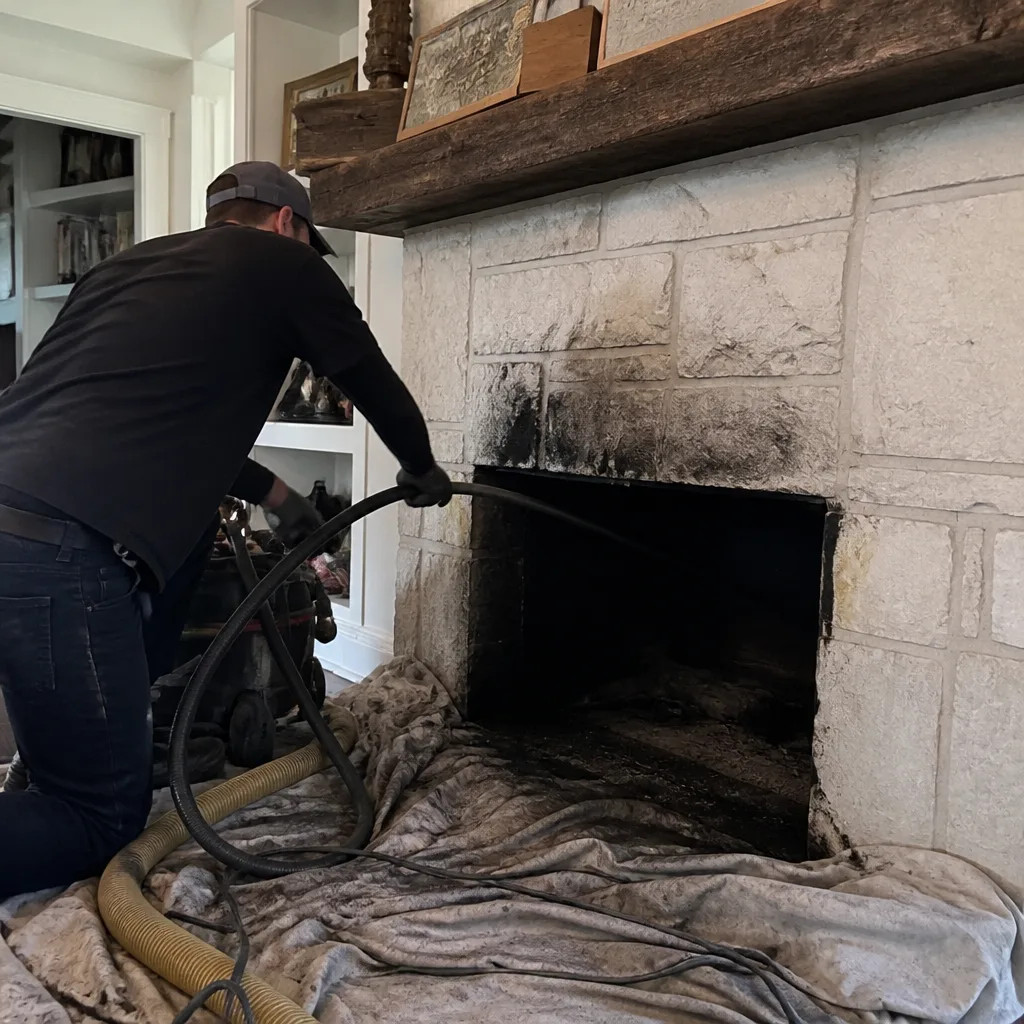 Before
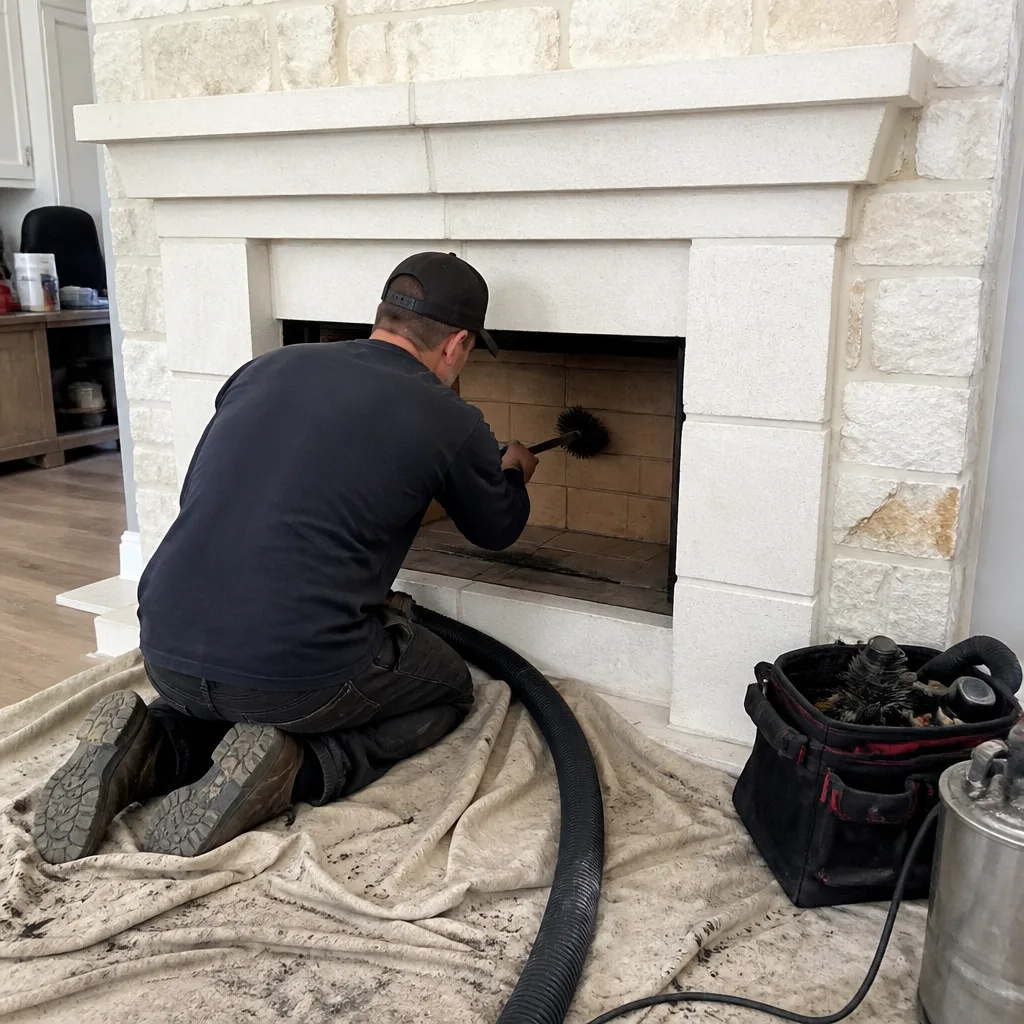 After
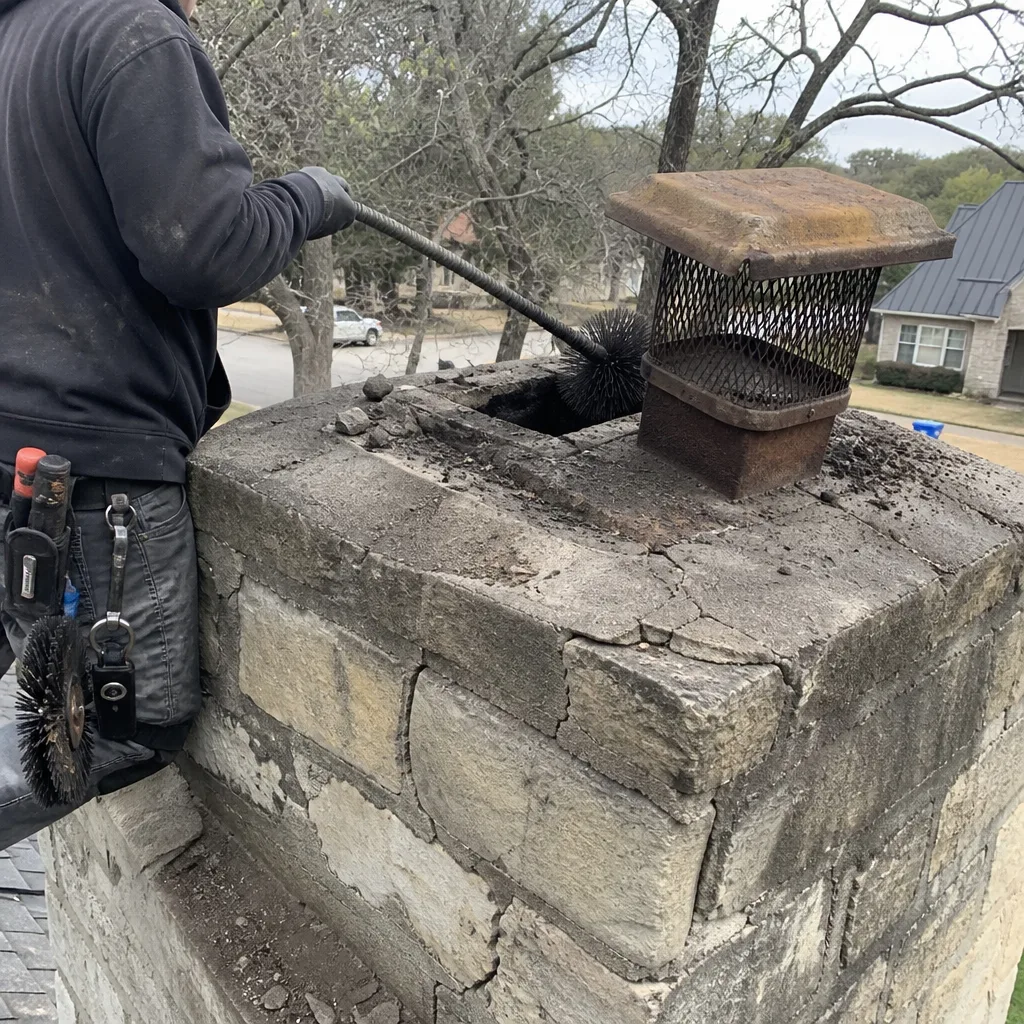 Before
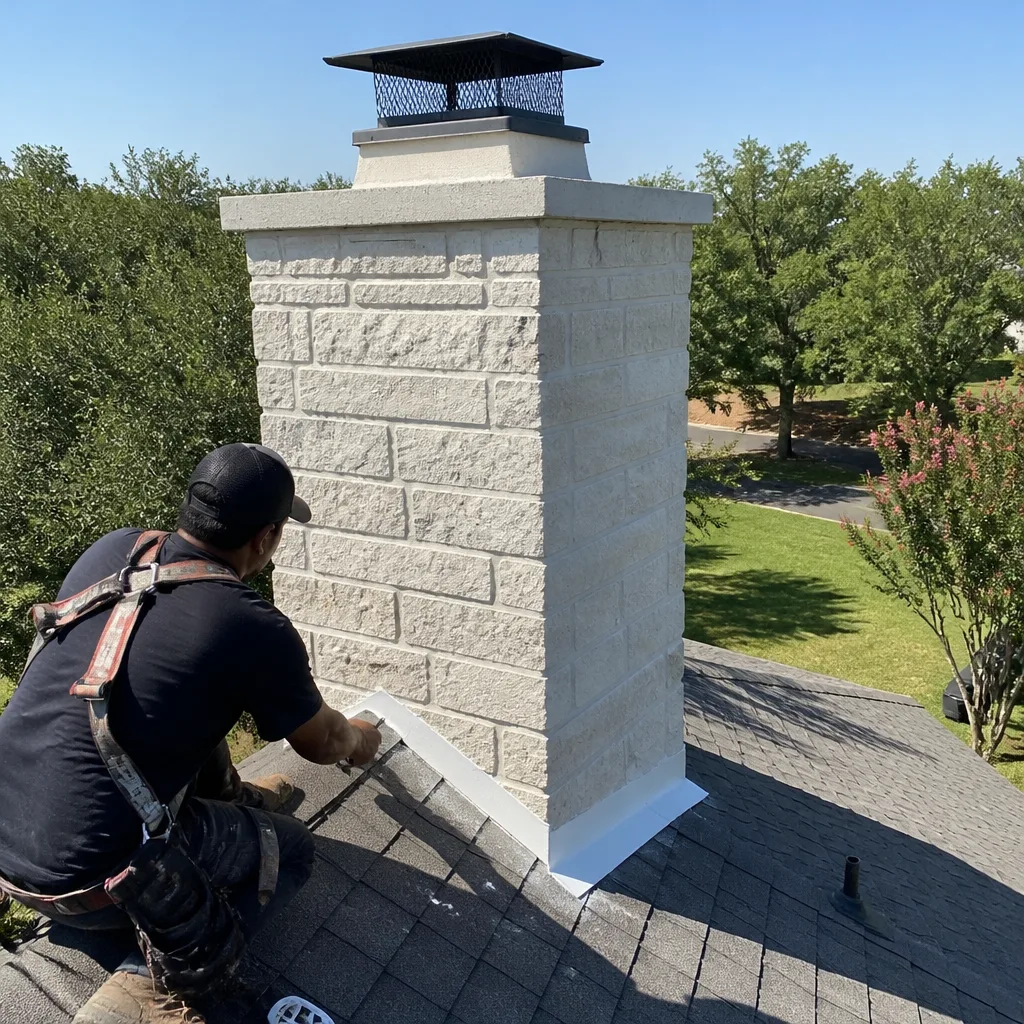 After
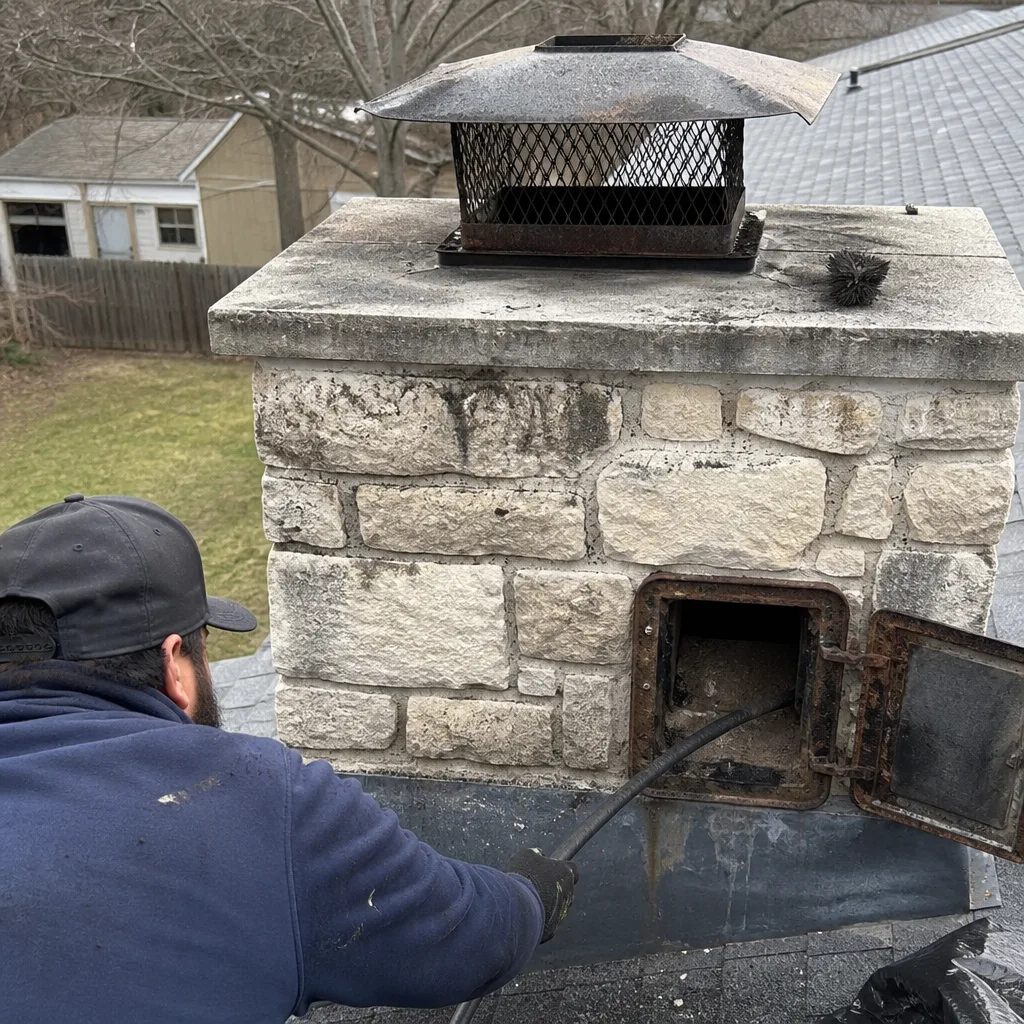 Before
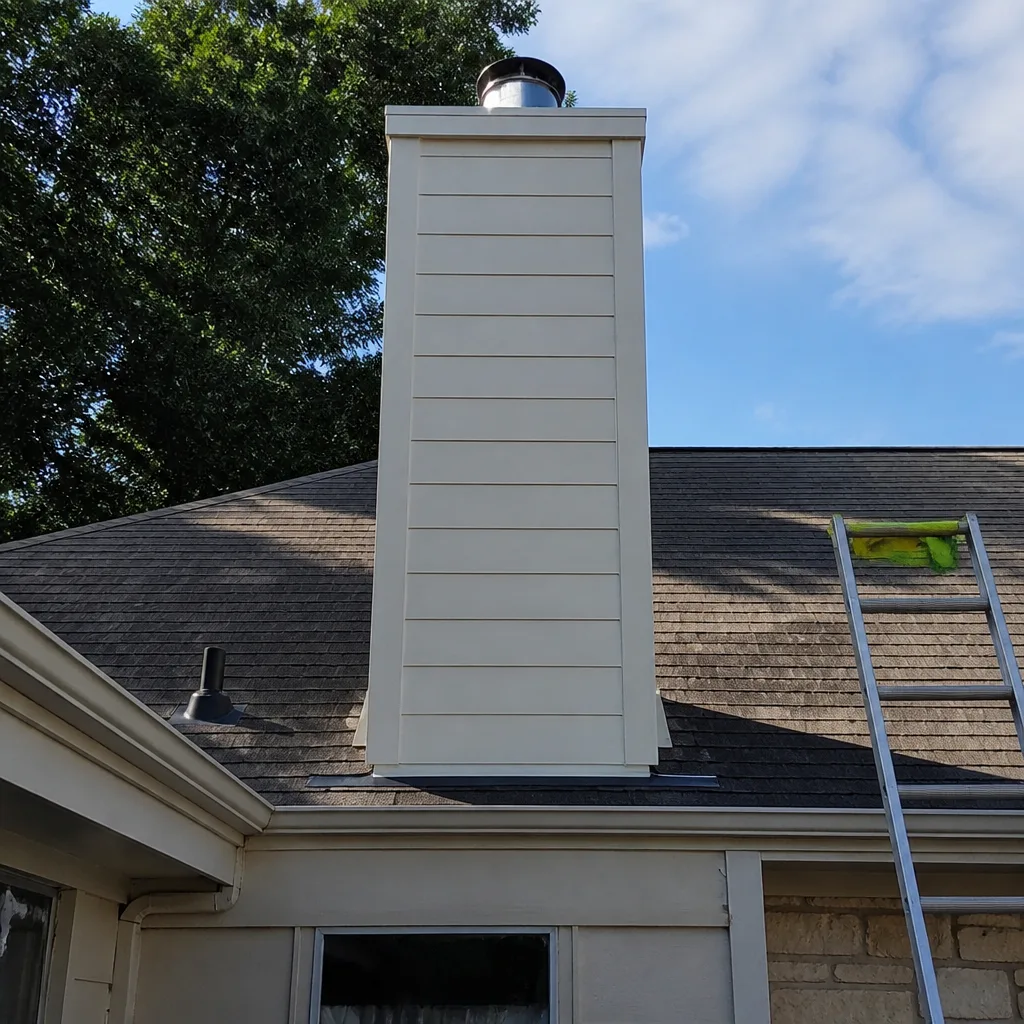 After