Last updated October 31, 2026
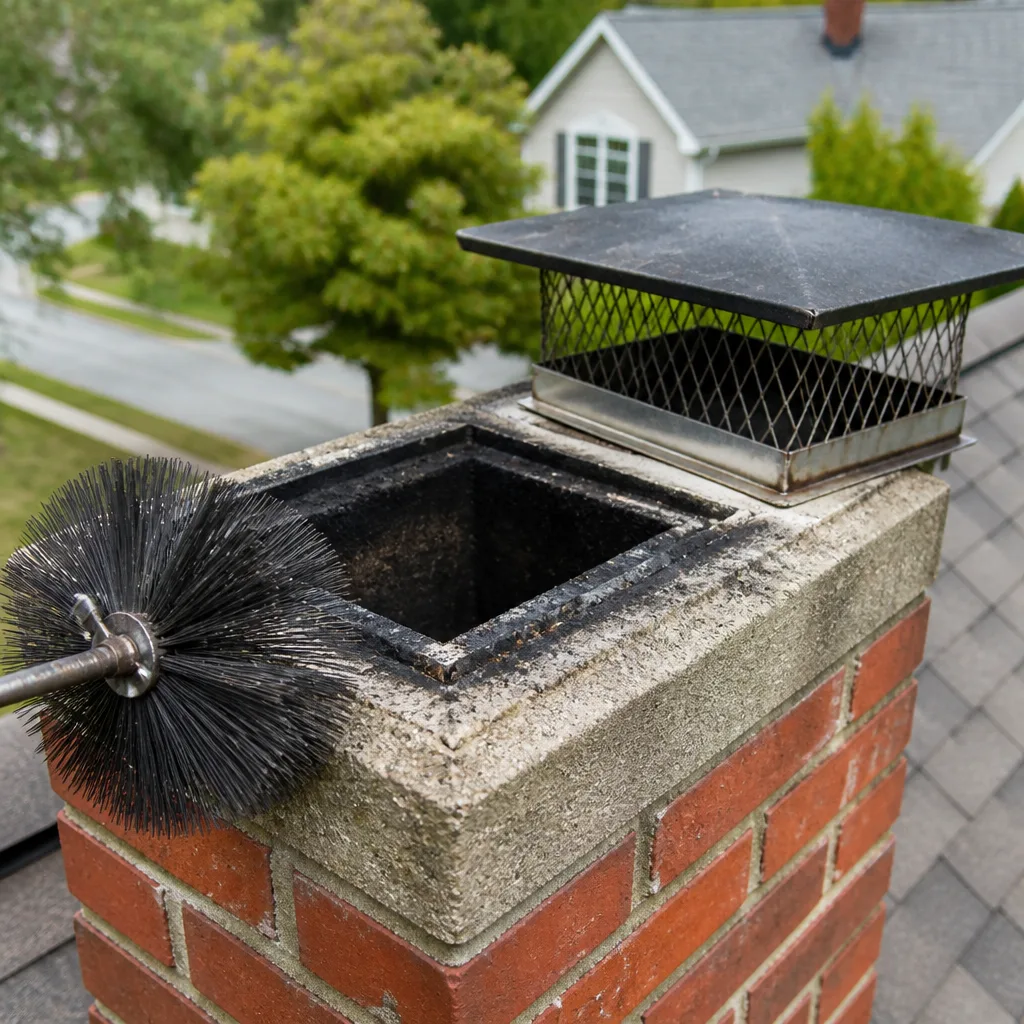 Sweep & inspection
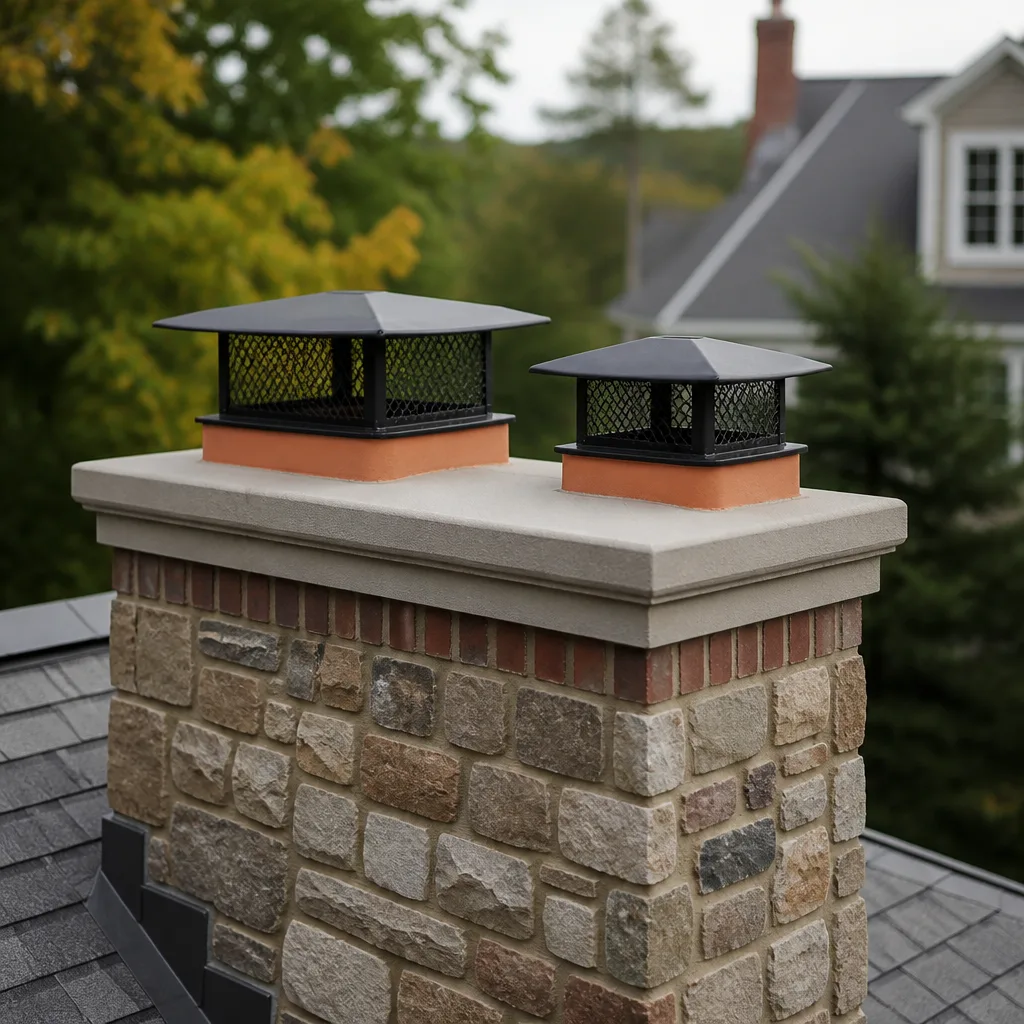 Caps & crowns
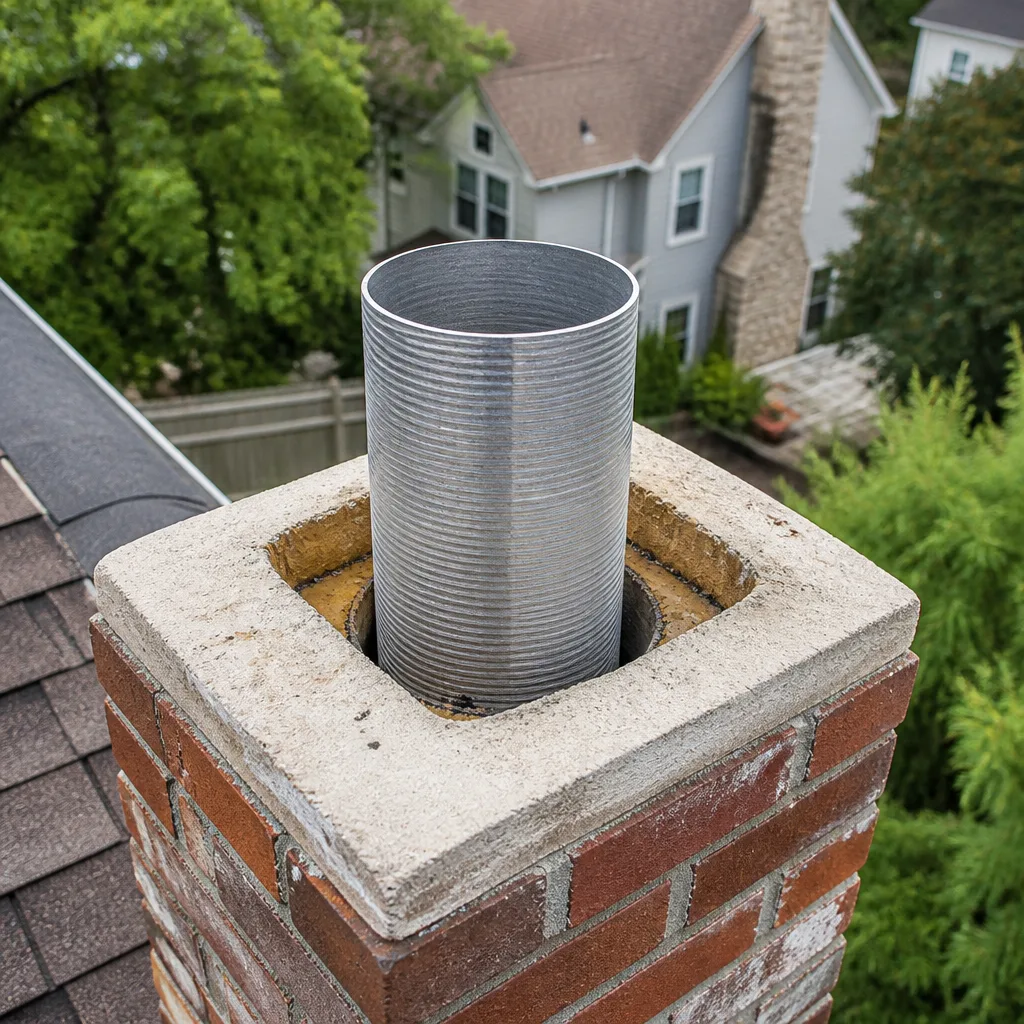 Flue relining
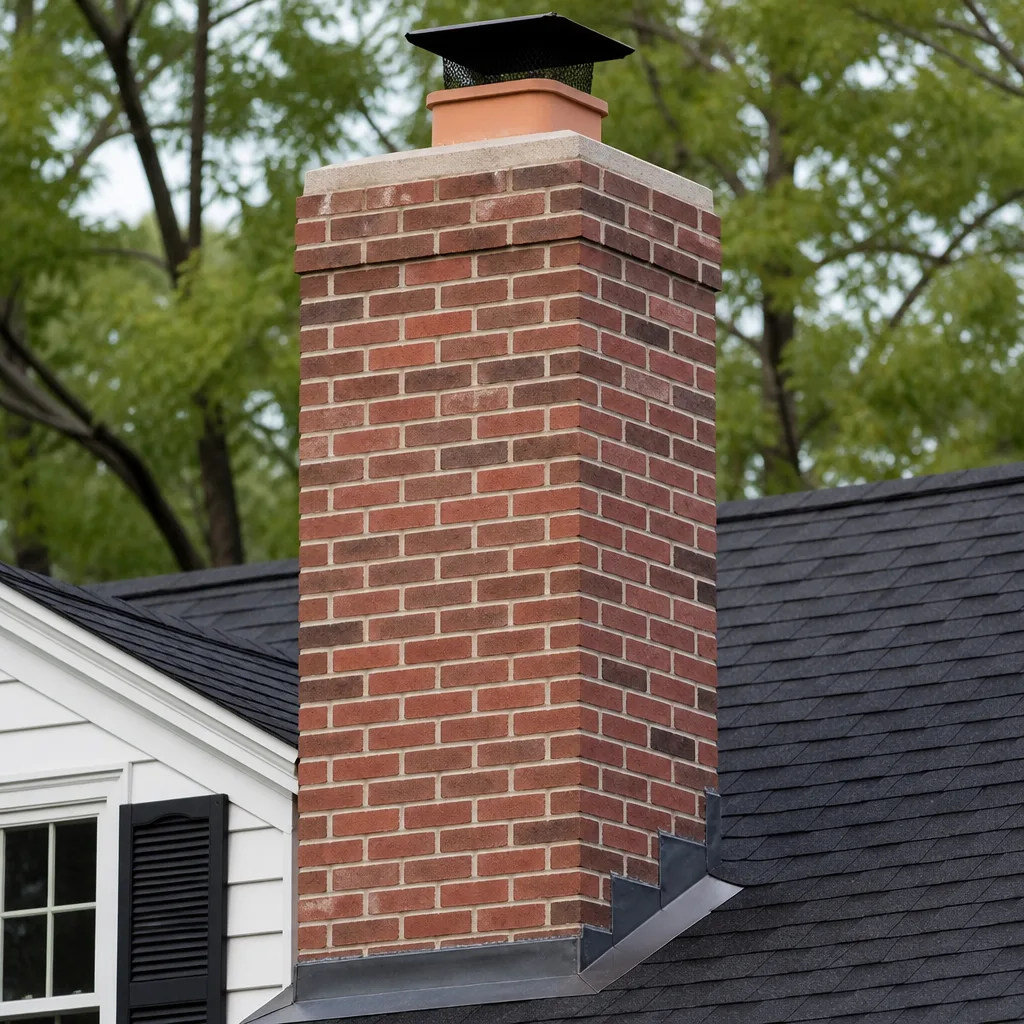 Masonry repair
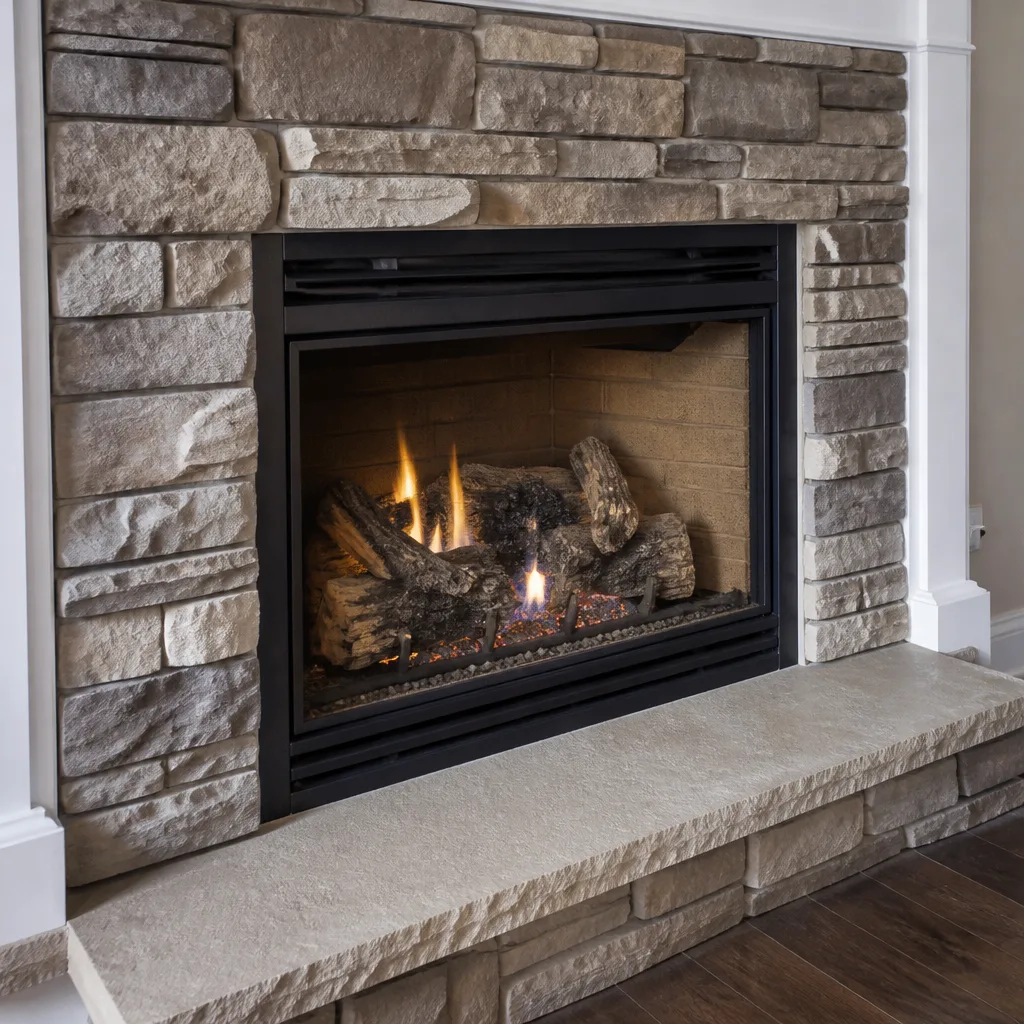 Gas fireplace service
Level 1 sweep and inspection to the NFPA 211 annual standard - flue, crown, cap, and flashing checked and photographed
Chimney sweep logs do not sweep chimneys. They loosen some creosote - which then falls where a brush and vacuum still have to collect it.
Chimney Cleaning Permits, Codes & Inspections in TX: What You Need to Know
Most homeowners in Georgetown assume a chimney sweep is a chimney sweep: someone shows up with brushes, cleans out the soot, and leaves. What they don’t expect is the follow-up conversation about a cracked flue liner, and they’re genuinely surprised when the repair quote mentions something called a permit. The sweep itself is paperwork-free in Texas. The repairs that cleaning uncovers are not. This guide walks through exactly where that line sits, who enforces it, and what happens when a repair gets done without the right sign-offs. For related reading, see our Chimney Cleaning Warning Signs: A Georgetown Homeowner’s Reference Guide. If you heat with wood or gas here in Georgetown, this affects what you can sell your house for and whether your insurance company will actually pay a claim.
Quick Answer
A routine chimney cleaning does not require a permit anywhere in Texas, including Georgetown and Williamson County. However, structural repairs commonly revealed during a sweep, like flue liner replacement, firebox rebuilds, or smoke chamber resurfacing, do require permits through the local building department. Code enforcement follows NFPA 211, the national standard chimney professionals and inspectors reference.
Styles & brands we work with
Table of Contents
- Why Chimney Cleaning Itself Doesn’t Need a Permit
- The Repair Categories That Trigger Permits
- Who Enforces What: State Fire Marshal vs. Williamson County vs. Georgetown
- NFPA 211: The Standard Inspectors Actually Reference
- The Insurance Risk of Unpermitted Chimney Work
- How to Request a Level 2 Inspection Report That Holds Up
- What Permits Cost and How Long They Take in Williamson County
- Common Mistakes to Avoid
- When to Call a Professional
- Frequently Asked Questions
Why Chimney Cleaning Itself Doesn’t Need a Permit
Here’s the straightforward part: sweeping creosote and soot from an existing chimney is classified as maintenance, not construction. You are not altering the structure, you are not changing how combustion gases exit the home, and you are not touching the building envelope. No Texas municipality we’re aware of, Georgetown included, treats a standard sweep as a permit-required activity.
What a sweep does involve is access. A technician gets on your roof or works from the firebox, runs brushes and rods through the flue, and vacuums out what comes loose. The chimney itself is untouched in any structural sense. That’s why the invoice you pay for a cleaning is the entire paper trail: a receipt, not a permit.
That said, a professional sweep in Georgetown should always produce a written inspection report alongside the cleaning, as noted in our Chimney Sweep Maintenance Checklist for Georgetown Homeowners. This is not a permit, but it functions as a maintenance record. Insurance companies occasionally ask for it after a fire, and real estate disclosures in Williamson County have been known to request documentation of routine maintenance. Keep it.
The confusion starts because chimney companies offer both cleaning and repair. A single visit can produce a cleaning invoice and, separately, a repair recommendation that does require city paperwork. Homeowners often conflate the two. That’s the gap this guide exists to close.
The Repair Categories That Trigger Permits
In Georgetown and across Williamson County, permits follow the work, not the word “chimney.” If a repair changes how the chimney performs, how it’s anchored, or what materials carry the exhaust, the city wants to review it. Below are the categories we see trigger permit requirements most often in this market.
- Flue liner replacement or relining: Installing a new stainless liner, whether rigid or flexible, alters the exhaust pathway. In Georgetown, this falls under mechanical and fuel-gas permitting. If the liner changes size or material, it also triggers a review against the appliance’s BTU rating.
- Smoke chamber resurfacing: Parging or resurfacing the smoke chamber with a product like HeatShield changes the interior geometry of the chimney. Because it affects draft and clearance to combustibles, inspectors want it on record.
- Masonry rebuilds above the roofline: If a crown replacement extends into rebuilding courses of brick, you are now in structural territory. A crown-only repair may not need a permit. Rebuilding eight courses of brick does.
- Firebox modification or rebuild: Anything that changes the firebox dimensions, refractory materials, or clearance to framing requires review. This is a fire-containment boundary, and the city treats it as such.
- Gas appliance conversion: Switching a wood-burning fireplace to gas logs, or installing a gas insert, is a mechanical change. It involves a gas line, a different venting profile, and often a new liner. This is one of the most commonly unpermitted chimney projects we see in Georgetown.
If you’re unsure whether your specific repair needs a permit, the test is simple: does the work change what’s already there, or just clean it? Cleaning is maintenance. Changing is construction. When in doubt, call the Williamson County building permit office and describe the scope. They’d rather answer a question upfront than inspect a problem later. If you call Resolute Chimney Sweep home, we can tell you during the estimate whether your job falls on the permit side of that line.
Who Enforces What: State Fire Marshal vs. Williamson County vs. Georgetown
Texas splits chimney oversight between state-level fire prevention and local building departments. Understanding who does what prevents a lot of wasted phone calls.
The Texas State Fire Marshal’s Office sets fire safety standards and investigates fires. They do not issue building permits for residential chimney repairs. Their role enters the picture after something goes wrong: a fire investigation, a code enforcement action, or a complaint involving a clearly hazardous installation. They reference NFPA 211 during investigations, but they are not the entity you call to pull a liner permit.
Williamson County handles permitting for unincorporated areas of the county. If you live outside Georgetown city limits but within Williamson County, you pull your chimney repair permit through the county. The county reviews firebox rebuilds, liner installations, and structural work using the adopted building code and NFPA standards as reference points.
The City of Georgetown operates its own building inspection and permitting department. If you have a Georgetown address, this is your authority. The city reviews chimney repairs that alter the structure or the mechanical exhaust system. They inspect the work before it gets closed up, which is one reason a contractor who says “we don’t need to pull anything” should give you a specific regulatory citation for why not. A phrase like “the city doesn’t care about residential” is, in our experience, often a signal of a contractor who doesn’t want the delay or the inspection fees.
One point of overlap: both the county and the city defer to NFPA 211 on technical questions. That standard, not local opinion, dictates clearances, liner sizing, and material requirements. A contractor who can cite the relevant NFPA 211 section when explaining why your flue needs a specific liner is working from the same playbook as the inspector.
NFPA 211: The Standard Inspectors Actually Reference
NFPA 211 is the National Fire Protection Association’s Standard for Chimneys, Fireplaces, Vents, and Solid Fuel-Burning Appliances. It is not a law in Texas, but Georgetown and Williamson County inspectors use it as the technical benchmark when reviewing chimney work. Think of it as the engineering rulebook behind the permit.
What NFPA 211 actually covers in a residential chimney context:
- Clearances to combustibles: How far the chimney and connector pipe must sit from framing, insulation, and other burnable materials.
- Liner requirements: When a flue liner is required, what materials qualify, and how a liner must be sized relative to the appliance it serves.
- Inspection levels: The three-tier inspection system (Level 1, Level 2, Level 3) that dictates how thoroughly a chimney must be examined under different circumstances.
- Maintenance triggers: The standard’s guidance on when creosote accumulation or structural deterioration has reached a point where continued use is unsafe.
A repair contractor doing permit-required work in Georgetown should be able to tell you which NFPA 211 provision applies to your chimney. “Your flue liner has separated at the tile joints, which under NFPA 211 means the chimney is no longer suitable for continued use” is a statement that gives an inspector something to verify. “You need a new liner because it’s old” does not. For help diagnosing such issues, see our Chimney Sweep Troubleshooting: Common Problems and How to Fix Them.
For the homeowner, NFPA 211 matters even beyond permits. Insurance adjusters reference it during claims. Home inspectors reference it during real estate transactions. A chimney that fails an NFPA 211 Level 2 inspection becomes a negotiating point in a sale and a potential denial point in a claim. This is why the inspection report from Chimney Sweep in Georgetown matters as much as the cleaning itself: the report is your documentation that you met the standard.
The Insurance Risk of Unpermitted Chimney Work
Here is the section most Georgetown homeowners skip until they cannot skip it anymore. Texas has no statute requiring insurance companies to cover damage caused by or involving unpermitted work. What that means in practice: if you have a chimney fire and the adjuster’s investigation finds that a liner replacement was done without a permit, the claim can be denied or reduced on the grounds that the work was not inspected or code-verified.
This is not hypothetical. Post-fire investigations routinely examine the firebox, flue, and surrounding framing. An unpermitted liner leaves a paper trail gap: no permit application, no inspection record, no final sign-off. The insurance company then has grounds to argue that the work may not have met code, and that the unverified condition contributed to the loss. In Texas, the burden shifts to the homeowner to prove the work was done correctly. Without a permit record, that proof is hard to produce.
The same issue surfaces during home sales. Williamson County real estate transactions commonly include a seller’s disclosure asking about any work done without required permits. Answering honestly creates a title problem. Answering dishonestly creates a liability problem. Neither option is good.
There is a secondary risk many homeowners miss: some policies contain exclusions for losses caused by “faulty workmanship” or “defective installation.” An unpermitted repair is the definition of a target for that exclusion. The inspector’s report from Chimney Repair in Georgetown, when done properly, creates the opposite: a documented, inspected, permit-backed record that insulates you from the workmanship exclusion argument.
Our practical advice in Georgetown: if a contractor tells you a repair “doesn’t need a permit,” ask for the specific exemption in writing. Email works. If they cannot provide a code citation, pull the permit anyway. The few hundred dollars a permit costs is less than the deductible on a denied chimney fire claim, and it is certainly less than what title repair costs when a sale collides with an undisclosed unpermitted liner.
How to Request a Level 2 Inspection Report That Holds Up
A Level 2 inspection is the mid-tier chimney inspection defined by NFPA 211. It includes everything in a Level 1 visual inspection plus access to attic, crawl space, and exterior roofline areas, and it typically involves a camera scan of the flue interior. This is the inspection insurance underwriters and real estate transactions most often request in Georgetown.
Getting one that actually satisfies those parties requires more than calling and saying “do a Level 2.” Here is the step-by-step:
- State the purpose upfront. Tell the chimney company whether this inspection is for an insurance review, a home sale or purchase, or a post-incident evaluation. The reporting requirements differ. An insurance-focused Level 2 should reference NFPA 211 chapter and section citations where defects are found.
- Request camera documentation. A written description of a crack is opinion. A still image or video frame from a flue camera is evidence. Ask that the report include images of any defect the technician identifies.
- Ask for a written pass/fail against the standard. “The flue shows minor creosote accumulation but is suitable for continued use” is a clear statement an underwriter can accept. “Some buildup noted” is not.
- Get a repair scope in the same report. If the inspection finds issues that require permit work, the report should say so explicitly. “Flue liner replacement recommended per NFPA 211, permit required through City of Georgetown” is the kind of sentence that makes the next steps unambiguous.
- Keep the report with your homeowner records. This is not just for a transaction. It is your baseline. If something changes later, you have documentation of the condition at a specific point in time.
In Georgetown, a Level 2 inspection typically costs more than a standard sweep-and-Level-1 because of the camera equipment and the added time on the roof and in the attic. The cost is predictable and should be quoted before the appointment. If the report includes photos and NFPA references, it is worth the added cost if you are buying, selling, or filing any kind of insurance claim.
What Permits Cost and How Long They Take in Williamson County
Permit costs in Williamson County and the City of Georgetown are modest, especially compared to the repair work they govern. Exact fees change periodically and depend on the scope of the project, so treat the figures below as the range we currently see for typical residential chimney repairs in this area.
- Liner replacement or relining permit: roughly $50 to $150 depending on the valuation of the work and whether it is filed as mechanical or residential alteration.
- Firebox rebuild or masonry structural repair permit: roughly $75 to $250 depending on the declared project cost and the inspection count.
- Re-inspection fee (if the first inspection fails): typically $50 to $100 per additional visit. This is the hidden cost of a sloppy install: the permit itself is cheap, but a failed inspection costs both money and time.
- Turnaround for a simple permit: often 1 to 5 business days in Georgetown for straightforward liner or firebox work. Larger structural projects can take longer.
What tends to surprise Georgetown homeowners is not the fee, it is the inspection sequencing. The inspector needs to see the work before it gets covered up. In a liner installation, that means the inspector verifies the liner is properly sized, connected, and terminated before the top plate and cap get fully sealed. If a contractor says they finished everything and then asks about pulling a permit, you have a sequencing problem: the inspector cannot verify what is already sealed. This is one reason we schedule permit inspections as part of the repair timeline from the start at Dryer Vent Cleaning in Georgetown-style appointments, where the cleaning, inspection, and any resulting repair scope are handled in one coordinated sequence.
The practical takeaway: the permit is the cheapest part of the chimney repair. It also creates the inspection record that protects you. There is no scenario where skipping it saves you more than a few hundred dollars, and there are several scenarios where skipping it costs you tens of thousands.
Common Mistakes to Avoid
- Treating the sweep invoice as proof of repair compliance. A cleaning receipt proves you had a cleaning. It says nothing about a liner or firebox repair. If the repair was recommended and completed, the permit and inspection record are the only documentation that counts.
- Assuming a handyman can pull a chimney permit. In Georgetown, permits for mechanical and structural work are tied to the scope and sometimes to the qualifications of the party performing it. A general handyman may be able to file, but the work still gets inspected against the same standard. If the work fails, you pay the re-inspection fee, not the handyman.
- Converting a wood fireplace to gas without a permit. This is the most common unpermitted chimney project in Williamson County. It involves fuel gas, a new venting profile, and often a liner. All of that is reviewable. Skipping it is a gift to any future buyer’s inspector.
- Believing “the city doesn’t inspect residential chimneys.” The city does not do random chimney inspections, but they absolutely inspect permitted work in progress. The distinction matters. They will not come looking for your chimney, but if you pull a permit, they will be on your roof to verify the work.
- Closing up a repair before the inspection. If the inspector cannot see the liner connection or the firebox reinforcement, the inspection fails. That means opening the wall or the chase, paying a re-inspection fee, and losing days of heat during the repair window.
- Hiring a sweep company that does not do repairs, then hiring a separate repair contractor with no continuity. You end up with two companies, two reports, and a gap in responsibility. A company that can clean, inspect, and repair from the same visit closes that gap. The cleaning finds the problem, the repair team fixes it, and the inspection record follows the same job file.
- Ignoring a Level 2 recommendation after a chimney fire or a near-miss. If your chimney has experienced a flue fire, the liner may be compromised even if the outside looks fine. A Level 2 camera inspection is the minimum due diligence. Skipping it after a known fire event is a choice your insurance company will not respect.
When to Call a Professional
Call a chimney professional if you have not had your chimney inspected in the last year and you burn wood regularly. You can also browse more guides & resources on our blog. Call sooner if you notice a strong smoky odor when the fireplace is not in use, if you see cracked or spalling brick on the exterior chimney, or if your last sweep included a recommendation you have not acted on. If you are buying or selling a home in Georgetown, a Level 2 inspection is standard due diligence, and it will surface permit and code issues before they become your problem. Resolute Chimney Sweep offers free estimates in Georgetown, and we will tell you plainly whether the work on your chimney needs a permit or not. Call (877) 644-8036.
Frequently Asked Questions
No. A routine chimney cleaning, where no structural or mechanical change is made, does not require a permit in Georgetown, Williamson County, or anywhere else in Texas. Permit requirements begin when a repair alters the liner, firebox, smoke chamber, or masonry structure.
Flue liner replacement or relining, firebox rebuilds, smoke chamber resurfacing, masonry rebuilds above the roofline, and gas appliance conversions all require a permit through the City of Georgetown building department. A crown-only repair or minor repointing may not, but when in doubt, file and let the city decide. Call (877) 644-8036 if you want an exact read on your specific chimney.
Yes. If an insurance investigation determines that unpermitted chimney work contributed to the loss, the claim can be denied or reduced under faulty workmanship or defective installation exclusions. A permit record with a passed inspection is your strongest defense against that outcome.
A Level 1 inspection is a visual check of accessible portions of the chimney during routine service. A Level 2 adds attic, crawl space, and roofline access, plus a camera scan of the flue interior. Level 2 inspections are what insurance companies and real estate transactions typically request.
Most residential chimney repair permits in Williamson County run between $50 and $250 depending on scope and declared valuation. Re-inspections after a failed check typically add $50 to $100. Compared to the cost of the repair and the risk of not having one, the permit is the least expensive part of the project.
NFPA 211 requires proper clearances to combustibles, a correctly sized and intact flue liner, and inspection at defined intervals based on use. It is the technical standard Georgetown inspectors reference when reviewing permitted chimney work, and the standard insurance adjusters cite when evaluating claims.
The Bottom Line
The permit line in Texas is simple: cleaning is maintenance, repair is construction. A sweep in Georgetown requires no paperwork beyond the inspection report. A liner replacement, firebox rebuild, or gas conversion requires a permit, an inspection, and a record that follows the house. The people who get hurt are the ones who treat all chimney work as if it were equally paperless. If you heat with wood or gas in Williamson County, the affordable decision is the permit, the inspection, and the report. The expensive decision is finding out after a fire or during a sale that your chimney repair never existed on paper.
Written by the team at Resolute Chimney Sweep, serving Georgetown since 2014.
See the difference
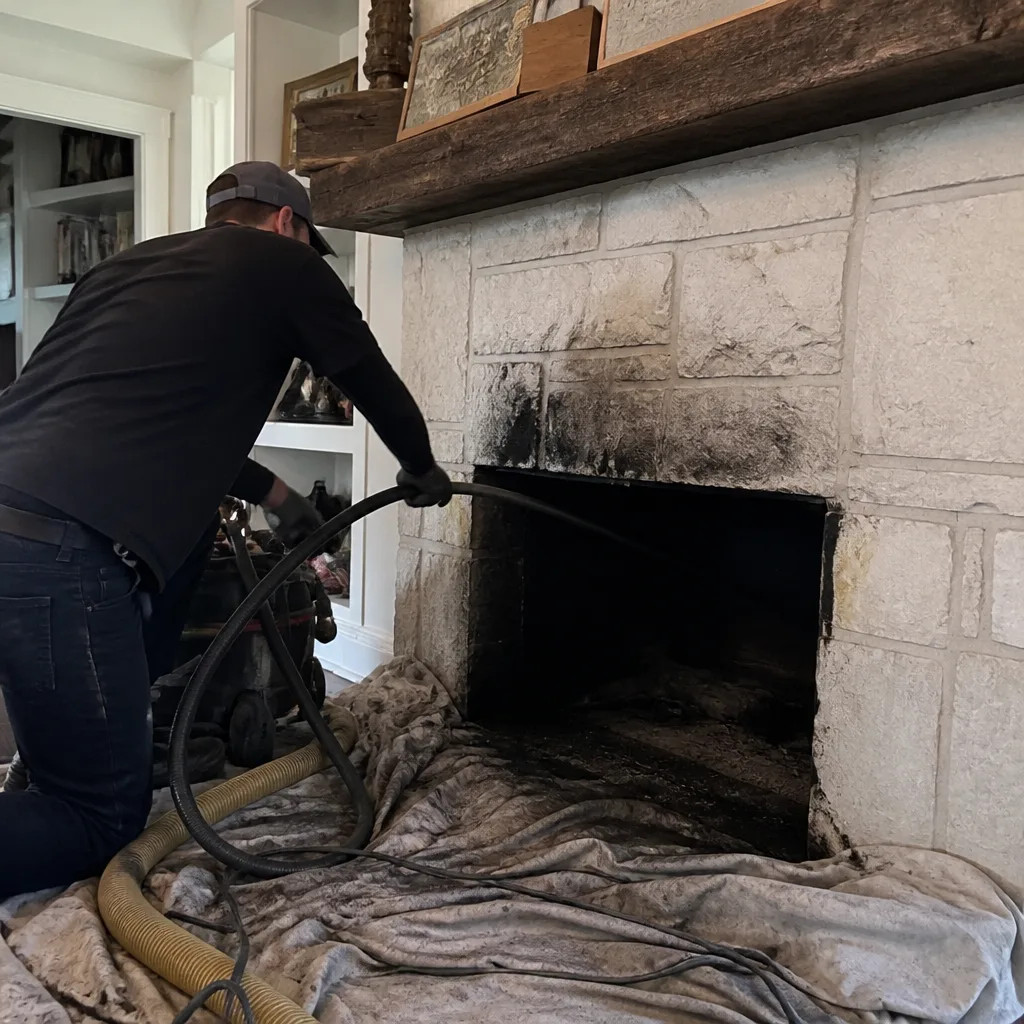 Before
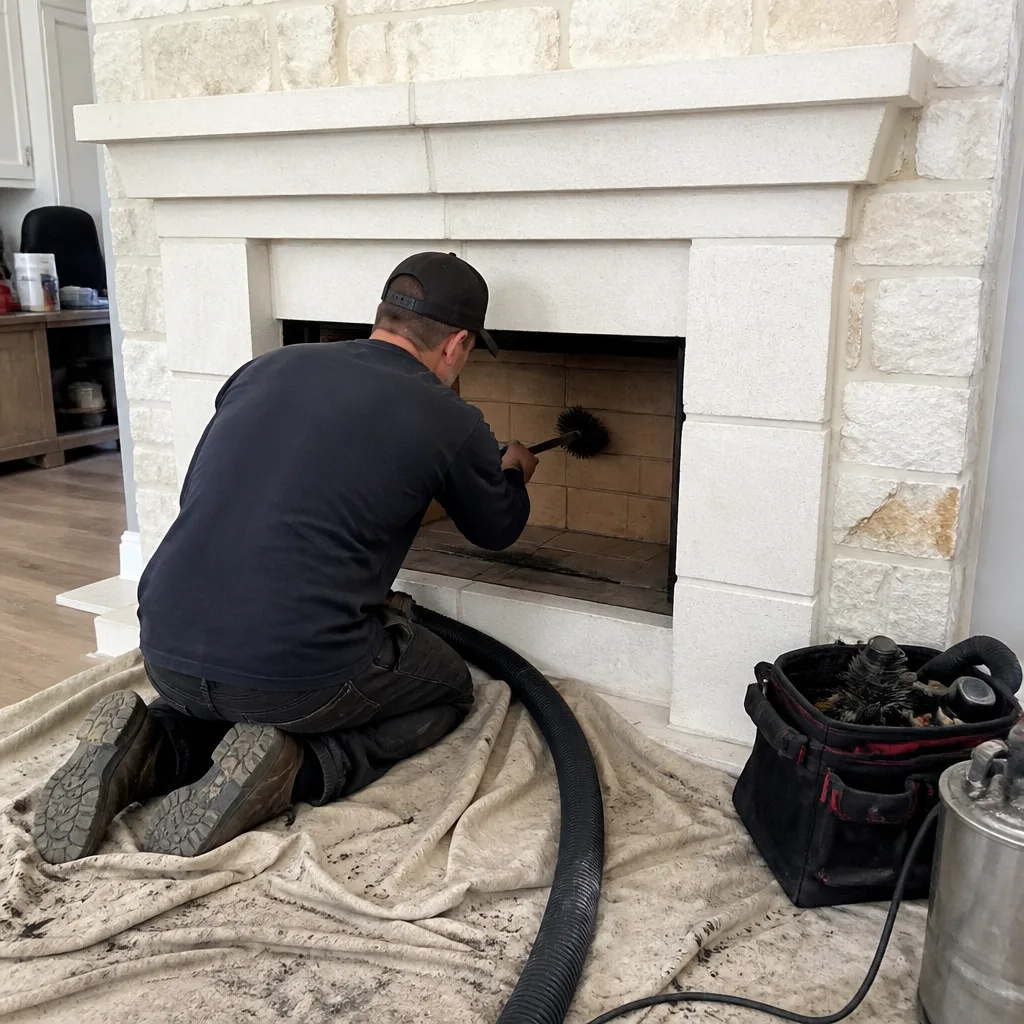 After
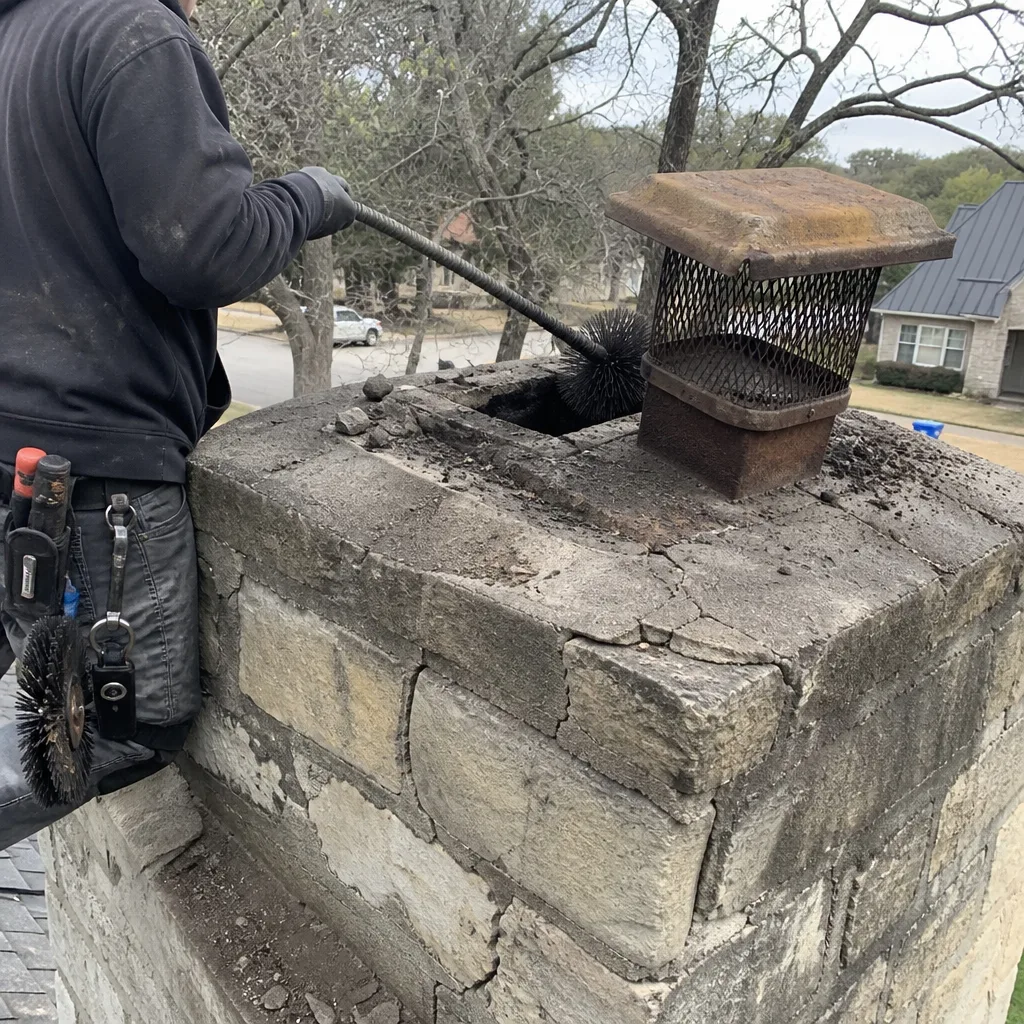 Before
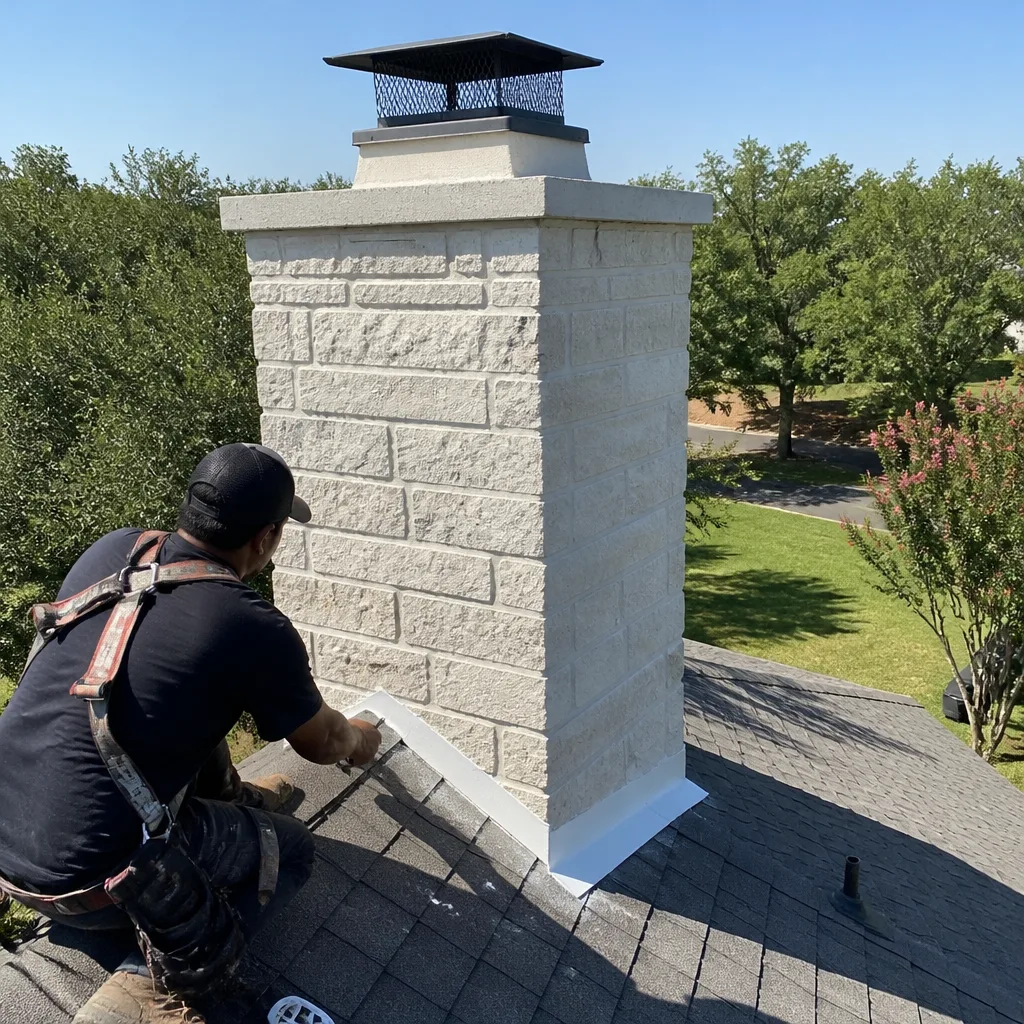 After
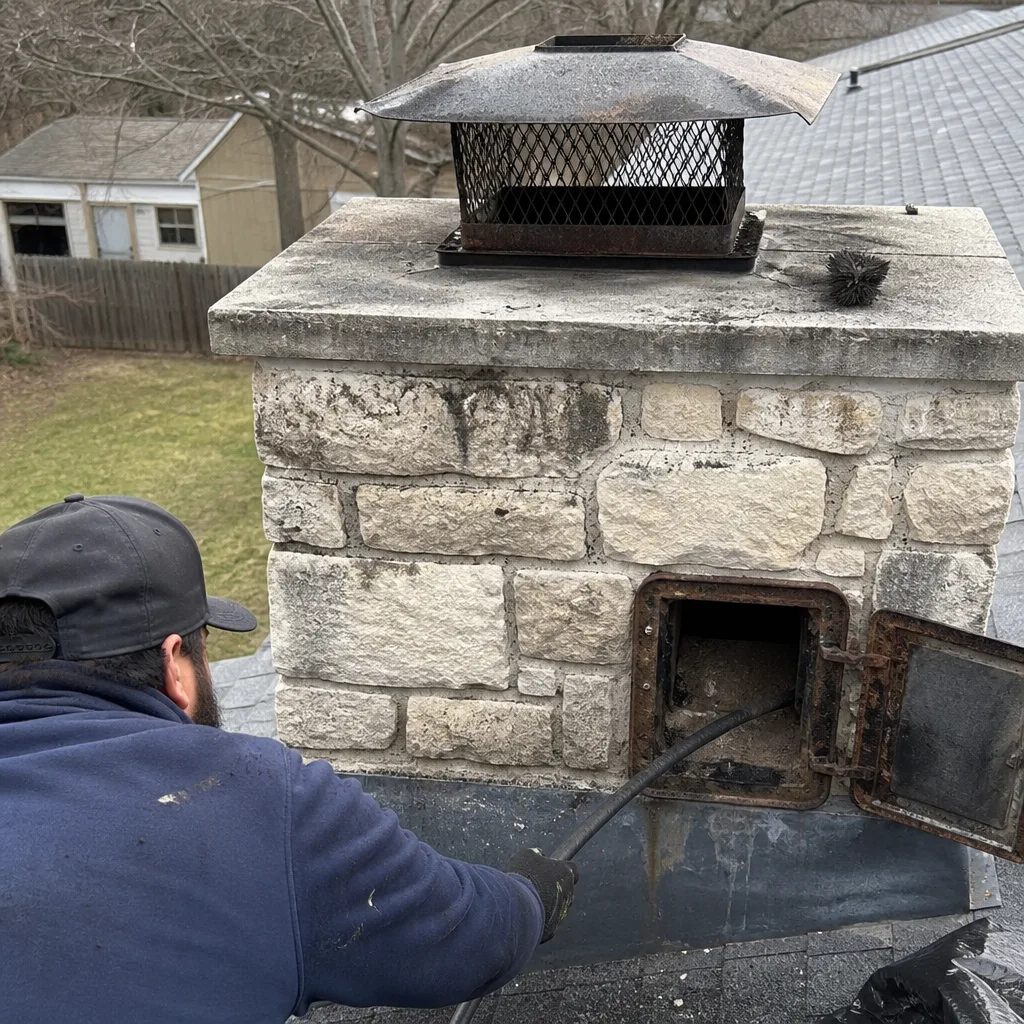 Before
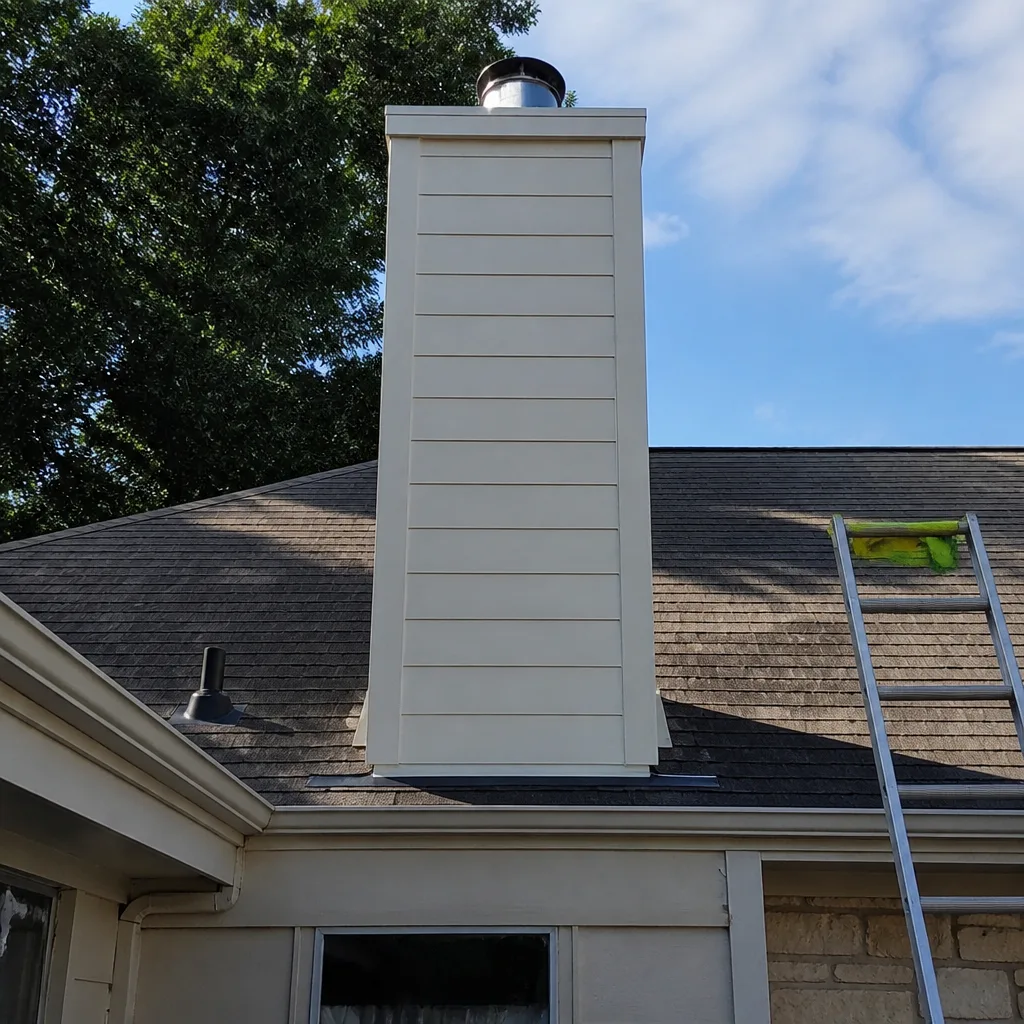 After