
Last updated October 31, 2026
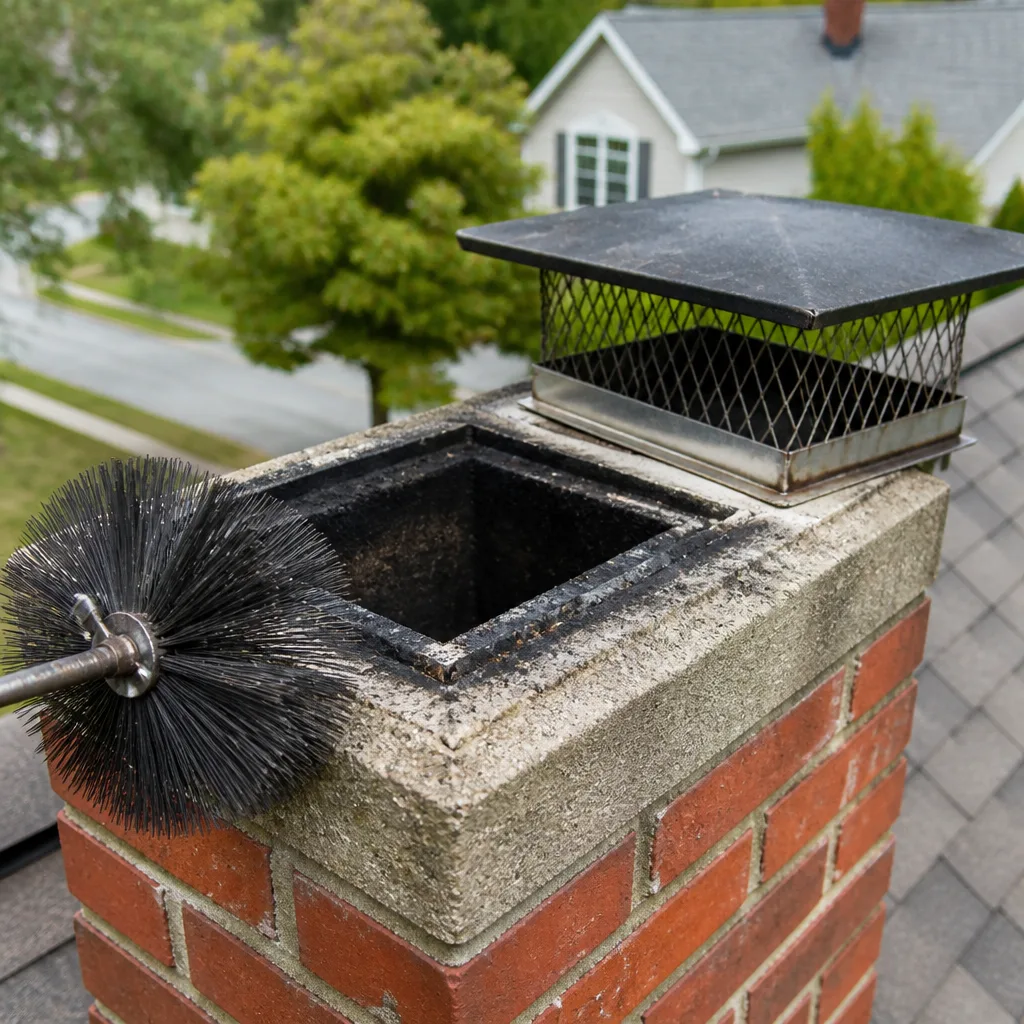 Sweep & inspection
 Caps & crowns
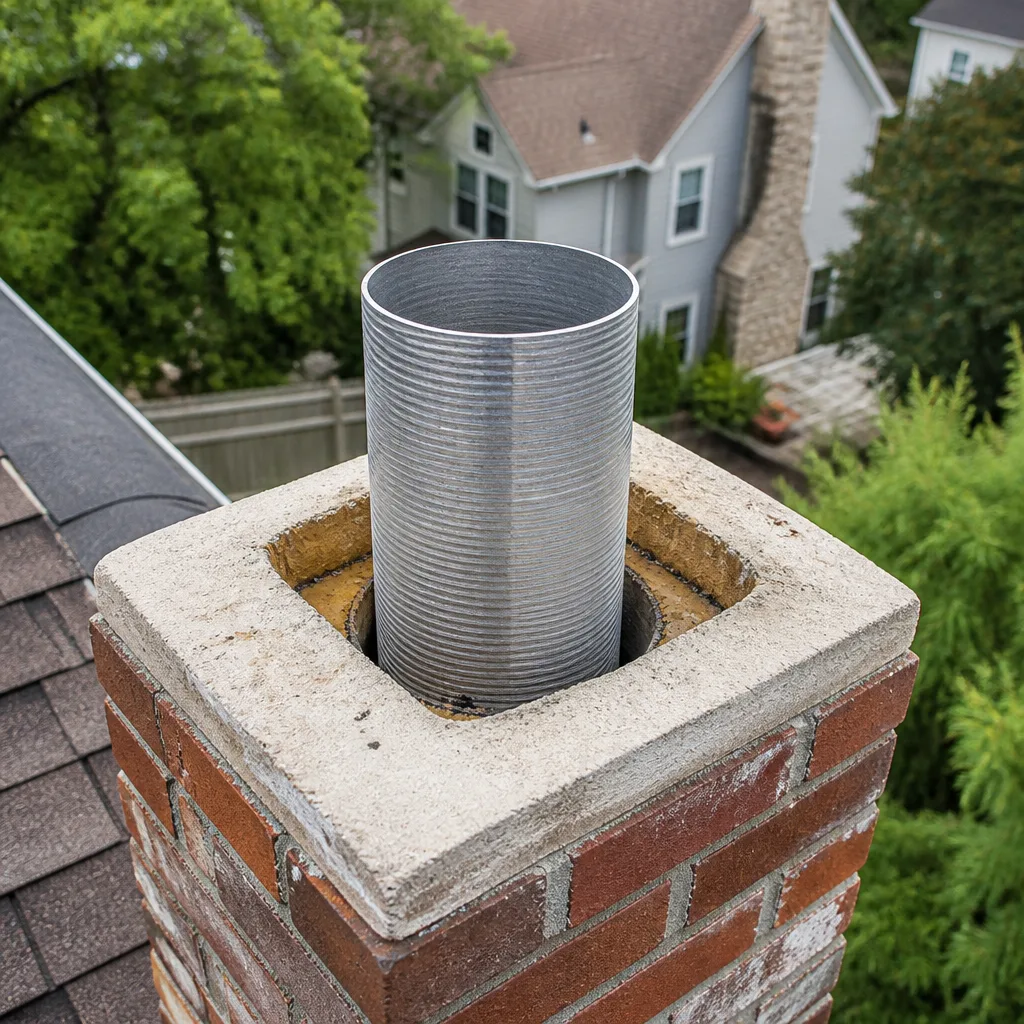 Flue relining
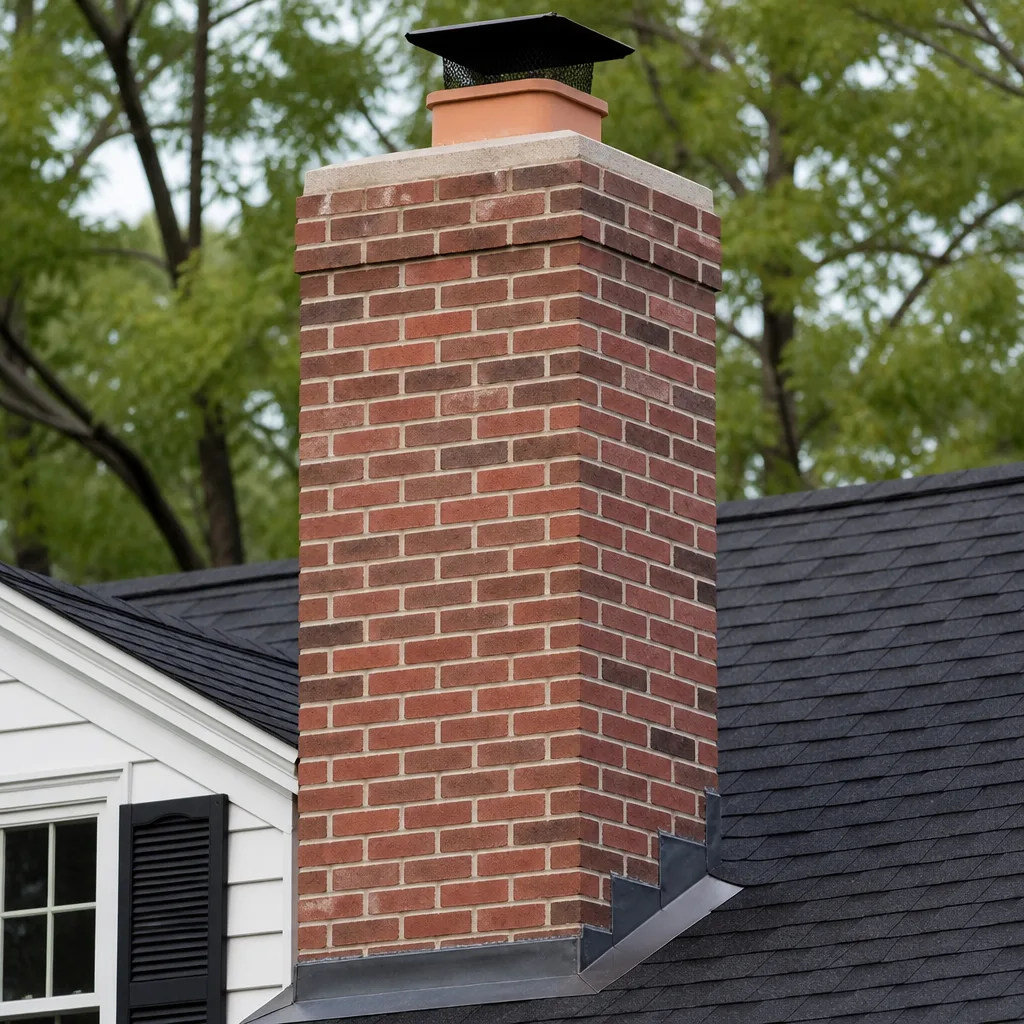 Masonry repair
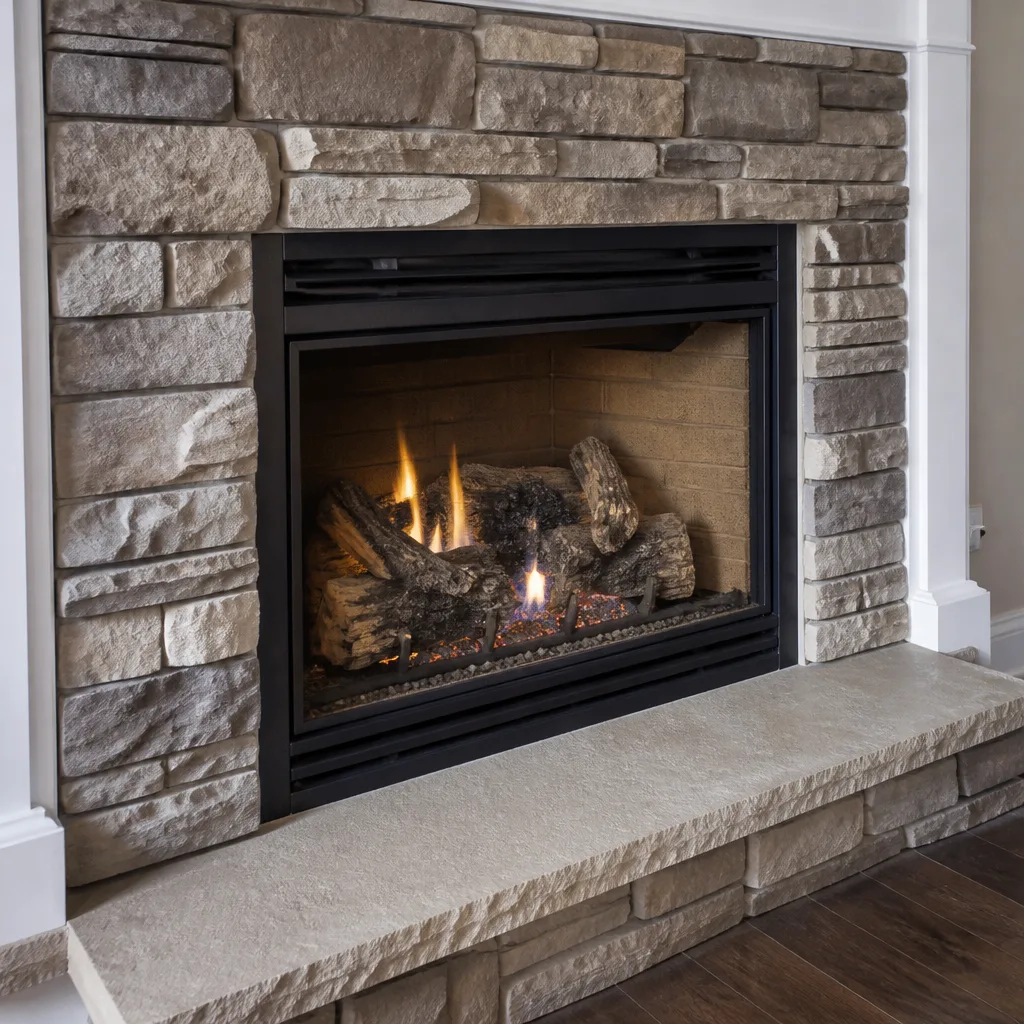 Gas fireplace service
Level 1 sweep and inspection to the NFPA 211 annual standard - flue, crown, cap, and flashing checked and photographed
Chimney sweep logs do not sweep chimneys. They loosen some creosote - which then falls where a brush and vacuum still have to collect it.
Seasonal Chimney Cleaning Care for Georgetown: Year-Round Homeowner’s Guide
A chimney that sits unused from March through October in Central Texas humidity isn’t resting. It’s rusting, settling, and inviting nesting birds. Most national chimney advice assumes a northern calendar: burn all winter, sweep in fall, repeat. Georgetown doesn’t work that way. Our burn season is short, often just eight to twelve weeks between late November and early February. That means the real threat to your chimney isn’t creosote buildup during the burn months. It’s what happens during the long, hot, humid idle season. This guide explains why Georgetown homeowners should flip the standard maintenance calendar, what specific damage the Texas off-season causes, and how to protect your chimney year-round without spending money on services you don’t need. For Chimney Cleaning Cost Breakdown: The Georgetown Homeowner’s Reference for 2026, see our dedicated pricing guide.
Styles & brands we work with
Quick Answer
Seasonal chimney care in Georgetown works best on an inverted schedule: schedule your main sweep and inspection in early spring, right after the last fire of the season, rather than waiting for fall. The eight-month idle season in Central Texas causes more chimney deterioration through moisture, pests, and corrosion than a short burn season ever will. A post-season sweep in March, a mid-summer check, and a light pre-season inspection in September covers the full year.
Table of Contents
- Why Georgetown’s Climate Inverts the National Chimney Calendar
- The Post-Season Sweep: Why March Beats October in Georgetown
- The Idle Season: What Actually Happens to a Dormant Chimney
- Chimney Swifts and Texas Law: What Georgetown Homeowners Must Know
- Summer Protection: Dampers, Caps, and Moisture Defense
- The September Pre-Season Check: What to Confirm Before the First Fire
- Year-Round Maintenance Calendar for Georgetown Homes
- Signs Your Chimney Needs Attention Between Scheduled Sweeps
- Common Mistakes to Avoid
- When to Call a Professional
- Frequently Asked Questions
- The Bottom Line
Why Georgetown’s Climate Inverts the National Chimney Calendar
Standard chimney advice comes from places like New England or the Upper Midwest, where fireplaces burn daily from October through April. In those climates, creosote accumulates steadily for six months, and a fall sweep before burn season makes sense because the chimney has been dormant only during the dry summer. Georgetown, Texas, sits in a different reality. We average perhaps 40 to 60 fireplace days per year, concentrated between Thanksgiving and Valentine’s Day. The other eight or nine months, your chimney stands empty in an environment that oscillates between 95-degree heat and 70-percent humidity.
That idle period is not passive. Central Texas humidity works its way into masonry in ways that freeze-thaw cycles never will. The repeated expansion and contraction of brick and mortar as temperatures swing from 40-degree winter mornings to 100-degree summer afternoons creates microscopic cracks. Humidity enters those cracks, and when the chimney heats up again months later, trapped moisture expands, widening the damage. Over several years, this cycle causes spalling, the flaking and crumbling of brick faces and mortar joints.
We see this pattern constantly in Georgetown homes, from Sun City to the older ranch houses near the square. A chimney that gets swept every fall but never checked in spring will often show more structural deterioration than one that gets a single thorough post-season examination. The reason is simple: creosote buildup at Georgetown’s burn frequency is rarely severe enough to cause a chimney fire. Moisture damage, pest intrusion, and rust are not limited by how often you burn. They happen whether you use the fireplace or not.
The takeaway for Georgetown homeowners is this: treat your chimney as a year-round structural element, not a seasonal appliance. The maintenance calendar that works for a Minneapolis homeowner will leave gaps in Central Texas. Our specific threats are off-season threats. For Chimney Cleaning Emergency Preparedness Guide for Georgetown Homes, review our emergency planning resources.
The Post-Season Sweep: Why March Beats October in Georgetown
The most useful chimney service in Georgetown is not a fall sweep. It’s a March sweep, done within a few weeks of your final fire of the season. Here’s the reasoning.
When you sweep in October, you remove a season’s worth of creosote before you start burning again. That’s the national logic, and it’s defensible. But it leaves your chimney dirty for the entire hot season, and that dirt does more than sit there. Creosote is hygroscopic. It absorbs moisture from humid air. During a Georgetown summer, the creosote left behind from your winter fires pulls humidity into itself, softening and becoming more acidic. That acidic residue then sits in direct contact with your flue liner and smoke chamber for eight months, gradually eating at the surface. By the time October arrives, the creosote that would have been simple to remove in March has hardened into a glaze and begun corroding whatever it touches.
A March sweep interrupts that process. You burn your last fire in February, schedule the sweep within a few weeks, and the chimney goes into the idle season clean. No creosote absorbing humidity, no acidic residue on your liner, no odor rising into the house during the first warm days when the stack effect reverses and pushes chimney air downward. Georgetown homeowners often notice a musty fireplace smell in late spring. That smell is usually the residue of winter fires, not the chimney itself. Remove the residue in March, and the smell problem largely disappears.
The spring sweep also catches problems that need the idle season to address properly. Cracked flue tiles, deteriorating mortar joints, a rusted damper: these are all easier to repair in April or May, when temperatures are mild and schedules are flexible, than in October, when every chimney company in Central Texas is booked out for weeks. A spring inspection gives you eight months to plan and budget for any repair, with no pressure to get it done before the first cold snap.
For Georgetown homeowners who burn regularly, combine the March sweep with a lighter pre-season check in September. We’ll cover that later. But if you only get one chimney service per year, make it the post-season sweep in March.
The Idle Season: What Actually Happens to a Dormant Chimney
A dormant chimney in Georgetown faces three overlapping threats. Understanding each one helps you spot problems early and understand why the off-season matters more than the burn season here.
Moisture and Masonry Deterioration
Water is the single most destructive force affecting any chimney, and Central Texas delivers plenty of it. We get around 35 inches of rain annually, often in heavy spring downpours and sudden fall storms. But the bigger issue is humidity. Even without rain, Georgetown’s average summer humidity runs between 60 and 80 percent. That moisture penetrates porous brick and mortar through capillary action, the same way water climbs a paper towel.
We regularly see spalled bricks on chimneys in Georgetown neighborhoods that were built in the 1980s and 1990s, where the masonry has absorbed ten or fifteen years of humid air without a proper sealant or cap repair. Spalling looks like thin flakes of brick popping off the exterior surface. Once it starts, it accelerates, because each flake exposes fresh, more porous brick underneath. Left alone, spalling can eventually compromise the structural integrity of the chimney, requiring partial or full rebuilds that are far more expensive than a crown seal or cap replacement would have been.
Mortar joints are equally vulnerable. The constant expansion and contraction from temperature swings weakens the bond between mortar and brick, which is why we recommend checking the chimney crown, the concrete or mortar cap at the top, every spring. Cracks in the crown let water run directly down through the flue system, reaching the firebox and smoke chamber below.
Damper Corrosion
Georgetown’s humidity is brutal on metal components, and dampers are the most exposed of them all. The typical throat damper sits just above the firebox, where it’s exposed to warm, humid air rising from the house interior all summer long. Over time, the metal rusts, the hinges stiffen, and the seal degrades. You may not notice until the first cold evening in November, when the damper won’t open, or worse, won’t close tightly after a fire.
A corroded damper that won’t seal properly lets conditioned air escape your home all summer, working against your HVAC system and raising your cooling costs. It also allows humid air into the flue, accelerating every other form of moisture damage. We advise Georgetown homeowners to open and close the damper a few times each spring, exercise it like a joint, and listen for rough or gritty movement. If it sticks or scrapes, that’s a small repair now versus a replacement later.
Pest Intrusion
A chimney without a proper cap is a standing invitation to Central Texas wildlife. Squirrels, raccoons, and birds all see an open flue as shelter. But the most common and most legally complicated intruder in Georgetown is the chimney swift, which we’ll address separately.
Beyond the animals themselves, nests and droppings create fire hazards and blockages. A bird nest in a flue restricts draft, pushes smoke back into the living space, and provides dry, flammable material that can ignite from a stray ember. We have removed nests from Georgetown chimneys that filled an entire five-gallon bucket. A properly fitted rain cap with a mesh screen eliminates most of the problem before it starts.
Chimney Swifts and Texas Law: What Georgetown Homeowners Must Know
If you live in Georgetown and own a chimney, you need to know about the chimney swift, because federal law has something to say about it.
The chimney swift is a small, dark-gray bird that, as its name suggests, nests almost exclusively in chimneys and similar vertical structures. It’s also protected under the Migratory Bird Treaty Act of 1918. That federal law makes it illegal to remove, disturb, or destroy an active chimney swift nest. The birds typically arrive in Central Texas in late March or early April and stay through the summer, raising a single brood before migrating south in October. During nesting season, from April through August, a chimney with an active nest cannot legally be cleaned or repaired without a permit. See Chimney Cleaning Permits, Codes & Inspections in TX: What You Need to Know for full regulatory details.
For Georgetown homeowners, the practical implication is simple and strict. If you want a spring sweep, schedule it in early March, before the swifts arrive. From April through August, a sweep that would disturb an active nest is off the table. The birds are also the single best argument for a proper chimney cap. A cap with a mesh screen prevents swifts from entering in the first place, which sidesteps the legal question entirely. No nest, no protected species, no delay in your maintenance schedule.
If you hear a high-pitched chittering sound coming from your chimney between April and August, you likely have swifts. Do not attempt to smoke them out, seal them in, or remove the nest. Wait until the birds leave on their own, which generally happens by late September, then have a Chimney Sweep in Georgetown clean the flue and install a cap to prevent a repeat visit next spring.
The swift issue also reinforces our argument for the March sweep. February and early March are the last reliable window before nesting season. A homeowner who puts off the spring visit until May will find themselves in legal limbo until October, with a dirty chimney sitting in the humid Georgetown summer, exactly the situation we advise against.
Summer Protection: Dampers, Caps, and Moisture Defense
Summer is when Georgetown chimneys take the most abuse, and it’s also the season when most homeowners think about them the least. Here’s how to protect your chimney during the idle months.
Top-Mount Dampers vs. Throat Dampers
The traditional throat damper, the metal plate just above the firebox, was standard in most Texas homes built before the 2000s. It works adequately when it’s new, but it sits at the bottom of the flue, where it does little to stop moisture or pests from entering the chimney above. A top-mount damper, installed at the top of the flue, seals the entire chimney like a plug when closed. It keeps humid air out of the flue entirely, prevents downdrafts that push musty air into the house, and provides a second barrier against pests even if your cap fails.
For Georgetown’s climate, a top-mount damper is one of the best year-round investments you can make in your chimney. It pays for itself in reduced cooling costs during summer, because it stops conditioned air from escaping up the flue. We’ll also note that the difference between a top-mount damper and a properly fitted cap is not an either/or question. The cap keeps rain and animals out. The damper seals the flue. Together, they cover both the top opening and the passage below.
Rain Caps and Screen Integrity
A rain cap is not a one-time installation. The mesh screens deteriorate, especially in Georgetown’s alternating humidity and heat. We recommend checking your cap every spring and again in September. Look for rust, gaps in the mesh, or missing fasteners. If the cap was installed years ago and the mesh is rusted through, birds will find the opening. Squirrels are even more determined. A compromised cap is an open door.
Professional-grade caps, like those from Famco and Copperfield, are built from materials that hold up in Central Texas conditions better than the thinner hardware-store alternatives. We use these brands because the mesh gauge is heavier, the fasteners are stainless, and the overall construction survives the thermal swings and high UV exposure that cheap galvanized caps do not.
Firebox and Smoke Chamber Protection
During summer, your firebox and smoke chamber face two specific risks: moisture saturation and acidic residue if the chimney wasn’t cleaned in spring. You can reduce both with a few simple habits. Keep the damper closed throughout the summer, unless you have a top-mount damper, in which case keep that closed and the throat damper open to let the flue breathe. You may find it helpful to place a desiccant or moisture absorber in the firebox during May through September to pull humidity out of the air before it condenses on the masonry.
Avoid painting or sealing the firebox interior with consumer products not rated for high-heat fireplace use. The firebox is designed to absorb and radiate heat, and sealing it with the wrong material can trap moisture and cause efflorescence, the white powdery deposit that appears when water moves through masonry and evaporates at the surface. If you see efflorescence, it’s a sign of moisture movement, not a decorative issue, and it warrants a professional look.
The September Pre-Season Check: What to Confirm Before the First Fire
By September, the swifts have departed, the worst of the summer heat is past, and the burn season is eight to ten weeks out. This is when a lighter, pre-season check makes sense, especially if you skipped the spring sweep. Here are the specific items to confirm before you light the first fire of the season.
- Damper function. Open and close the damper several times. It should move smoothly without grinding. If it sticks, gets stuck, or won’t fully close, the hinge or the plate itself has likely rusted over the summer. A damper that won’t close seals nothing, and a damper that won’t open blocks your draft.
- Cap and screen condition. Visually inspect the cap from the ground using binoculars if you don’t want to climb. Look for rust, bent mesh, or gaps where the cap meets the crown. If a storm passed through Georgetown over the summer, which it almost certainly did, cap damage is common.
- Flue obstruction. Shine a flashlight up the flue from the firebox. Look for obvious obstructions: nests, twigs, balls, dead animals. This is especially important if you skipped the spring sweep and your cap is missing or damaged.
- Creosote level. If you burned regularly last winter and did not sweep in March, you need a professional inspection before the first fire. Last season’s creosote has been absorbing humidity all summer, and it can be more dangerous now than it was in February. A residue that was moderate in winter can become a hard, shiny glaze after a Texas summer.
- Carbon monoxide detector. This one is outside the chimney itself, but it belongs on every pre-season checklist. Test the batteries and confirm you have detectors on every floor of the home, especially near sleeping areas. Every year, blocked chimneys and faulty flues cause CO incidents, and the detector is your final line of defense.
If you cannot confirm items one through four yourself, that’s a sign to bring in a professional. A pre-season inspection is less involved than a full sweep, and it gives you time to address any issues before the nights turn cold.
Year-Round Maintenance Calendar for Georgetown Homes
Here is a Georgetown-specific maintenance calendar that consolidates everything above into a season-by-season plan. Use it as a reference, not a rigid schedule, and adjust for how often you actually burn.
March (Post-Season)
- Schedule your main chimney sweep and inspection within two to four weeks of your final fire.
- Confirm the damper operates smoothly and closes tightly.
- Check the rain cap and mesh for winter storm damage.
- Address any repairs identified during the sweep now, while temperatures are mild.
April – May (Swift Season Begins)
- Do not schedule any chimney work that would disturb a nest.
- Watch for swift activity, especially in neighborhoods with mature trees near the river.
- If you have no cap, plan to have one installed in October, before the swifts return next spring.
June – August (Peak Humidity)
- Keep the damper closed to block humid air from entering the flue.
- Place a moisture absorber in the firebox and replace it monthly.
- Check for efflorescence or water stains on the chimney exterior.
- Note any musty odor from the fireplace, which signals moisture buildup or a blockage.
September (Pre-Season)
- Conduct the five-point pre-season check described above.
- Test carbon monoxide detectors.
- If you skipped the March sweep, schedule a full cleaning now, before the October rush.
October – November (First Fires)
- Burn your first fire with a small amount of dry, seasoned hardwood.
- Watch the draft. Smoke entering the room means a blockage or a cold flue.
- Inspect the cap again after the first strong fall storm.
December – February (Burn Season)
- Burn only seasoned hardwood. Georgetown’s live oaks and pecans produce excellent firewood, but it must be split and dried for at least six months.
- Avoid burning wrapping paper, cardboard, or treated lumber.
- Leave the damper open until the fire is completely out and the ashes are cold.
Signs Your Chimney Needs Attention Between Scheduled Sweeps
Between your regular service visits, your chimney will tell you when something is wrong. Here are the specific signals we tell Georgetown homeowners to watch for.
- Smoke backing into the room. This is never normal. It usually indicates a blockage, a cold flue, or a draft problem. In an older Georgetown home, it can also mean the flue is sized incorrectly for the fireplace. Either way, stop using it and call for an inspection.
- A strong musty smell from the fireplace. In summer, this points to moisture trapped in the flue or a nest decomposing above the damper. It won’t go away on its own.
- Flaking brick or mortar on the exterior. Spalling is progressive. The earlier you address it, the less expensive the fix. A deteriorating chimney crown can often be sealed. A partially rebuilt chimney is a different scope entirely.
- White staining on the chimney exterior. Efflorescence means water is moving through the masonry and depositing mineral salts on the surface. It’s a moisture diagnosis, not a stain.
- Rust streaks or a damper that won’t move. Rust is the signature of a moisture problem. Where metal is rusting, masonry is likely taking on water somewhere nearby.
- Hearing animals in the chimney. Scratching, chittering, or fluttering sounds mean something is living up there. Do not attempt to remove it yourself, especially during swift nesting season.
If any of these signs appears, the cheapest response is almost always to call before the symptom becomes a structural problem. What starts as a cracked crown seal can become a full chimney rebuild if left through two more Georgetown summers.
Common Mistakes to Avoid
- Sweeping only in the fall. This is the single most common mistake we see in Georgetown. A fall-only schedule leaves creosote in the flue through the humid months, exactly when it causes the most damage. March is the primary sweep window here.
- Skipping the cap because the chimney is unused. An unused chimney still takes on water, still attracts pests, and still deteriorates. The cap is not about burn season. It’s about the other nine months.
- Attempting swift nest removal. Federal law protects chimney swifts and their nests during breeding season. Removing or disturbing an active nest carries substantial penalties. The legal solution is a cap installed before the swifts arrive.
- Using the fireplace to test whether the chimney is clear. Lighting a fire is not a diagnostic tool. If the flue is blocked, you won’t know until smoke fills the room or a chimney fire starts. Inspect first, then burn.
- Ignoring a musty summer smell. That odor is evidence of moisture in the flue, a nest, or both. It will not “air out” – it will worsen, and it usually points to a problem that will cost more to fix later.
- Trusting a visual check from the ground. You cannot see the condition of a flue liner, smoke chamber, or crown from your yard. A professional camera inspection reveals what your eyes can’t, and that’s where most Georgetown chimney problems begin.
- Burning green or unseasoned wood. Central Texas is hot and humid, but that doesn’t season firewood faster. It actually makes it take longer. Green wood creates excessive creosote, even in a short burn season.
When to Call a Professional
Some chimney tasks are appropriate for a careful homeowner. Checking the damper movement, watching for efflorescence, noting unusual odors: these are all things you can and should do. But the moment you suspect a problem inside the flue, above the damper, or on the crown, call a professional. High-temperature flue gases, masonry deterioration, and wildlife intrusion are not areas where guesswork is acceptable. An imperfect seal, a missed crack, or a wrong material choice creates fire hazards that you can’t see from the living room.
Our team at Resolute Chimney Sweep works with Georgetown homeowners across every neighborhood, from the historic district to Sun City to the newer developments along Williams Drive. We inspect with cameras, we show you what we find, and we repair with the same professional-grade components we’d install in our own chimneys. That includes DuraFlex liner systems for relining work and HeatShield for liner resurfacing, both of which are far beyond what a basic sweep company offers. Resolute Chimney Sweep offers free estimates in Georgetown – call (877) 644-8036.
Frequently Asked Questions
For most Georgetown homeowners who burn only during the short winter season, one professional sweep per year is sufficient, and the best time for it is March, after the last fire. Explore more guides & resources on our blog for year-round chimney care tips. Homes that burn heavily every day from November through February may need a mid-season check as well, especially if the wood isn’t fully seasoned. If you’ve skipped a year or just bought a home with an unknown maintenance history, schedule an inspection before lighting the first fire. Call (877) 644-8036 and we’ll tell you exactly what your chimney needs.
Skipping a single year may not cause a chimney fire, but in Georgetown it means your chimney goes through a full wet season with a season’s worth of creosote and soot inside it. The residue absorbs humidity, becomes acidic, and accelerates deterioration of the flue liner and smoke chamber. A missed year also means minor issues like a cracked crown or a weakening cap go undetected for another twelve months of Texas weather. If you’re due for a cleaning, get it scheduled before the next hot season – call (877) 644-8036.
Yes, and it’s close to the best value in chimney protection. A proper rain cap with mesh screening stops rain, blocks chimney swifts and squirrels, and prevents downdrafts. Georgetown’s April-to-October humidity and spring storm season make caps essential, not optional. An uncapped chimney is a standing invitation to moisture damage and protected bird nesting, both of which are far more expensive than the cap itself.
Not if the nest belongs to chimney swifts, which are federally protected under the Migratory Bird Treaty Act. Disturbing an active nest between April and August is illegal. The correct solution is prevention: install a properly fitted cap before the swifts return each spring. If you already have a nest, wait until the birds migrate in late September, then have the chimney cleaned and capped. Call (877) 644-8036 for guidance specific to your situation.
A musty fireplace odor in summer usually comes from moisture trapped in the flue, often amplified by creosote residue left from winter fires. Warm, humid Georgetown air condenses inside the chimney, and the resulting dampness produces that distinct smell. A spring sweep removes the creosote that feeds the odor, and a top-mount damper or closing the throat damper reduces the humid air entering the flue in the first place.
For Georgetown homes, yes. A top-mount damper seals the entire flue from the top, which keeps humid summer air out and conditioned air in. That means lower cooling costs, fewer musty odors, and less moisture reaching your liner during the eight months the fireplace sits idle. It’s a one-time installation that pays back in comfort and reduced moisture damage. Call (877) 644-8036 for a free estimate on a top-mount damper installed with professional-grade hardware.
The Bottom Line
Georgetown’s climate asks you to think about your chimney differently than the national advice suggests. The burn season is short. The idle season is long, hot, and humid, and that’s when the real damage accumulates. Sweep in March, protect through the summer, confirm in September, burn without worry from November to February. One call covers the sweep, the vent, and the repair: Resolute Chimney Sweep home brings all three services under one roof, so what’s found during the sweep gets fixed by us – no handoffs, no referrals, no loose ends. And if your dryer vent has been neglected, it shares the same stakes: Dryer Vent Cleaning in Georgetown addresses a fire hazard most chimney companies never touch. For anything structural, from cracked crowns to full liner replacement, Chimney Repair in Georgetown is the same team, same standards.
Written by the team at Resolute Chimney Sweep, serving Georgetown since 2014.
See the difference
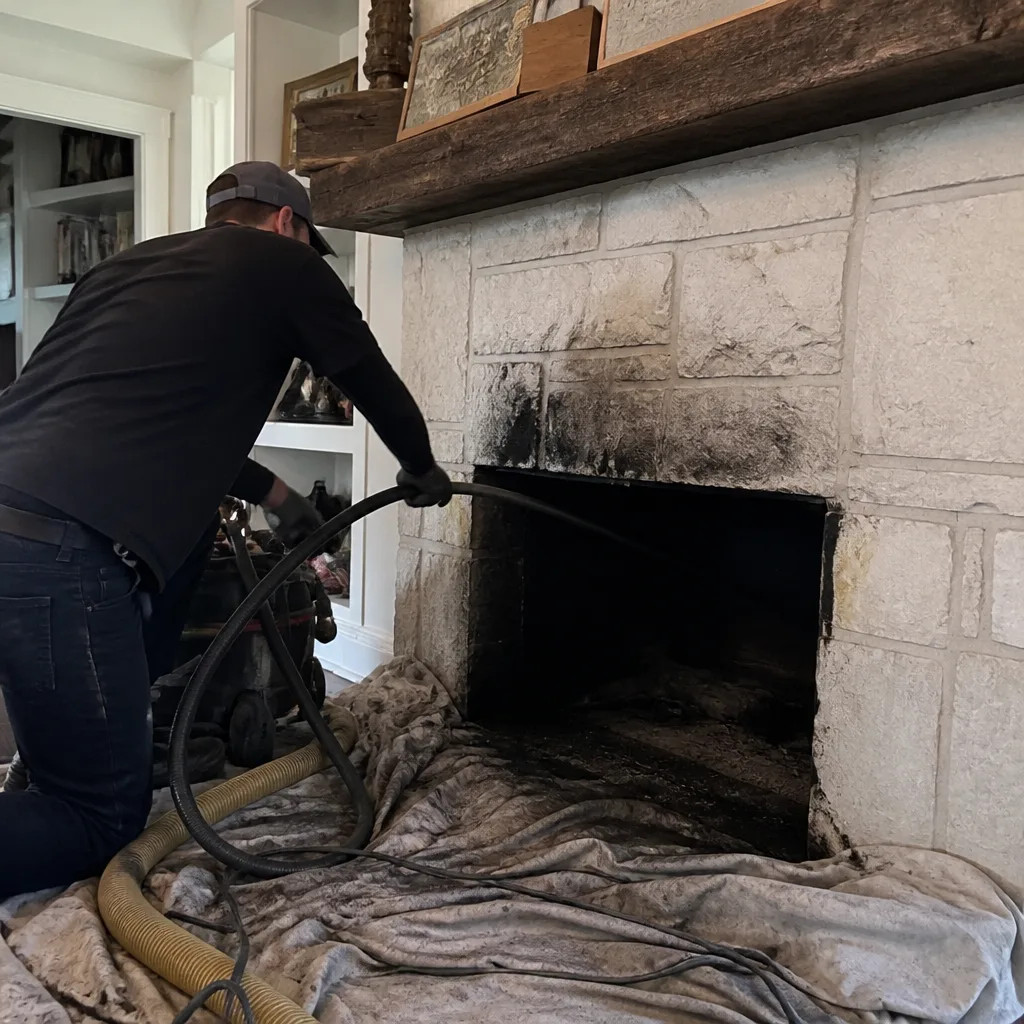 Before
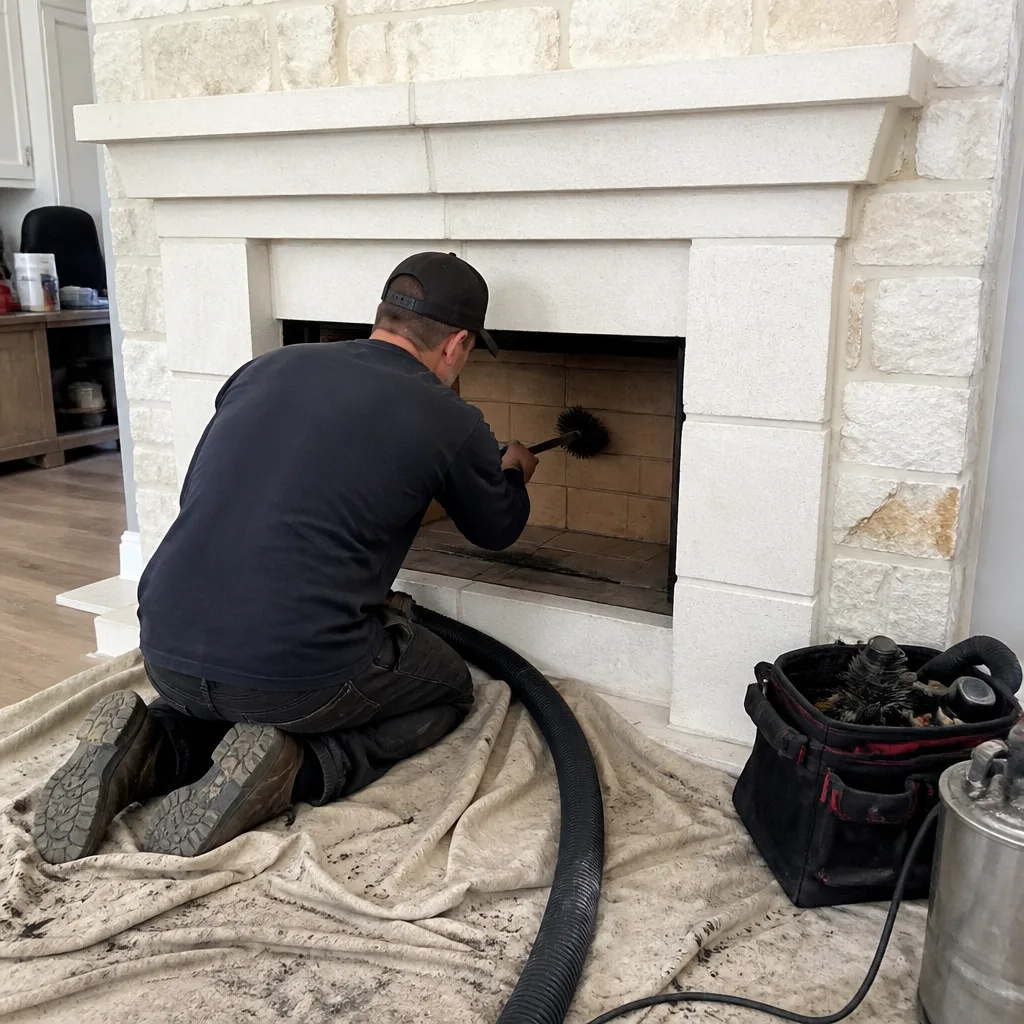 After
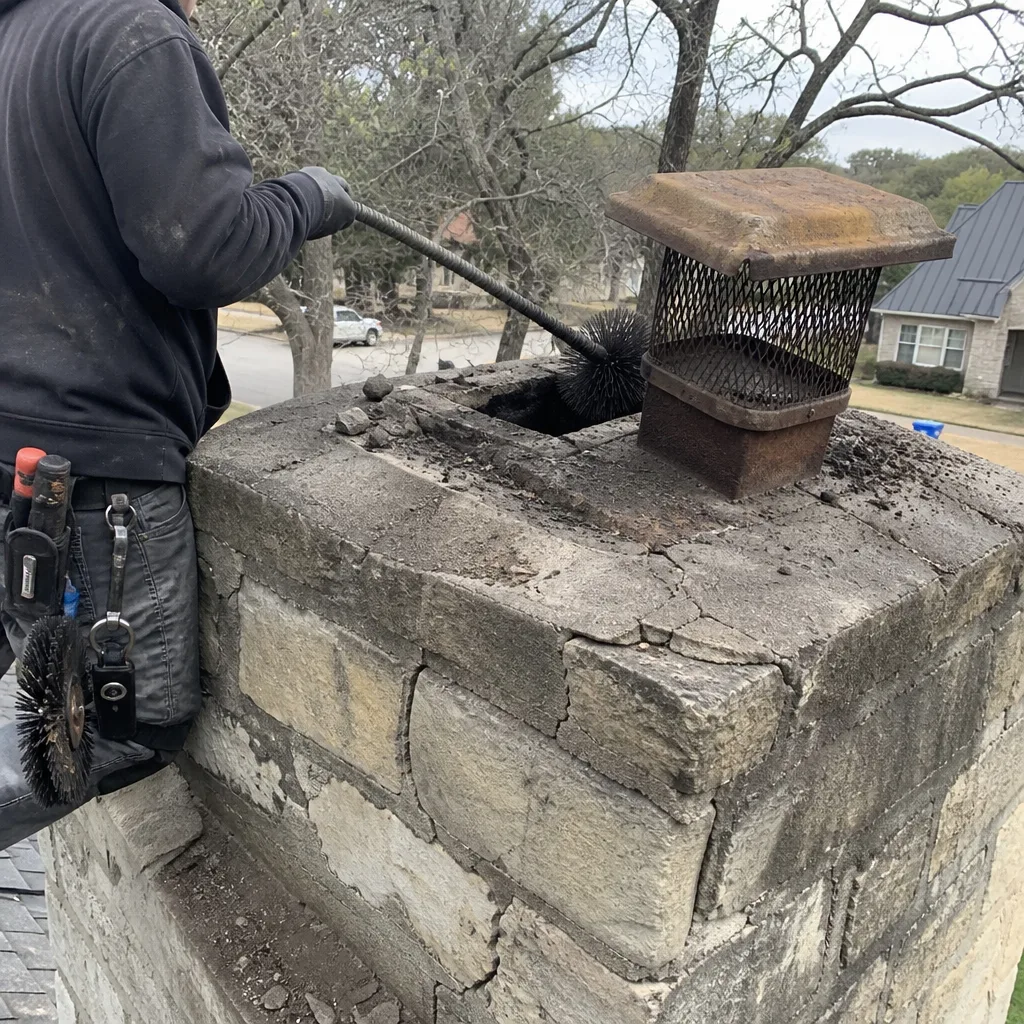 Before
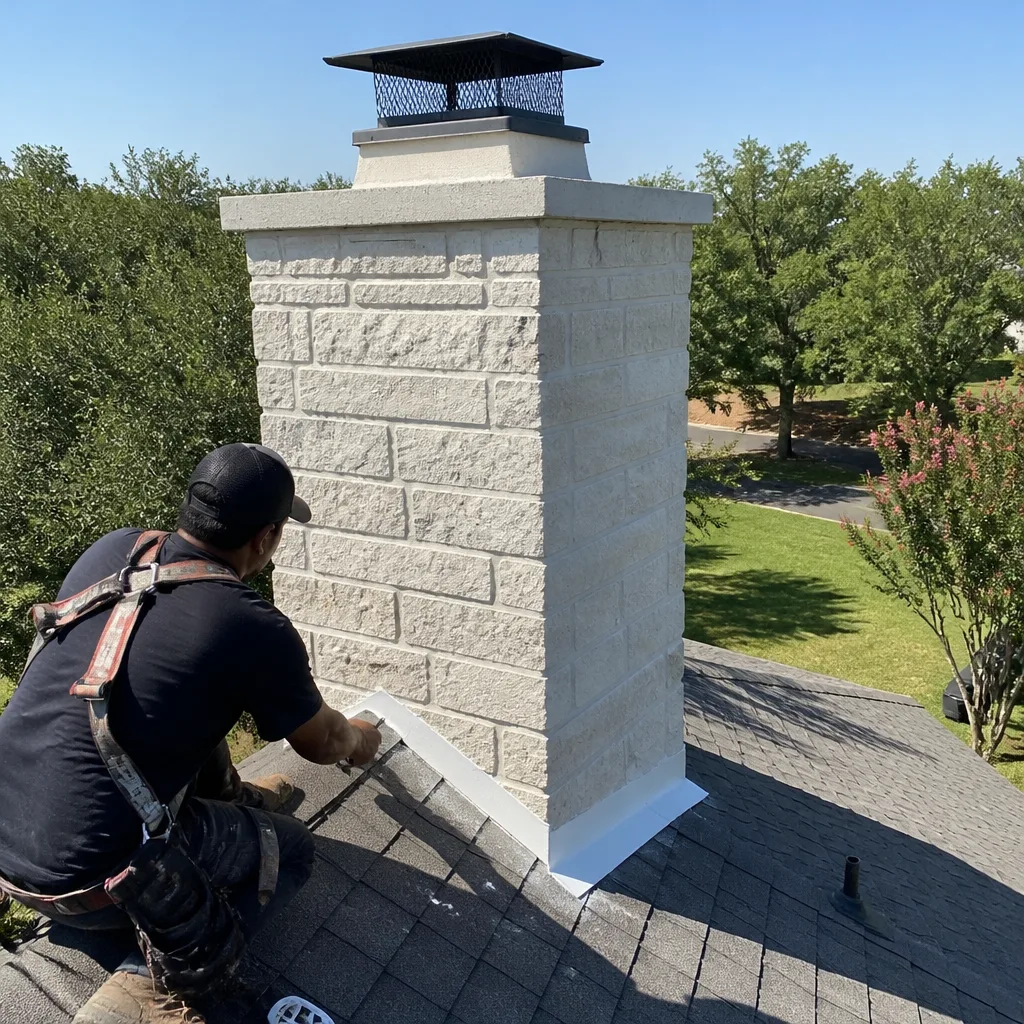 After
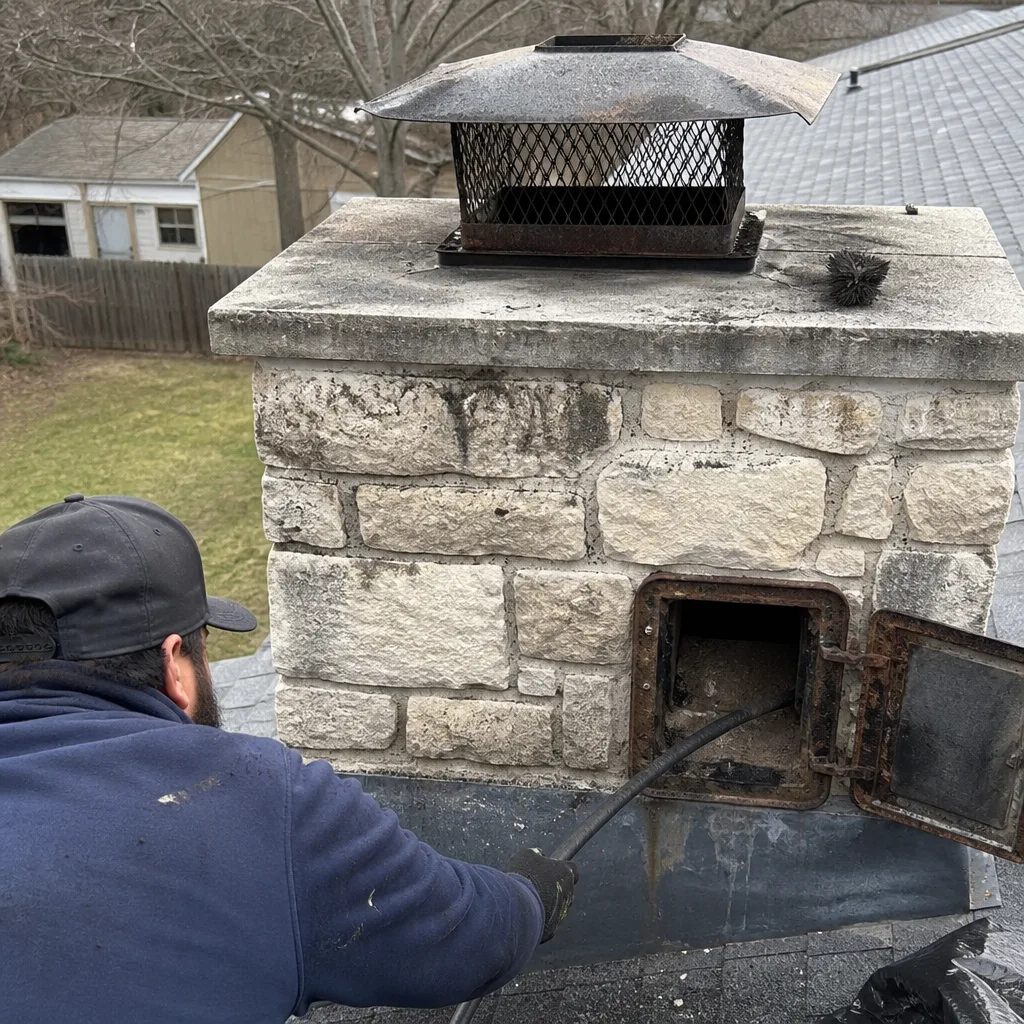 Before
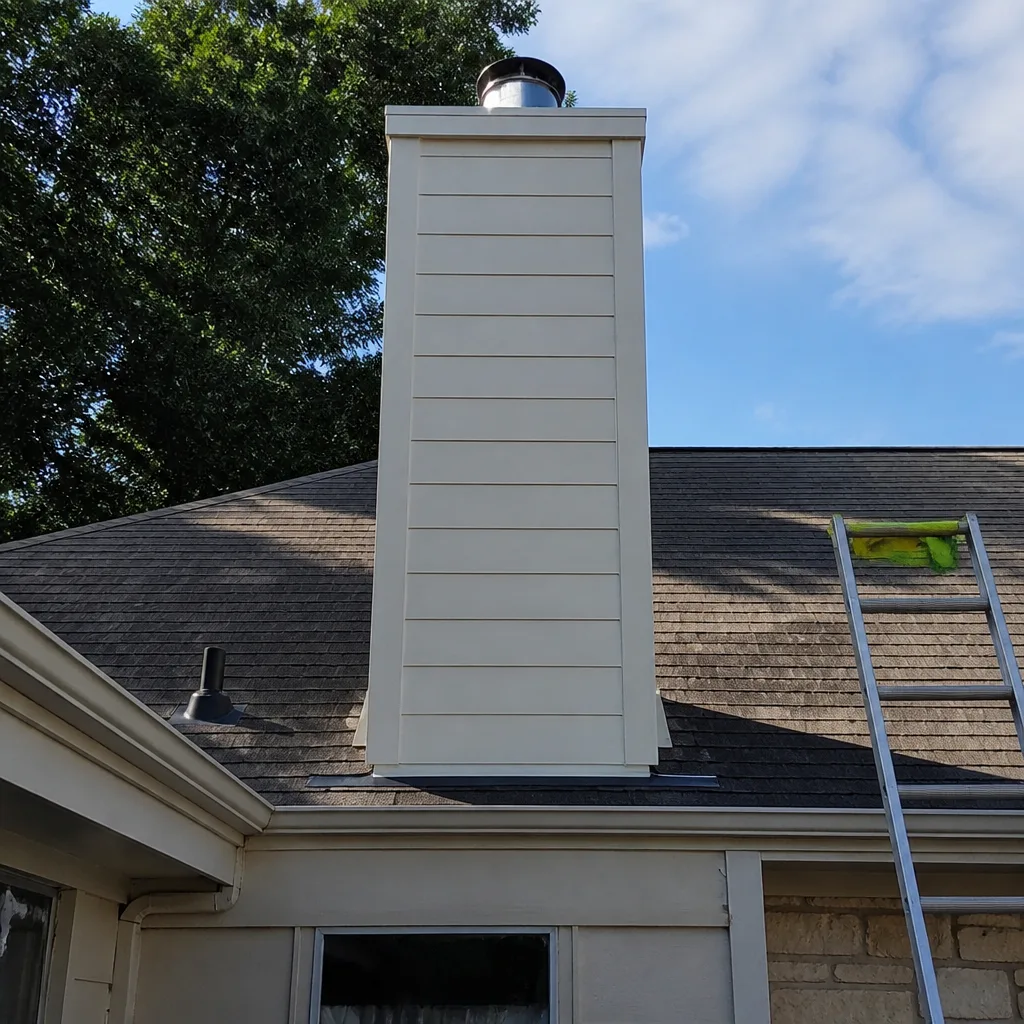 After