
Last updated October 31, 2026
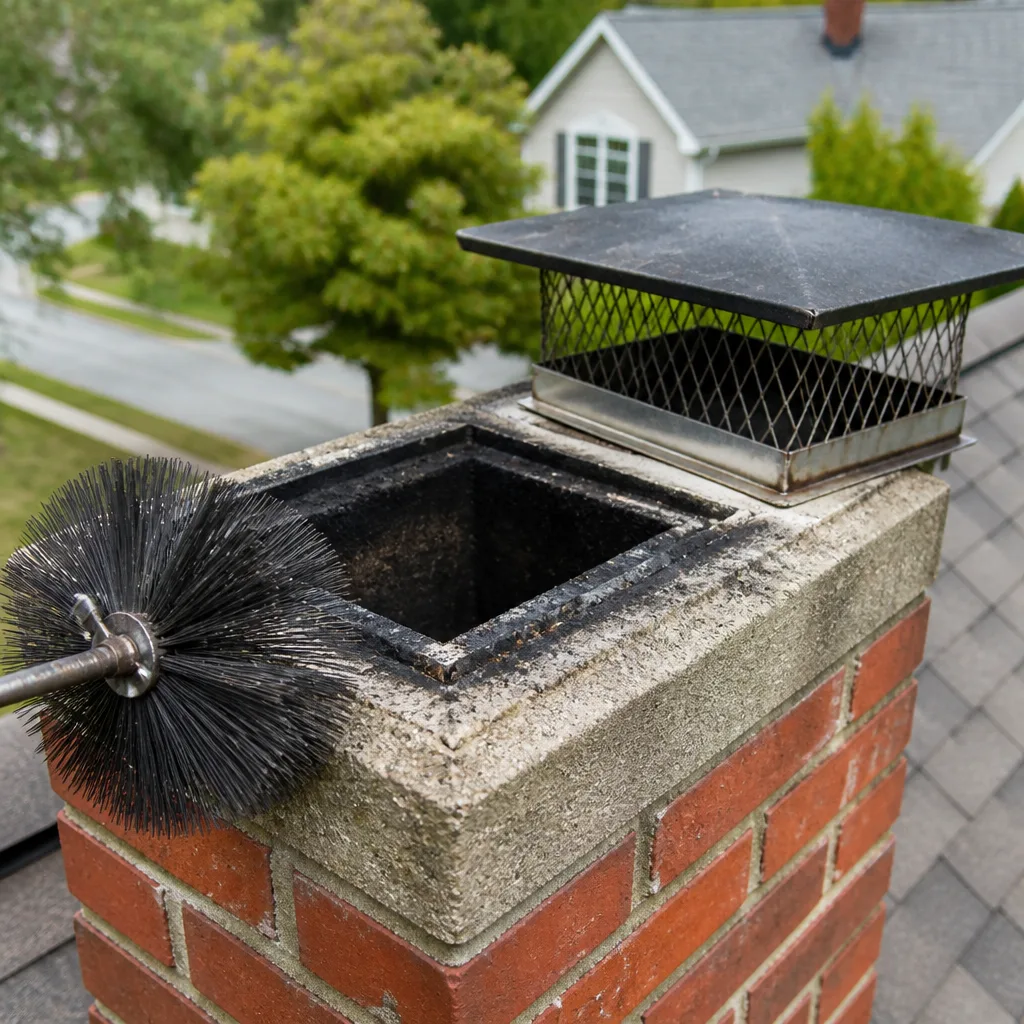 Sweep & inspection
 Caps & crowns
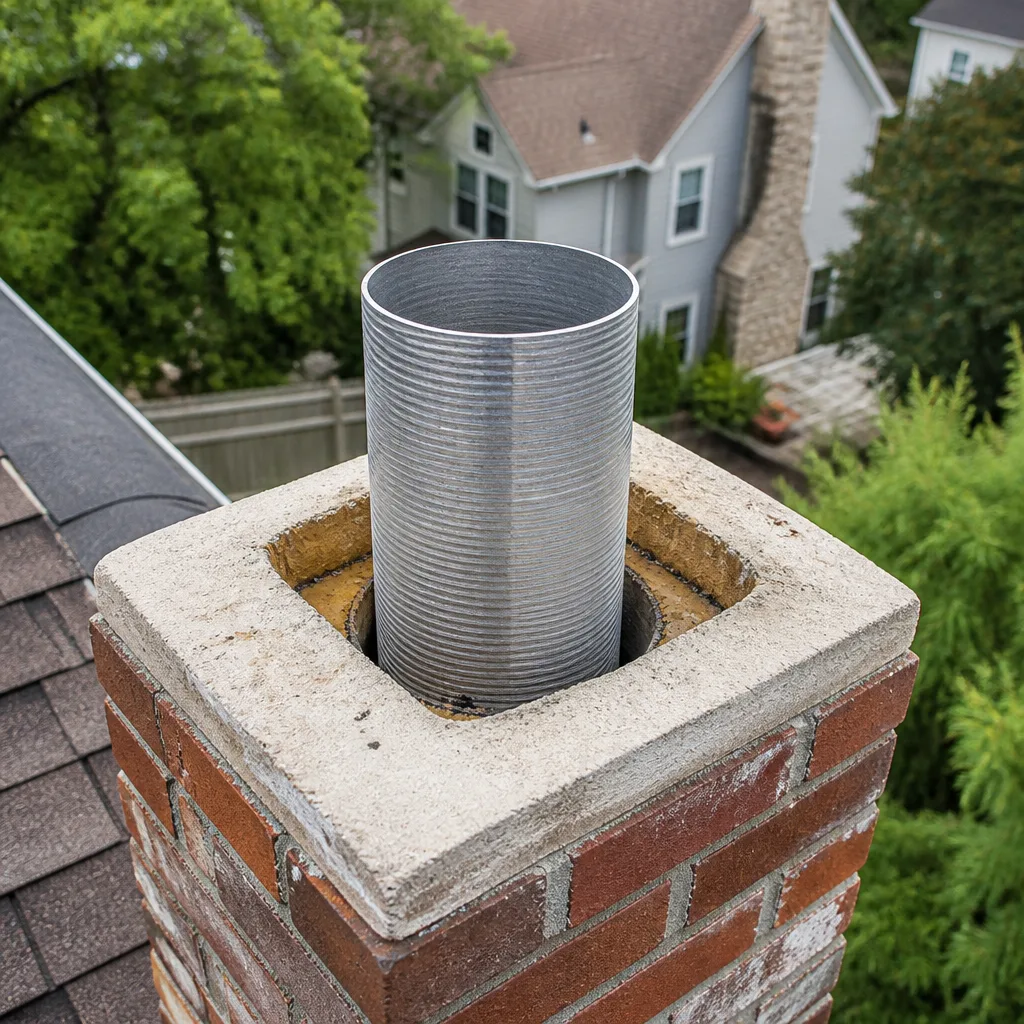 Flue relining
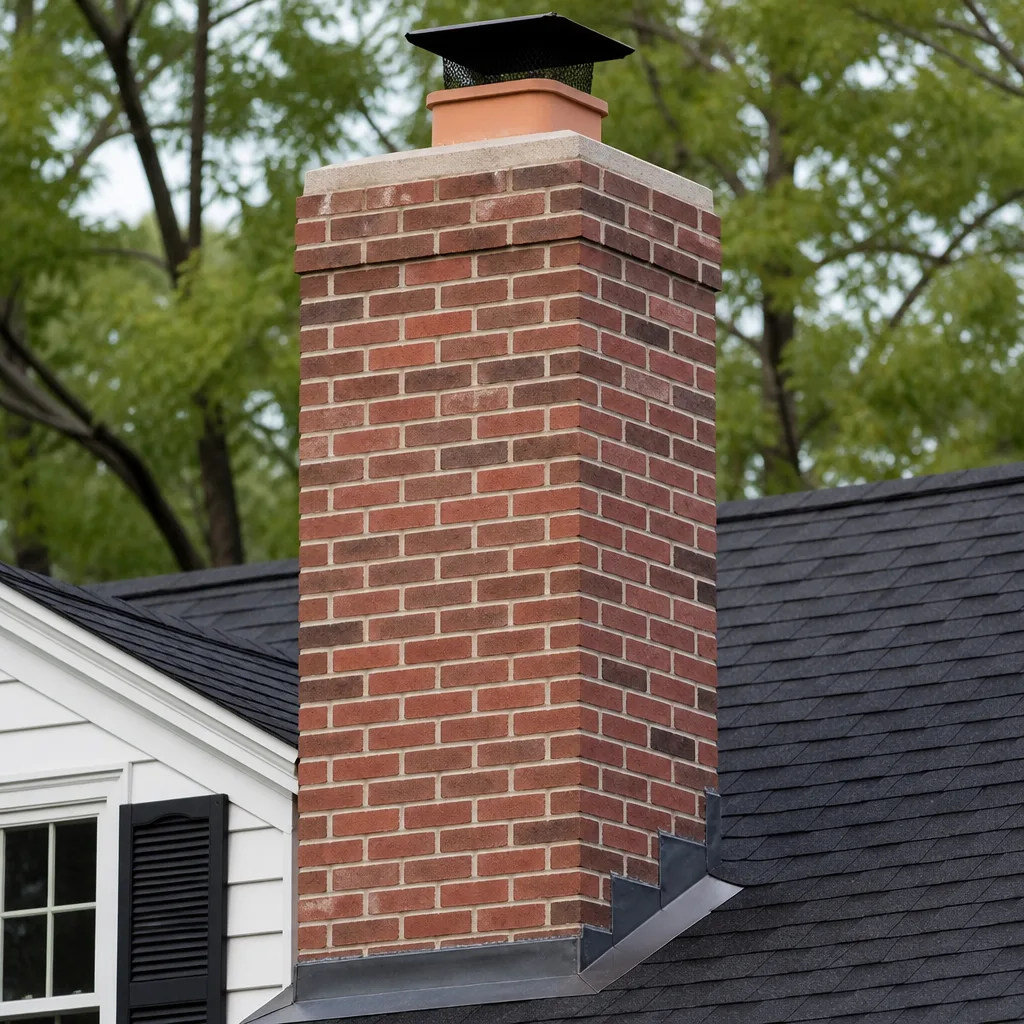 Masonry repair
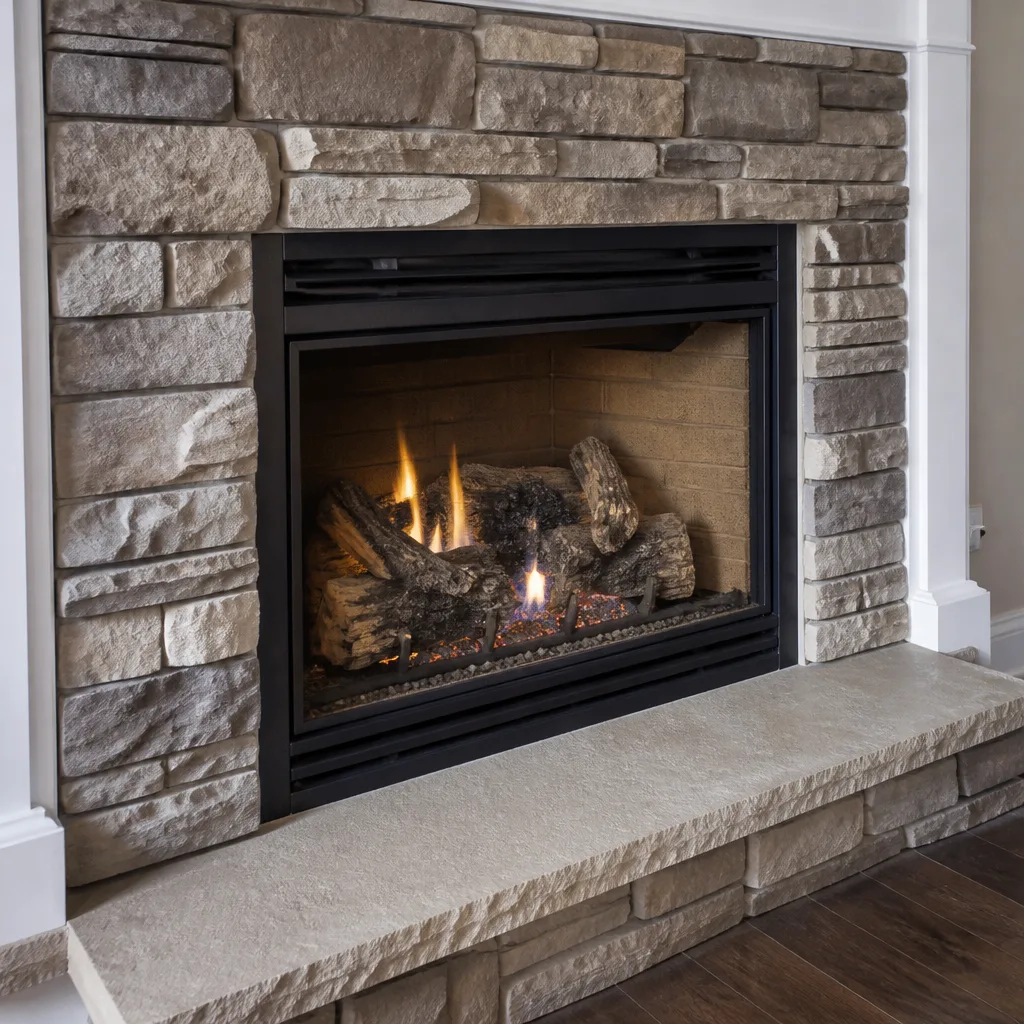 Gas fireplace service
Level 1 sweep and inspection to the NFPA 211 annual standard - flue, crown, cap, and flashing checked and photographed
Chimney sweep logs do not sweep chimneys. They loosen some creosote - which then falls where a brush and vacuum still have to collect it.
The Complete Guide to Chimney Cleaning in Georgetown
Most chimney fires don’t start during a storm or a marathon burn. They start the first cool October night after a chimney that “looked fine all summer” gets its first real use. Eight months of non-use is a long stretch, and in Georgetown, that idle season is exactly when things go quietly wrong inside a flue. This guide explains what a thorough chimney cleaning in Georgetown actually involves, why local soil conditions make this more than a routine sweep, and what a homeowner should expect from a job done to specification.
Styles & brands we work with
Quick Answer
Chimney cleaning in Georgetown, TX typically costs $180 to $340 for a standard sweep and inspection, and should be performed annually before the first fall fire. A proper cleaning includes a full visual assessment of the flue liner, smoke chamber, damper, and chimney cap, because Georgetown’s expansive clay soil can cause foundation movement that cracks liners in ways creosote buildup alone won’t reveal. The job is not just about removing soot; it’s about confirming the entire venting path is still sound after a long Texas off-season.
Table of Contents
- Why Georgetown’s Soil Changes the Stakes
- What a Chimney Cleaning Actually Involves
- Understanding the Three-Level CSIA Inspection Framework
- How Professional Rotary Systems Differ From Box-Store Kits
- Why Cedar and Live Oak Build Creosote Differently
- What Your Sweep Should Document
- What Chimney Cleaning Costs in Georgetown
- Common Mistakes to Avoid
- When to Call a Professional
- Frequently Asked Questions
- The Bottom Line
Why Georgetown’s Soil Changes the Stakes
Georgetown sits on the Blackland Prairie, where the dominant soil is Houston Black clay, a heavy, expansive clay that swells when wet and shrinks when dry. This is the same soil type that gives Central Texas its reputation for foundation movement. Homes in neighborhoods like Sun City, Serenada, and Berry Creek sit on ground that moves measurably between wet springs and dry summer stretches.
What does that have to do with a chimney? Plenty. A chimney is a rigid vertical structure attached to a house that is otherwise built to flex slightly. When the ground under a Georgetown home swells or contracts, the foundation can shift by fractions of an inch. The house frame tolerates that movement. A masonry chimney often doesn’t. The result is hairline cracking at the mortar joints, minor tilting of the firebox, and stress at the flue liner seams.
Those are exactly the places where a chimney fire finds its fuel. Creosote, which we’ll get to in a moment, accumulates on every flue surface. But a cracked or separated liner joint is a different problem: it gives creosote a pocket to collect in, and it gives heat a path to reach the wood framing of the house. A cleaning that only removes surface deposits will miss the joint separation entirely. That’s why a thorough chimney cleaning in Georgetown has to include a structural check keyed to local soil movement, not just a brush pass.
We’ve swept chimneys in Georgetown where the flue looked clear on camera but the real issue was a firebox tilted two degrees off level, visible only when you ran a level across the hearth during the inspection. The homeowner had never noticed. The house had settled unevenly over three dry summers, and the chimney followed.
This is the core argument for a site-specific approach: a Georgetown chimney cleaning is, by necessity, an inspection protocol that starts from the ground up.
What a Chimney Cleaning Actually Involves
A proper chimney sweep is a sequence of defined steps, not a single motion. Here is the order we follow, and what a homeowner should be able to ask about before anyone starts.
- Protection of the living space. Before anything else, the area around the fireplace gets covered. A professional sweep uses drop cloths and a high-suction vacuum with a HEPA filter. The goal is zero dust migration into the room. If a company skips this step, the job will show it for weeks.
- Cool-flue verification. No cleaning should start on a warm flue. Hot creosote is more volatile and harder to work with. A professional confirms the chimney has been cold for hours.
- Visual pre-inspection. The sweep looks at the firebox, damper, smoke chamber, and the first few feet of the flue from below before any brush goes up. This catches obstructions like bird nests, dead animals, or a deteriorated damper that could be damaged by mechanical cleaning.
- Mechanical cleaning. The flue is swept with a rotary brush system sized to the flue’s exact dimensions. In Georgetown, where many chimneys are masonry with clay tile liners, the brush must match the liner interior. A brush too small leaves creosote behind. A brush too stiff can score the clay.
- Smoke chamber and damper detail work. These areas collect a disproportionate share of creosote because they are irregular surfaces. They get hand-cleaned, not just brushed from below.
- Post-sweep camera inspection. When the flue is clean, a camera goes up to document liner condition, joint alignment, and any cracking or separation. This is the step that separates a cleaning from a diagnosis.
- Written report. The homeowner receives a condition report covering the liner, smoke chamber, damper, and cap. Not a one-line receipt. A real report notes observations and recommendations with supporting images.
That sequence takes one to two hours for a standard masonry chimney. Anything faster than that, and a step is being skipped.
Understanding the Three-Level CSIA Inspection Framework
The Chimney Safety Institute of America defines three levels of inspection. The level required depends on what has changed since the last service. After Georgetown’s long eight-month non-use season, the correct level is usually Level 1, unless something has changed since the previous year.
Level 1: The standard annual inspection. This accompanies a routine sweep. The technician examines all readily accessible areas: the firebox, damper, smoke chamber, flue interior, and the exterior chimney above the roofline. No special tools beyond a flashlight, mirror, and the sweep’s camera. This is appropriate when the chimney is being used exactly as it was the previous year, same appliance, same fuel.
Level 2: Required when something has changed. This applies when a new appliance is installed, the home is sold, the property changed ownership, or an event occurred that could have damaged the chimney. Events include a chimney fire, a lightning strike, a hail storm, or the kind of foundation movement Georgetown’s clay soil produces. A Level 2 inspection adds access to crawl spaces, attics, and roof surfaces, and typically includes video scanning of the full flue length.
Level 3: When a serious problem is suspected. This is an invasive inspection that may require removing portions of the chimney or surrounding building materials to access hidden areas. A Level 3 inspection is rare and is ordered only when a Level 1 or Level 2 raises a concern that cannot be resolved without opening the structure.
Here is the key point for Georgetown homeowners: if your chimney has never been swept, or the last sweep was more than two years ago, and the house sits on expansive soil, a Level 1 cleaning with a thorough camera pass is the minimum. If you moved into the home within the last year and have no service history, a Level 2 is the defensible choice. You cannot see a separated liner joint from the living room.
How Professional Rotary Systems Differ From Box-Store Kits
Hardware store chimney cleaning kits contain a brush and a set of fiberglass rods. The homeowner runs the brush up and down the flue from below or from the roof. For a lightly used chimney with minimal creosote, this can dislodge some surface buildup. It does not do what a professional rotary system does, and in the wrong liner, it can do more harm than good.
A professional rotary system uses a brush head driven by a power drill through flexible rods, spinning at controlled speeds. The brush head is sized to the flue’s exact interior dimensions. As it spins, it contacts all flue surfaces evenly, breaking the bond between creosote and the liner wall. The debris falls and is captured by the vacuum.
The box-store kit relies on friction from manual up-and-down movement. It works adequately on thin, flaky creosote. It works poorly on the dense, tar-like creosote that forms in chimneys burning cedar and live oak, which are the dominant firewoods in Williamson County. That glazed creosote resists manual brushing. A rotary head with the right bristle stiffness can remove it cleanly.
There is also a liner-safety difference. A box-store wire brush run through a clay tile liner with already-stressed joints, which is precisely the condition Georgetown’s soil movement creates, can chip the tile edges or widen a developing crack. A trained sweep knows how much mechanical force a given liner can tolerate. A homeowner working blind cannot.
If you choose to use a retail kit, use it only on a flue that was professionally cleaned and inspected within the last year. Anything older, and you are cleaning blind on a liner whose condition you do not know.
Why Cedar and Live Oak Build Creosote Differently
Firewood is not all the same. The type of wood you burn determines how fast creosote accumulates and what kind of creosote it is. In Georgetown and throughout Williamson County, the two most common firewoods are cedar and live oak. Both are abundant. Both burn. Neither behaves like the dense northern hardwoods that many fireplace guides assume.
Cedar is a soft, resinous wood. It lights easily, burns hot and fast, and throws off a lot of spark. It also produces heavy smoke and vaporized resin. When that smoke hits the cooler upper reaches of the flue, the resin condenses as creosote faster than most hardwoods. A Georgetown home that burns cedar as its primary firewood can accumulate a quarter inch of creosote in thirty to forty fires, roughly half the number it would take with a dense hardwood.
Live oak is a different problem. It is dense and burns long and slow. That sounds ideal, and for heat output per log it is. But live oak cut and split in Central Texas often goes into the firebox at a higher internal moisture content than hardwoods from colder climates, because our drying season is shorter and the air is not consistently dry. Wet wood means a cooler, smokier fire. Cool, smoky fires are the single biggest driver of creosote accumulation. Live oak that has not been properly seasoned for a full year produces the kind of slow, smoldering burn that coats a flue in a season.
The practical takeaway for Georgetown: if you burn cedar, schedule your annual sweep and do not skip a year. If you burn live oak, split it early, stack it off the ground, and burn only wood that has seasoned through at least one full Texas summer. The smell of a fire does not tell you whether the flue is safe.
What Your Sweep Should Document
A “swept clean” receipt is not a condition report. When you hire a chimney cleaning in Georgetown, you are paying for information as much as for cleaning. Here is what a proper report includes:
- Liner condition. The material, general appearance, presence of cracking, spalling, or separated joints. If the liner is clay tile, the report should note any tile misalignment or missing sections.
- Smoke chamber condition. Creosote in the smoke chamber is common. Cracks or gaps in the smoke chamber masonry are less common and more serious, because this area sits directly behind the damper and close to the house frame.
- Damper function. Does it open fully? Does it seal well enough to keep conditioned air from escaping up the chimney in summer? A damper that doesn’t close tightly is the silent energy leak in thousands of Georgetown homes.
- Chimney cap and spark arrestor. Is the cap in place and intact? A missing or damaged cap lets rain, birds, and squirrels into the flue. Rain plus creosote makes a mildly acidic slurry that eats at mortar joints from the inside.
- Exterior crown and flashing. Cracks in the crown are where water enters the chimney’s masonry. Flashing that has separated from the roofline is a leak waiting on the next heavy spring storm.
- Creosote type and thickness found. The report should note whether the buildup was fine powder (first stage), flaky (second stage), or glazed and shiny (third stage). Glazed creosote is the most flammable and the hardest to remove. If your report says third-stage creosote was found and removed, know that you were one hot fire away from a serious problem.
- Photos or video stills. Any company that runs a camera should be willing to show you the screen. You should not have to ask.
This documentation protects you in two directions. It gives you a baseline for next year’s comparison. And if the report identifies a problem, like a cracked liner or deteriorated crown, you have the information you need to make a repair decision on your own timeline rather than in an emergency.
What Chimney Cleaning Costs in Georgetown
Chimney cleaning prices in Georgetown fall into a predictable band. A standard sweep with a Level 1 inspection runs $180 to $340 for a masonry chimney. That range covers single-story and two-story homes in most Georgetown neighborhoods, from Old Town to the newer developments along Williams Drive.
Here is a breakdown of what affects the number:
- Flue height and roof pitch. A two-story home on a steep lot costs more than a single-story ranch. Roof access difficulty is a real factor, and Georgetown’s hillside homes in areas like Escalera Ranch add time.
- Creosote severity. Third-stage glazed creosote requires chemical treatment or extended rotary work. Expect to pay on the higher end of the range or slightly above it if the flue has not been cleaned in years.
- Presence of a chimney cap replacement. The sweep may be $200 while a replacement cap adds $80 to $150 depending on the size and material.
- Animals or obstructions. Removing a bird nest, raccoon damage, or a dead animal adds time and a removal fee.
- Camera inspection. Some companies charge separately for video scanning. Others fold it into the sweep price. In our opinion, a camera pass is part of a cleaning, not an add-on. Ask before you book.
For gas fireplaces, the cost runs lower, typically $130 to $200 for a cleaning and inspection of the venting system. Gas chimneys do not produce creosote, but they still need annual checks for blockages, corrosion, and proper draft.
These are cash-basis prices for a residential single-flue chimney. A home with two fireplaces sharing a single masonry structure is billed per flue. Call (877) 644-8036 for an exact quote on your home. Estimates are free.
Common Mistakes to Avoid
- Skipping a year because the fire “worked fine last winter.” Creosote accumulation is cumulative and silent. The fire that lit beautifully last March had one more season of deposits by the time you light it again in October. Georgetown’s long off-season is exactly when moisture and settling work on the liner unseen.
- Burning unseasoned live oak. The wood was cut in January and thrown into the fireplace in November. Eleven months sounds like enough, but a Central Texas summer with intermittent humidity does not season oak the way a cold northern climate does. Wet oak means smoky fires and rapid creosote buildup.
- Treating a chimney sweep as a purely cosmetic service. Some homeowners believe cleaning is about appearance. It is not. It is about removing combustible deposits from the path of exhaust gases. A sooty chimney is not a dirty chimney; it is a fuel-loaded chimney.
- Ignoring a crack in the chimney crown or missing cap. Water entry is the slow killer of Georgetown chimneys. A cracked crown lets rain seep into the masonry, where it freezes and thaws (rare but possible in a hard winter), or simply erodes mortar through repeated wet-dry cycles. Every heavy wet spring takes a toll.
- Using a wood stove in an unlined or improperly lined flue. Wood stoves produce hotter, more concentrated exhaust than open fireplaces. A flue built for an open fireplace is not necessarily safe for a stove insert. Georgetown homes built before the 1980s often need liner work before stove use.
- Failing to ask for proof of insurance and a written report. A legitimate chimney company carries liability insurance and provides documentation. If the person on your roof cannot produce either, you’re taking on risk that should not be yours.
When to Call a Professional
Call a professional if you see visible creosote buildup inside the firebox, if smoke enters the room when the fireplace is in use, if you smell a persistent campfire odor when the fireplace is cold, or if you see water staining on the ceiling near the chimney chase. Call if your damper is stuck, if you hear animals, or if the home is new to you and you have no service history. Chimney cleaning and inspection on a home with Georgetown’s expansive soil is not a job where you want to discover the problem by having one. Resolute Chimney Sweep offers free estimates in Georgetown, call (877) 644-8036.
Frequently Asked Questions
A standard chimney sweep in Georgetown costs $180 to $340 for a masonry chimney with a Level 1 inspection. Gas fireplace cleaning runs $130 to $200. Variables include roof height, creosote severity, and whether a cap or animal removal is needed. Call (877) 644-8036 for an exact quote on your flue.
Once a year, before the first fall fire. Homes that burn primarily cedar or unseasoned live oak, which are the dominant firewoods in Georgetown and Williamson County, may need a mid-season check if the fireplace sees heavy use. The annual cadence also catches liner and mortar issues that develop during the months the fireplace sits idle.
The only honest way to answer is with a camera inspection. A clay tile liner with minor surface cracks is not automatically a replacement situation. A liner with separated joints or spalled sections is a different matter, because those gaps expose the masonry and framing to heat and gases. Some liner damage can be addressed through resurfacing with HeatShield, a product system designed for exactly that repair, rather than a full teardown. A full reline using a DuraFlex flexible liner system is the code-compliant option when the existing liner is beyond restoration. Get the camera report first. Call (877) 644-8036 to schedule an inspection and get a straight answer.
Creosote accumulates. Creosote is combustible. When the flue gets hot enough, that creosote can ignite, producing a chimney fire that burns at temperatures hot enough to crack clay liners and melt mortar. A chimney fire can spread to the roof and the house frame. Skipping years also lets water and animal damage advance undetected, and a blockage can send carbon monoxide into the home. The financial risk is not theoretical.
You can, with significant caveats. A retail kit works on light, flaky creosote in a flue that was professionally cleaned and inspected within the last year. It does not effectively remove glazed creosote, and it cannot assess liner condition. Box-store brushes run blind on a liner you cannot see. In Georgetown, where soil movement stresses liner joints, cleaning without a camera inspection means missing the problem that matters most. Call (877) 644-8036 to schedule a professional sweep and camera check.
Georgetown follows the City of Georgetown’s adopted building and fire codes, which align with International Residential Code standards for chimney and venting system maintenance. The relevant standards require that chimneys and vents be kept in a sound, functional condition and free of obstructions and combustible deposits. Insurance claims after chimney-related fires often hinge on whether the homeowner can show a documented cleaning and inspection history. Keep your records.
The Bottom Line
A chimney cleaning in Georgetown is not a generic task. It is a structural check on a rigid vertical stack attached to a house sitting on some of the most expansive soil in Texas. The cleaning removes the fuel. The inspection confirms the exhaust path is still sound. Both matter. Cedar and live oak build creosote faster than most people expect, and Georgetown’s long off-season gives settlement and moisture time to work on the flue. Book an annual sweep before the first fall fire, insist on a written condition report with camera evidence, and call (877) 644-8036 to set up your free estimate.
Written by the team at Resolute Chimney Sweep, serving Georgetown since 2014.
See the difference
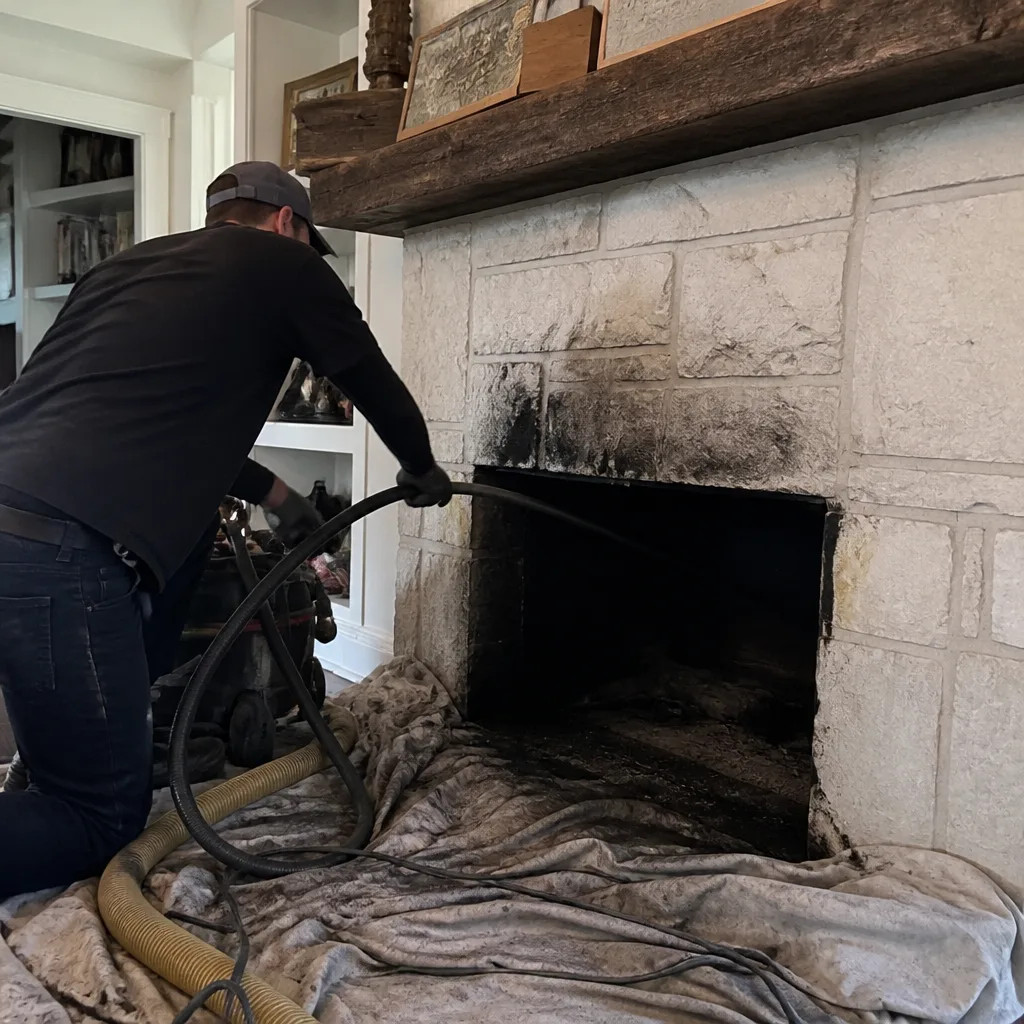 Before
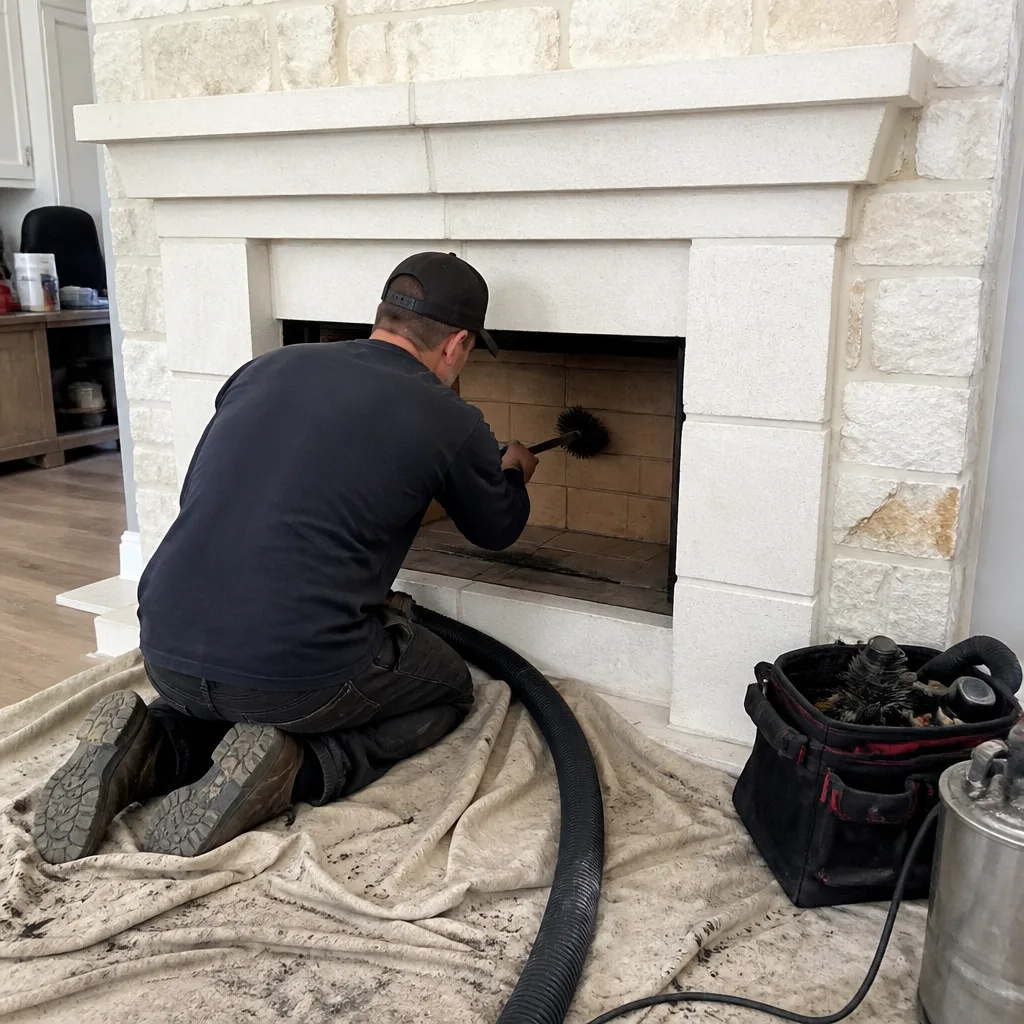 After
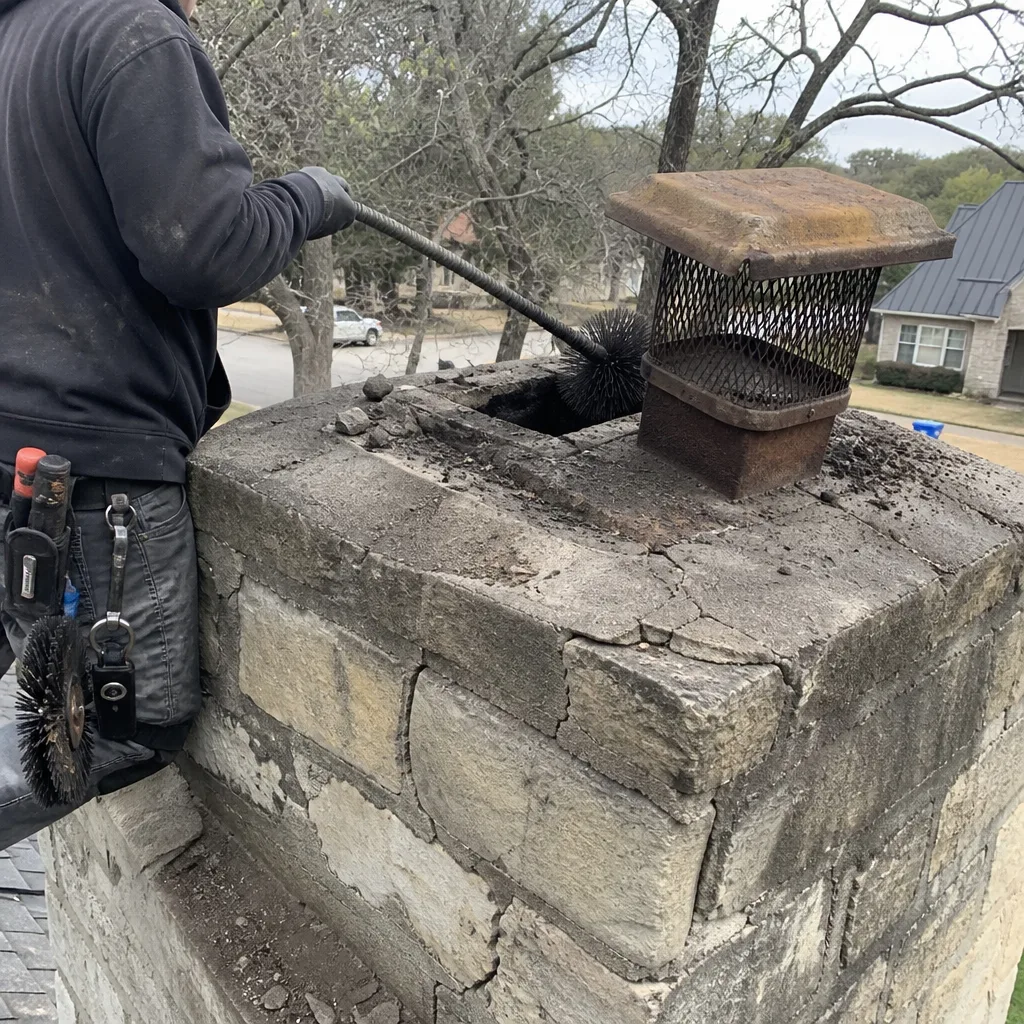 Before
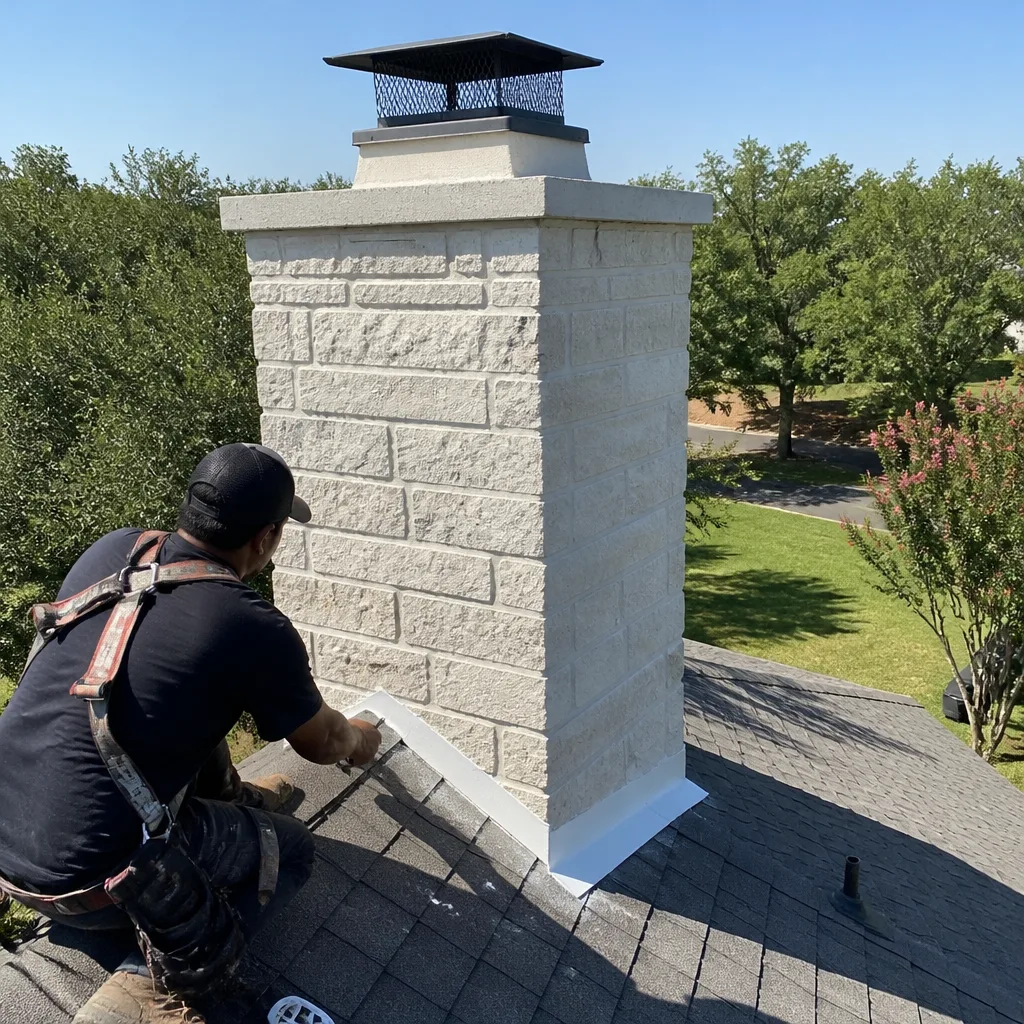 After
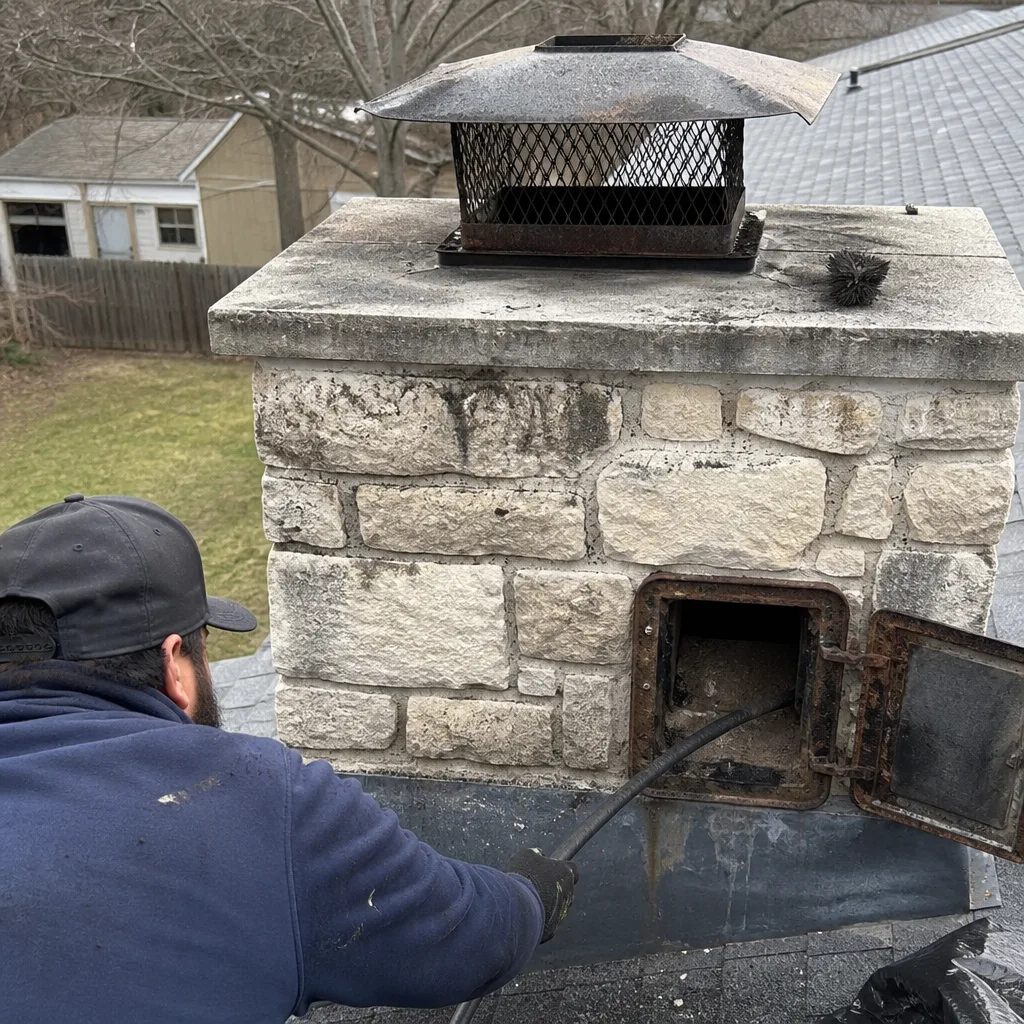 Before
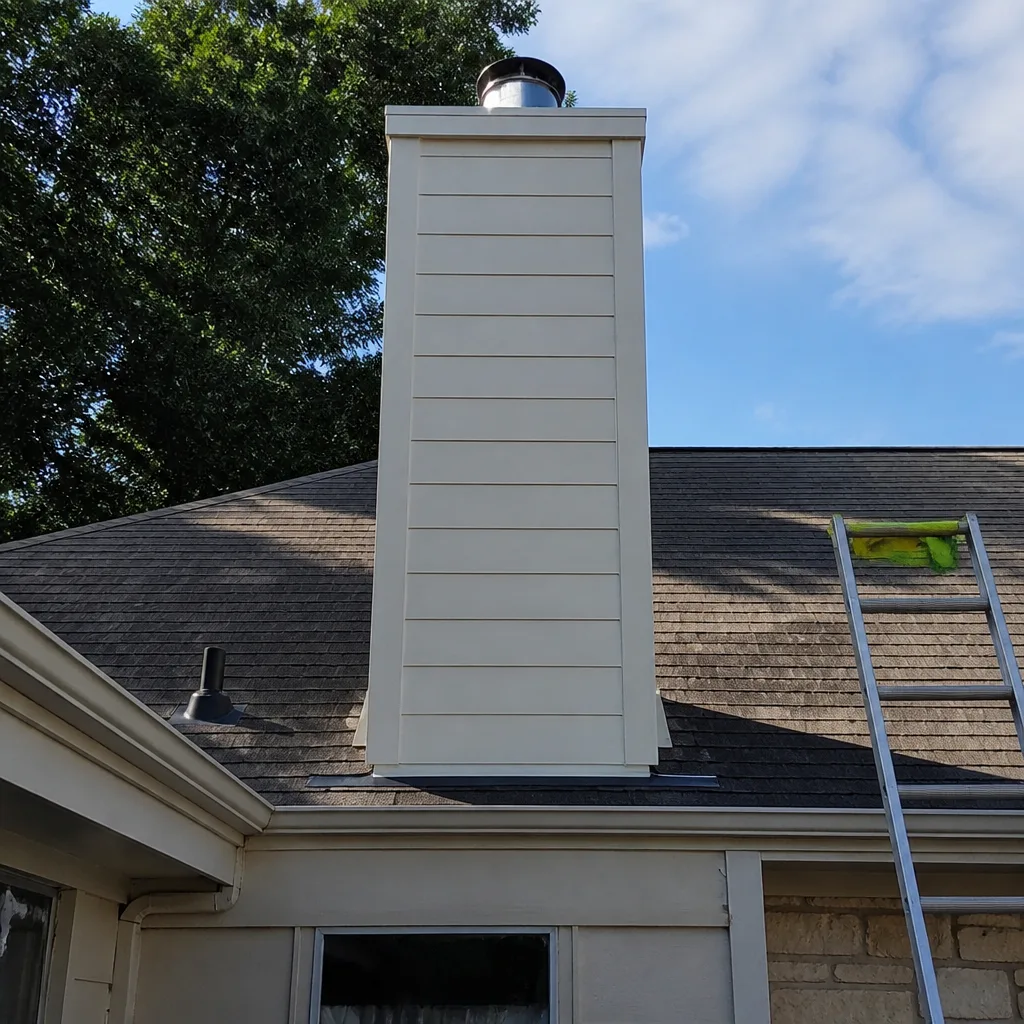 After